
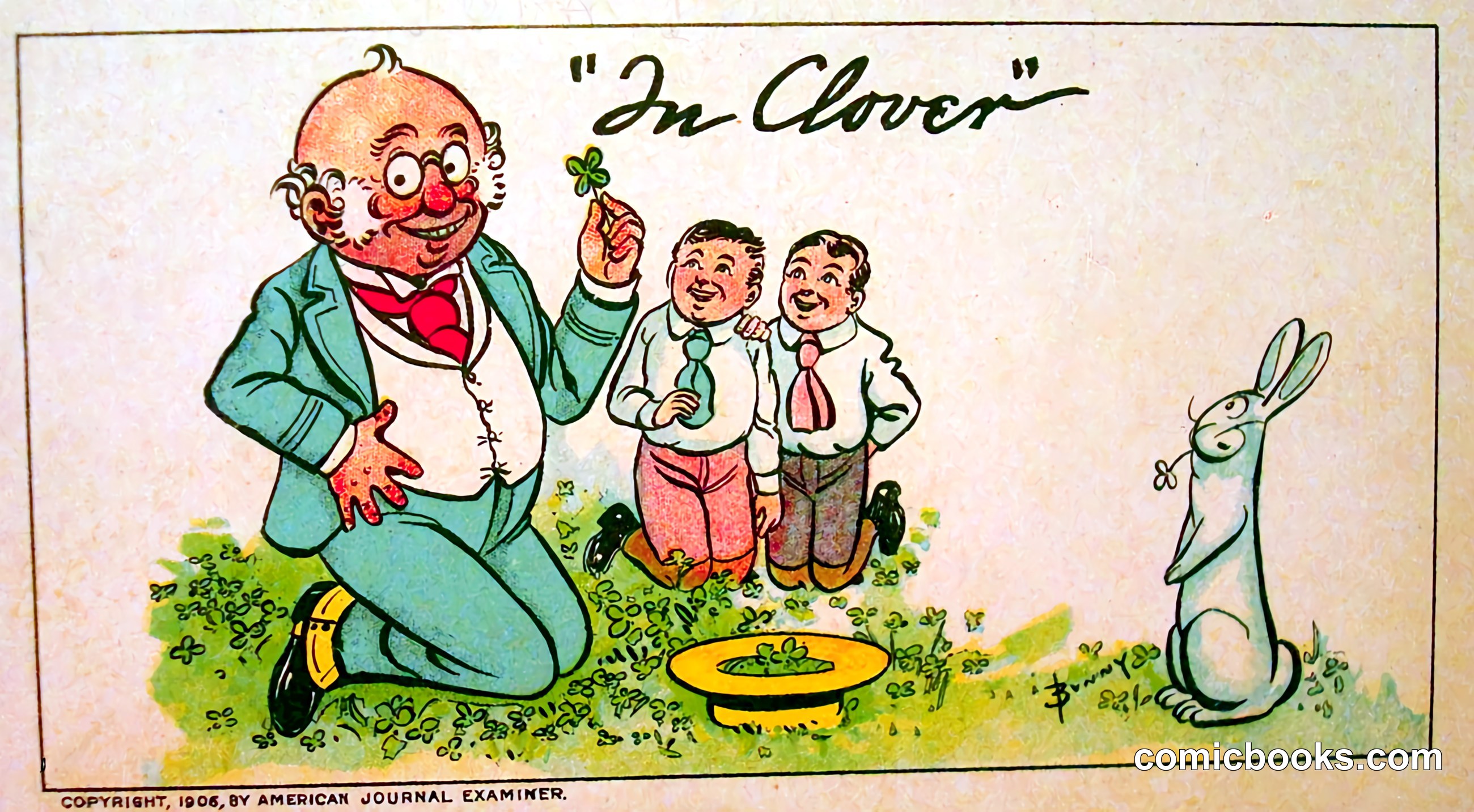
Carl Schultze's Foxy Grandpa, which ran in the New York papers in the early 1900s, offered a sly twist on a formula the funnies had quickly made familiar. Where strips like the Katzenjammer Kids delighted in children outwitting adults, Foxy Grandpa reversed the joke: two prank-loving boys set traps for their genial old grandfather, only to be outsmarted every time by the sharp-witted old man.
That inversion is more interesting than it sounds. Within just a few years of the comic strip's birth, its conventions were already established enough to be played against — a sign of how fast the form was maturing. Readers understood the 'mischievous kids' template so well that a strip could win laughs simply by subverting it, week after week.
Foxy Grandpa proved popular enough to jump off the page into books, stage adaptations, and merchandise, joining the wave of early comic characters that could support a life beyond newsprint. Schultze, who often signed his work 'Bunny,' gave the era one of its warmer figures: not a rascal or a tramp, but a twinkling grandpa who always had the last laugh — and a reminder that in the new world of the comics, formula was already something to toy with.
About this artifact
- Creator
- Carl Schultze
- Date
- 1902
- Rights
- Public domain — free to view, share, and reuse.
- Restoration
- Digitally restored and hosted by ComicBooks.com · high-resolution version available.
Part of our mission to preserve and restore the public-domain heritage of the medium.