
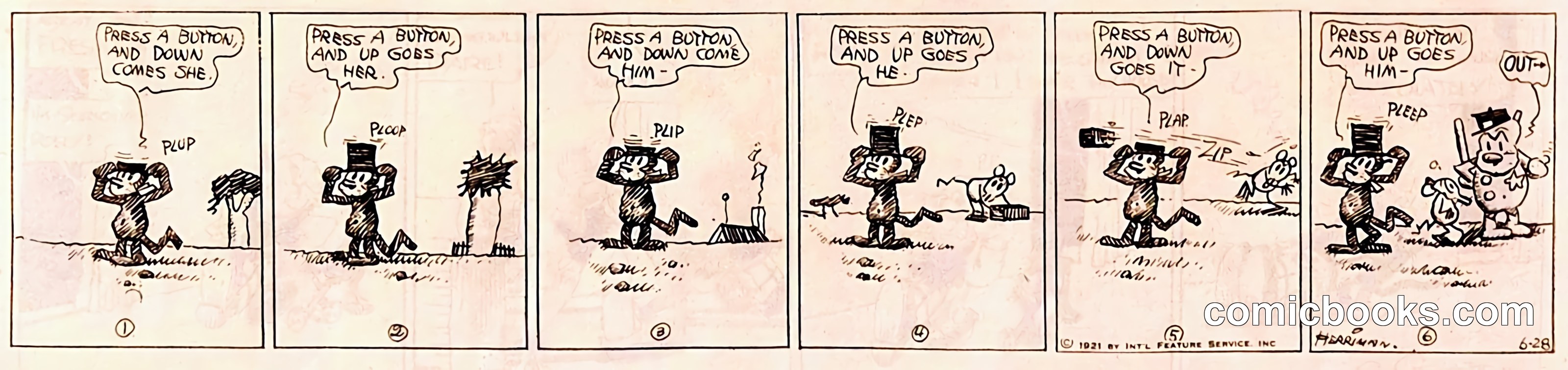
George Herriman's Krazy Kat is, by wide critical consensus, one of the most artistically celebrated works in the history of comics. Originating in the 1910s and flourishing through the 1920s, it followed a deceptively simple, endlessly repeated love triangle: Krazy Kat adores Ignatz Mouse; Ignatz expresses only contempt, hurling bricks at Krazy's head; and Offissa Pupp, the devoted police dog, loves Krazy and jails Ignatz for the assaults. Krazy, in a poignant twist, reads every thrown brick as a token of love.
Set in a shifting dreamscape based on the mesas of Coconino County, Arizona, the strip was famous for its poetic, invented dialect, its gender-ambiguous hero, and backgrounds that changed impossibly from panel to panel. It was gentle, surreal, and philosophical in a way nothing else on the funny pages attempted.
Though never a mass commercial smash, Krazy Kat was championed by artists, poets, and intellectuals, and it has been praised ever since as proof that the comic strip could be genuine art. Herriman drew it until his death in 1944. It stands here as the aesthetic conscience of comics' first great creative decade.
About this artifact
- Creator
- George Herriman
- Date
- 1922
- Rights
- Public domain — free to view, share, and reuse.
- Restoration
- Digitally restored and hosted by ComicBooks.com · high-resolution version available.
Part of our mission to preserve and restore the public-domain heritage of the medium.