
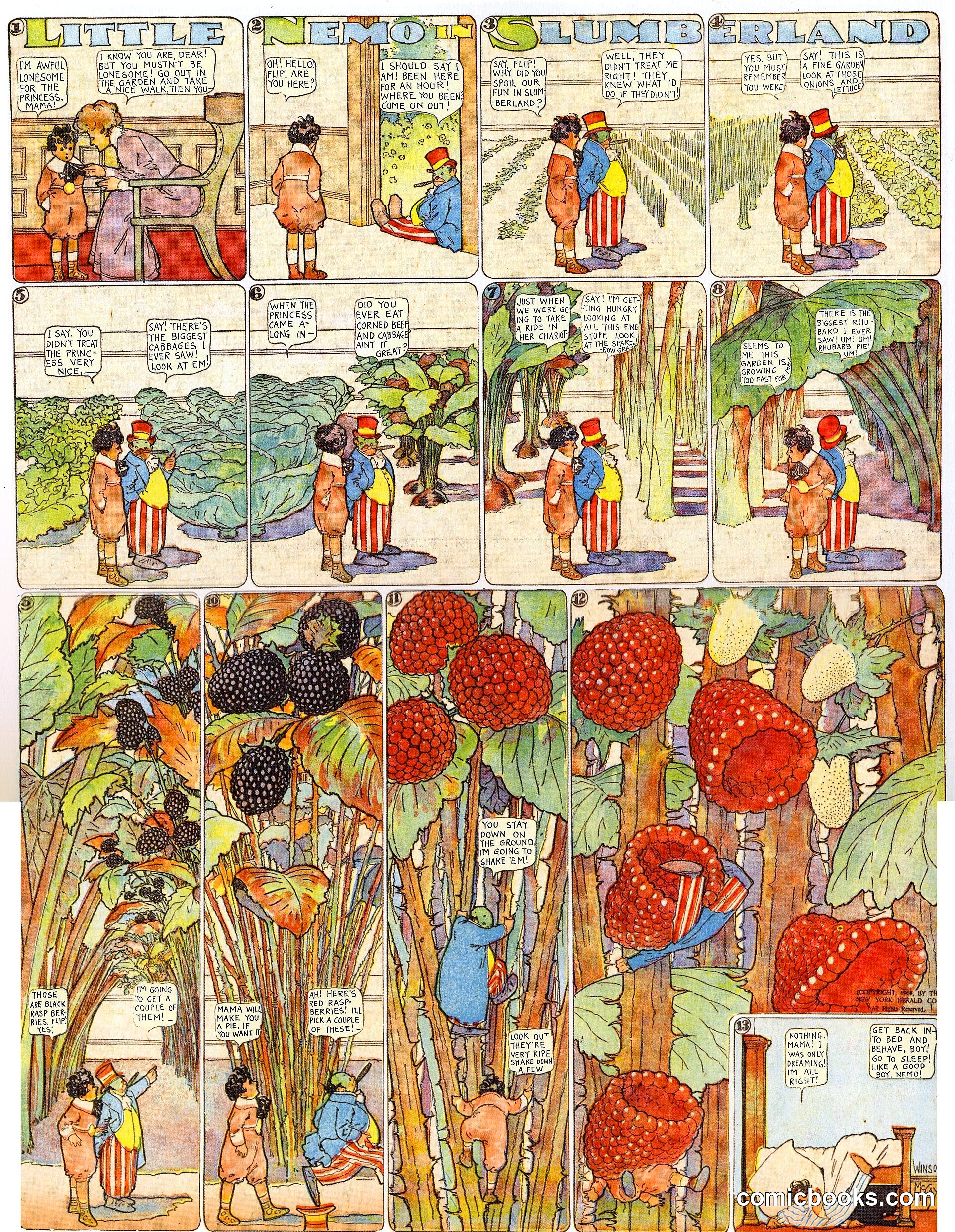
This 1908 Little Nemo page continues McCay's astonishing run in the New York Herald, where the strip had appeared since 1905. By now readers knew the ritual—Nemo's nightly voyage through Slumberland and his inevitable waking—yet McCay kept the format endlessly fresh through formal invention. On pages like this one, the panel layout itself becomes an actor in the story: rows expand to accommodate towering structures, or fracture to convey chaos and transformation. Dream logic governs everything, allowing objects to grow, multiply, or dissolve without explanation, and McCay exploited that freedom to stage effects impossible in any realist narrative. His draftsmanship remains meticulous, with ornate detail lavished on costumes, crowds, and cityscapes. The Sunday color printing lets him build lush, saturated environments that reward close looking. What distinguishes this period is McCay's confidence in treating the entire sheet as a unified design—balancing large spectacular panels against smaller connective ones to control the reader's pace and attention. It is comic-strip storytelling conceived with the eye of an architect and the patience of an illustrator, and it helped establish the Sunday page as a serious artistic space rather than mere filler.
About this artifact
- Creator
- Winsor McCay
- Date
- 1908
- Rights
- Public domain — free to view, share, and reuse.
- Restoration
- Digitally restored and hosted by ComicBooks.com · high-resolution version available.
Part of our mission to preserve and restore the public-domain heritage of the medium.