
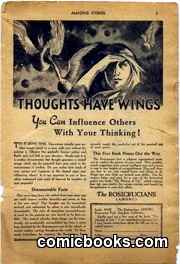
A robed figure gestures toward a vast alien landscape dominated by a towering brain-like form, while a winged creature soars overhead. The cover line "Thoughts Have Wings" promises science fiction's core appeal: the visualization of the impossible. Pulp magazines like Amazing Stories pioneered the visual language of speculative fiction through painted covers that could compress entire narrative worlds into a single image. These dime magazines—cheap, disposable, printed on wood pulp—became the primary venue for science fiction, fantasy, and weird fiction throughout the 1920s–1940s. Their cover art, often more inventive than the stories within, directly influenced the visual vocabulary of comic books that would emerge in the following decade, establishing conventions for depicting alien worlds, futuristic technology, and cosmic wonder that persist today.
📖 This public-domain issue is being restored page-by-page for our free reader — check back soon.
About this artifact
- Date
- 1947
- Rights
- Public domain — free to view, share, and reuse.
- Restoration
- Digitally restored and hosted by ComicBooks.com.
Part of our mission to preserve and restore the public-domain heritage of the medium.