
Life, 1929-03-08 · page 32 of 44
Life — March 8, 1929 — page 32: what you’re looking at
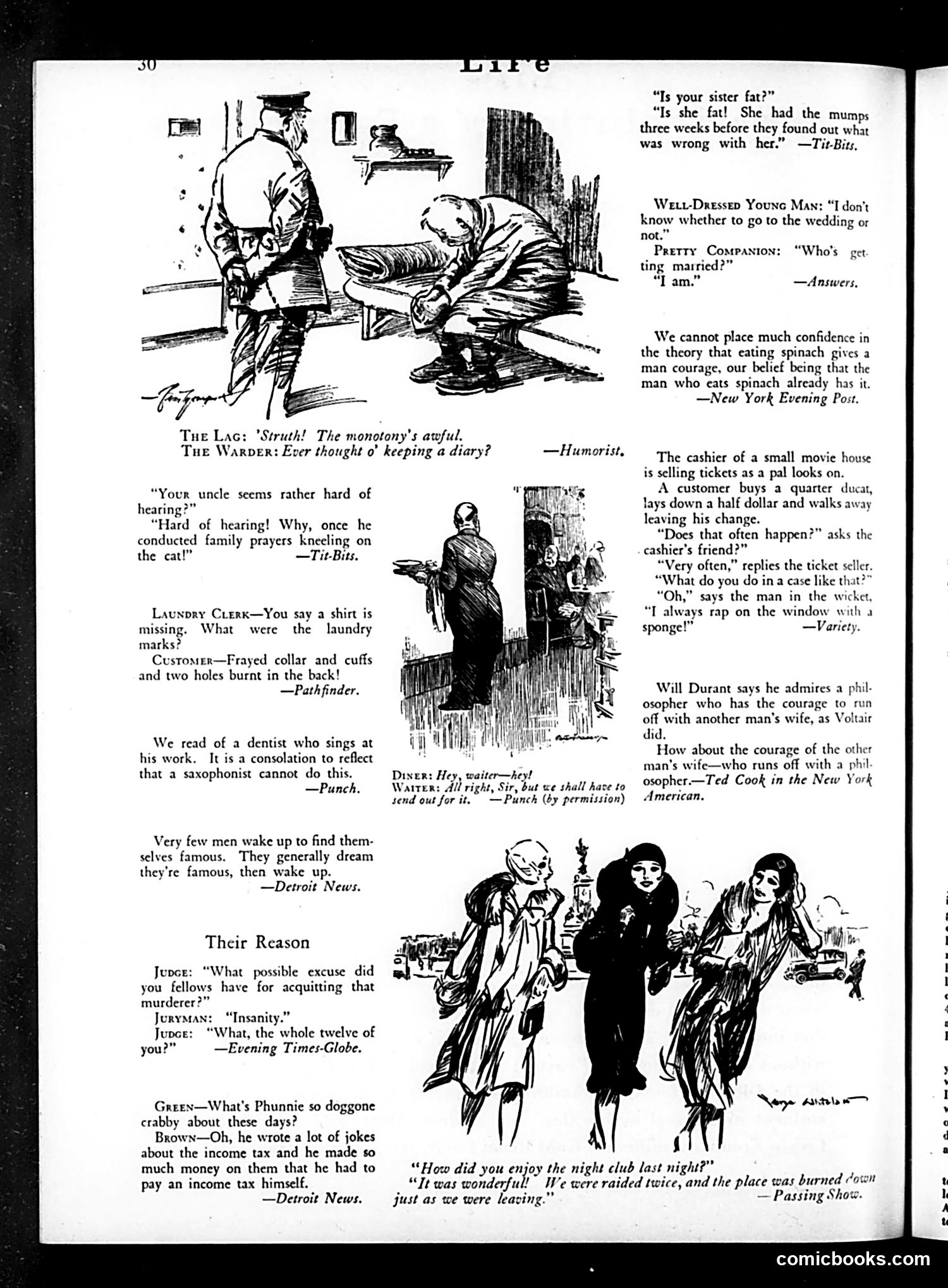
What you’re looking at
This page from *Life* magazine collects brief jokes and comic observations from various sources, representing early 20th-century American satirical humor. The cartoons and quips target everyday absurdities: **Key humor themes:** - **Domestic mishaps**: A laundry clerk's shirt marked by "frayed collar and cuffs and two holes burnt in the back" satirizes poor laundry service. - **Ironic reversals**: A joke writer making money from income-tax jokes, then owing taxes himself—the humor lies in self-inflicted consequences. - **Social commentary**: The movie-theater cashier who raps a sponge on the window when customers leave without their change suggests petty theft is commonplace enough to warrant a standard (absurd) response. - **Marital skepticism**: Multiple jokes mock marriage and relationships, reflecting period cynicism about romantic commitment. The humor is gentle, observational, and grounded in relatable middle-class experiences rather than political commentary. The *Passing Show* joke about a nightclub being "raided twice, and the place was burned down" references Prohibition-era speakeasies and their dangers.
📄 Transcribed text from this page (OCR, searchable)
Machine-transcribed from the original scan — historical spelling and the odd misread are preserved.
Tue Lac: 'Struth! The monotony’s awful. Tue Warpver: Ever thought o’ keeping a diary? “Your uncle seems rather hard of hearing?” “Hard of hearing! Why, once he conducted family prayers kneeling on the cat!” —Tit-Bits, Launpry Crerk—You say a shirt is missing. What were the laundry marks? Customer—Frayed collar and cuffs and two holes burnt in the back! —Path finder. We read of a dentist who sings at his work. It is a consolation to reflect that a saxophonist cannot do this. —Punch, Very few men wake up to find them- selves famous. They generally dream they're famous, then wake up. —Detroit News. Their Reason Jupce: “What possible excuse did you fellows have for acquitting that murderer?” Juryman: “Insanity.” Jupce: “What, the whole twelve of you?” —Evening Times-Globe. Green—What's Phunnie so doggone crabby about these days? Brown—Oh, he wrote a lot of jokes about the income tax and he made so much money on them that he had to pay an income tax himself. —Detroit News. —Humorist, Diner: Hey, waiter—hey! Waiter: All right, Sir, but we shall have to send out for it. —Punch (by permission) “Ts your sister fat?” “Is she fat! She had the mumps three weeks before they found out what was wrong with her.” —Tit-Bits, Wet-Dressep Younc Man: “I don't know whether to go to the wedding or not.” Pretty Companion: “Who's get ting married?” : “I am.” —Answers, We cannot place much confidence in the theory that eating spinach gives a man courage, our belief being that the man who eats spinach already has it. —New York Evening Post. The cashier of a small movie house is selling tickets as a pal looks on. A customer buys a quarter ducat, lays down a half dollar and walks away leaving his change. “Does that often happen?” asks the cashier's friend?” “Very often,” replies the ticket seller. “What do you do ina case like that?” “Oh,” says the man in the wicket, “I always rap on the window with a sponge!” —Variety. Will Durant says he admires a phil- osopher who has the courage to run off with another man’s wife, as Voltair did. How about the courage of the other man’s wife—who runs off with a phil- osopher.—Ted Cook in the New York American. “How did you enjoy the night club last night?” “Tt was wonderful! just as we were leaving.” We were raided twice, and the place was burned down — Passing Show. comicbooks.com Si aie ai ae as cmn~n