
Life, 1929-05-17 · page 19 of 52
Life — May 17, 1929 — page 19: what you’re looking at
What you’re looking at
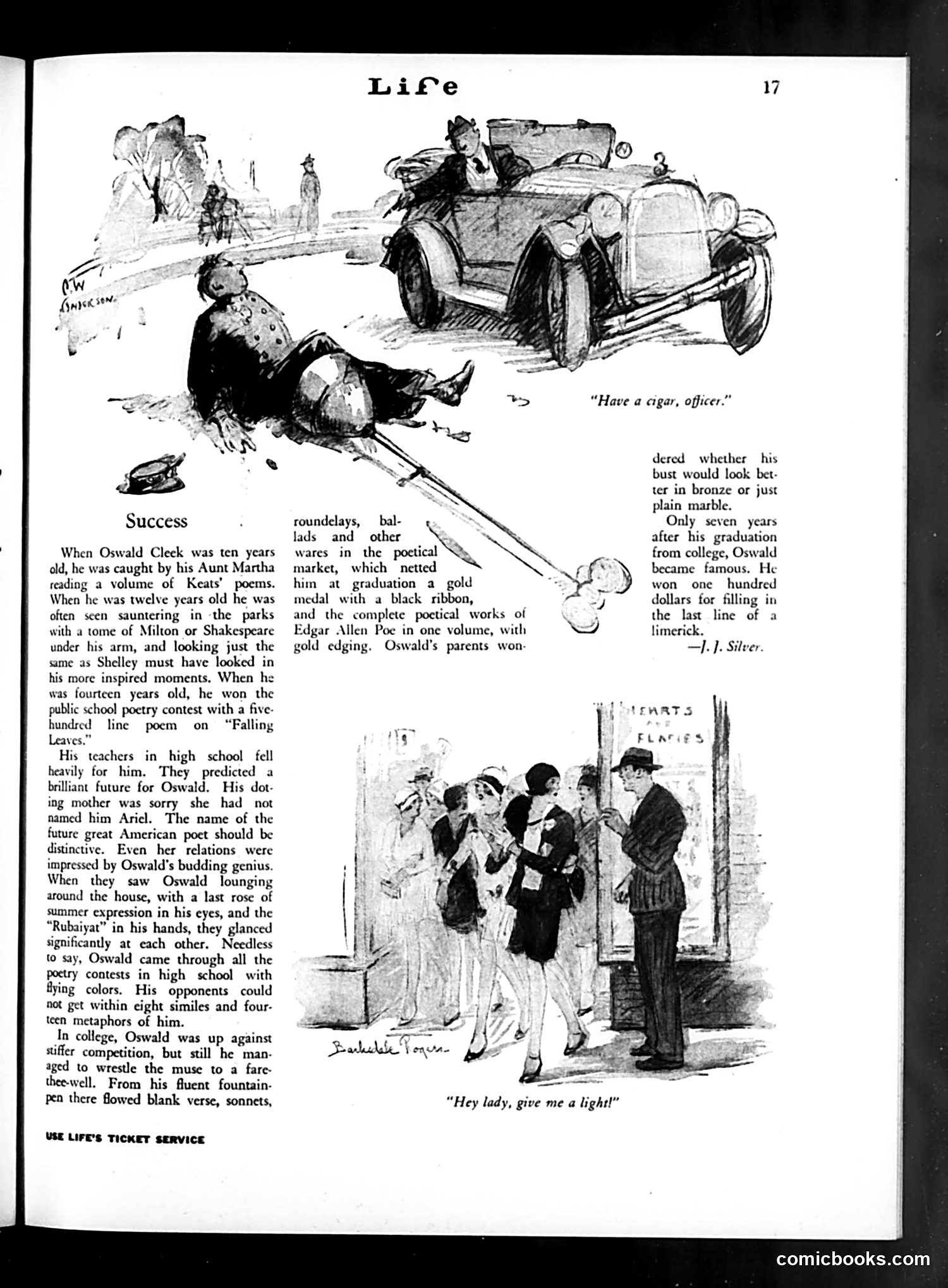
This page contains a biographical article about Oswald Cleck, a young poet who showed early literary promise. The top cartoon depicts a policeman struck by a car, captioned "Have a cigar, officer"—likely satirizing wealthy or privileged individuals who casually offer bribes or treats to authority figures. The bottom cartoon shows a man at a door asking "Hey lady, give me a light!"—presumably a humorous reference to someone seeking a light for a cigarette from a woman, playing on social awkwardness or impertinence. The article's text discusses Cleck's poetic achievements and academic success, but the cartoons appear unrelated to the biographical content, suggesting they're separate satirical commentary on social behavior and class dynamics typical of Life magazine's humor style.
📄 Transcribed text from this page (OCR, searchable)
Machine-transcribed from the original scan — historical spelling and the odd misread are preserved.
Success When Oswald Cleck was ten years old, he was caught by his Aunt Martha reading a volume of Keats’ poems. When he was twelve years old he was often seen sauntering in -the parks with a tome of Milton or Shakespeare under his arm, and looking just the same as Shelley must have looked in his more inspired moments. When he was fourteen years old, he won the public school poetry contest with a five- hundred line poem on “Falling Leaves.” His teachers in high school fell heavily for him. They predicted a brilliant future for Oswald. His dot- ing mother was sorry she had not named him Ariel. The name of the future great American poet should be distinctive. Even her relations were impressed by Oswald's budding genius. When they saw Oswald lounging around the house, with a last rose of summer expression in his eyes, and the “Rubaiyat” in his hands, they glanced significantly at each other. Needless to say, Oswald came through all the poetry contests in high school with fying colors. His opponents could hot get within eight similes and four- teen metaphors of him. In college, Oswald was up against stiffer competition, but still he man- aged to wrestle the muse to a fare- thee-well. From his fluent fountain- pen there flowed blank verse, sonnets, USE LIFE’S TICKET SERVICE roundelays, — bal- - lads and other Se wares in the poetical \2y market, which netted him at graduation a gold medal with a black ribbon, and the complete poetical works of Edgar Allen Poe in one volume, with gold edging. Oswald’s parents won- “Hey lady, give me a light!” “Have a cigar, officer.” —) dered whether his bust would look bet- ter in bronze or just plain marble. Only seven years after his graduation from college, Oswald became famous. He won one hundred dollars for filling in the last line of a limerick. —].}. Silver. comicbooks.com