
Penny Dreadfuls, 1839 · page 197 of 201
Alfred de Rosann — page 197: what you’re looking at
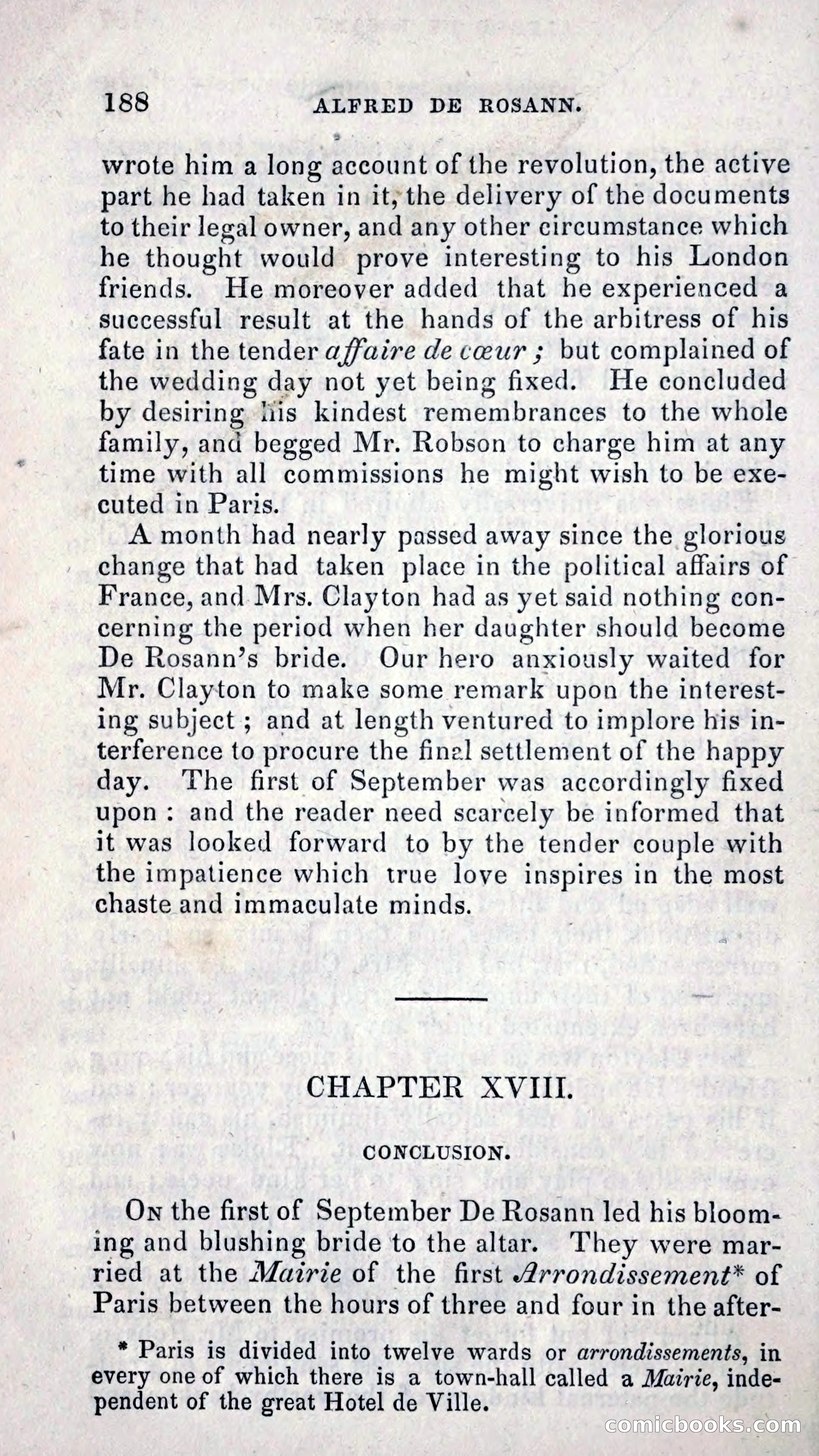
A restored page from Penny Dreadfuls, 1839. Page through the whole issue in the reader above.
📄 Transcribed text from this page (OCR, searchable)
Machine-transcribed from the original scan — historical spelling and the odd misread are preserved.
188 ALFRED DE ROSANN. wrote him a long account of the revolution, the active part he had taken in it, the delivery of the documents to their legal owner, and any other circumstance which he thought would prove interesting to his London friends. He moreover added that he experienced a successful result at the hands of the arbitress of his fate in the tender affaire de ceur ; but complained of the wedding day not yet being fixed. He concluded by desiring his kindest remembrances to the whole family, and begged Mr. Robson to charge him at any time with all commissions he might wish to be exe- cuted in Paris. A month had nearly passed away since the glorious change that had taken place in the political affairs of France, and Mrs. Clayton had as yet said nothing con- — cerning the period when her daughter should become De Rosann’s bride. Our hero anxiously waited for Mr. Clayton to make some remark upon the interest- ing subject ; and at length ventured to implore his in- — terference to procure the final settlement of the happy day. The first of September was accordingly fixed upon: and the reader need scarcely be informed that it was looked forward to by the tender couple with the impatience which true love inspires in the most chaste and immaculate minds. CHAPTER XVIII. CONCLUSION. On the first of September De Rosann led his bloom- ing and blushing bride to the altar. They were mar- ried at the Mairie of the first 4rrondissement* of Paris between the hours of three and four in the after- * Paris is divided into twelve wards or arrondissements, in every one of which there is a town-hall called a Mairie, inde- pendent of the great Hotel de Ville. COMME OOOKSaEO