
Penny Dreadfuls, 1839 · page 142 of 190
Penny Blood Serial Cover — page 142: what you’re looking at
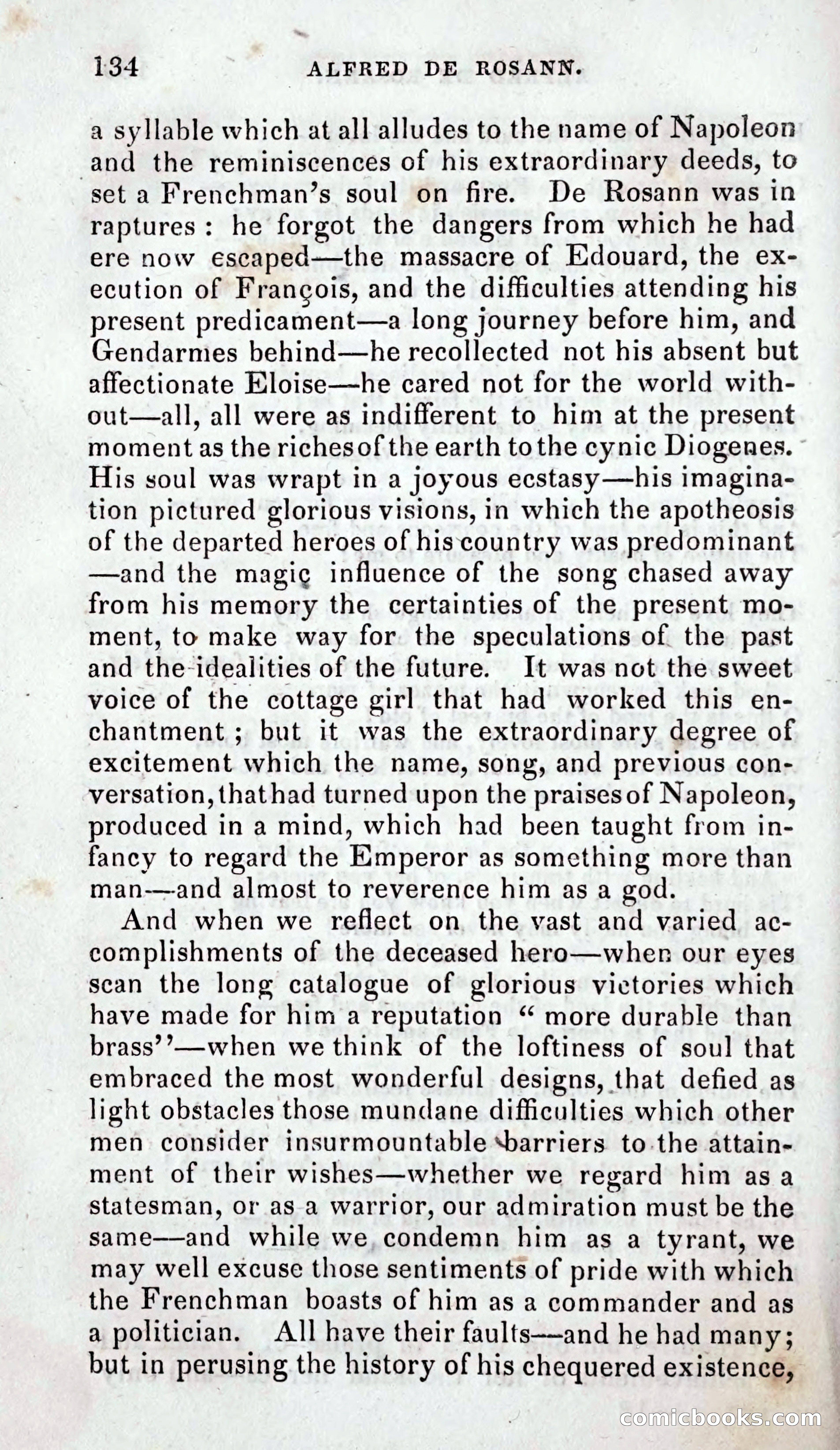
A restored page from Penny Dreadfuls, 1839. Page through the whole issue in the reader above.
📄 Transcribed text from this page (OCR, searchable)
Machine-transcribed from the original scan — historical spelling and the odd misread are preserved.
134 ALFRED DE ROSANN. a syllable which at all alludes to the name of Napoleon and the reminiscences of his extraordinary deeds, to set a Frenchman’s soul on fire. De Rosann was in raptures: he forgot the dangers from which he had ere now escaped—the massacre of Edouard, the ex- ecution of Francois, and the difficulties attending his present predicament—a long journey before him, and Gendarmes behind—he recollected not his absent but affectionate EKloise—he cared not for the world with- out—all, all were as indifferent to him at the present moment as the richesof the earth tothe cynic Diogenes. His soul was wrapt in a joyous ecstasy—his Imagina- tion pictured glorious visions, in which the apotheosis of the departed heroes of hiscountry was predominant —and the magic influence of the song chased away from his memory the certainties of the present mo- ment, to make way for the speculations of. the past and the-idealities of the future. It was not the sweet voice of the cottage girl that had worked this en- chantment ; but it was the extraordinary degree of excitement which the name, song, and previous con- versation, thathad turned upon the praisesof Napoleon, produced in a mind, which had been taught from in- fancy to regard the Emperor as something more than man-—and almost to reverence him as a god. And when we reflect on, the vast and varied ac- complishments of the deceased hero—when our eyes scan the long catalogue of glorious victories which have made for him a reputation “ more durable than brass’’—when we think of the loftiness of soul that embraced the most wonderful designs, that defied as light obstacles those mundane difficulties which other men consider insurmountable ‘barriers to-the attain- ment of their wishes—whether we regard him asa statesman, or as a warrior, our admiration must be the same—and while we, condemn him as a tyrant, we may well excuse those sentiments of pride with which the Frenchman boasts of him as a commander and as a politician. All have their faults—and he had many; but in perusing the history of his chequered existence, Gomichbooks Go =)