
Penny Dreadfuls, 1844 · page 213 of 278
Alfred; or, The Adventures of a French Gentleman — page 213: what you’re looking at
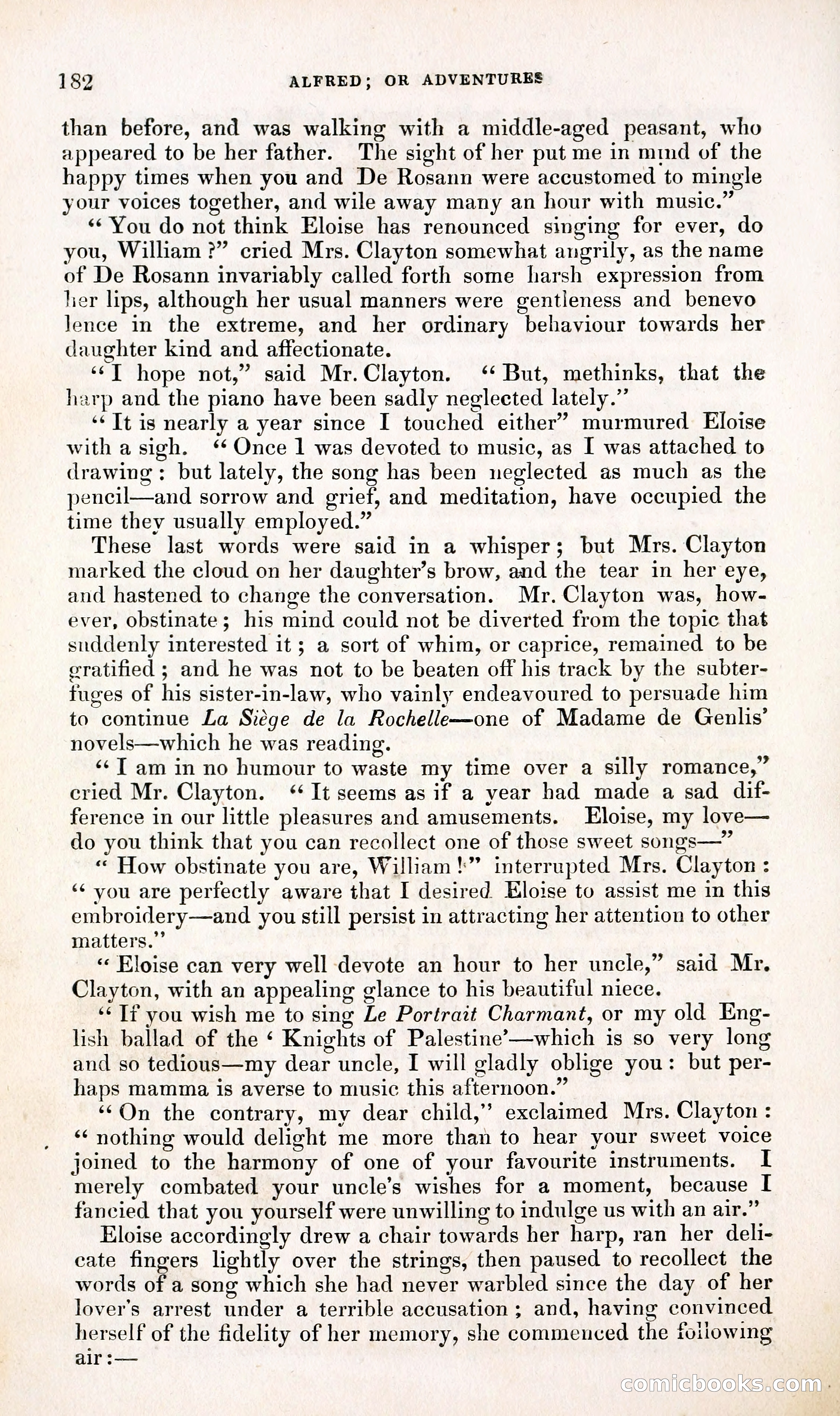
A restored page from Penny Dreadfuls, 1844. Page through the whole issue in the reader above.
📄 Transcribed text from this page (OCR, searchable)
Machine-transcribed from the original scan — historical spelling and the odd misread are preserved.
182 ALFRED; OR ADVENTURES than before, and was walking with a middle-aged peasant, who appeared to be her father. The sight of her put me in mind of the happy times when you and De Rosann were accustomed to mingle your voices together, and wile away many an hour with music.” ‘‘ You do not think Eloise has renounced singing for ever, do you, William ?” cried Mrs. Clayton somewhat angrily, as the name of De Rosann invariably called forth some harsh expression from hier lips, although her usual manners were gentleness and benevo lence in the extreme, and her ordinary behaviour towards her daughter kind and affectionate. ‘‘T hope not,” said Mr.Clayton. ‘‘ But, methinks, that the harp and the piano have been sadly neglected lately.” ‘Tt is nearly a year since I touched either” murmured Eloise with a sigh. ‘‘ Once 1 was devoted to music, as I was attached to drawing: but lately, the song has been neglected as much as the pencil—and sorrow and grief, and meditation, have occupied the time they usually employed.” These last words were said in a whisper; but Mrs. Clayton marked the cloud on her daughter’s brow, and the tear in her eye, and hastened to change the conversation. Mr. Clayton was, how- ever, obstinate; his mind could not be diverted from the topic that suddenly interested it ; a sort of whim, or caprice, remained to be cratified ; and he was not to be beaten off his track by the subter- fuges of his sister-in-law, who vainly endeavoured to persuade him to continue La Stége de la Rochelle—one of Madame de Genlis’ novels—which he was reading. ‘¢T am in no humour to waste my time over a silly romance,” cried Mr. Clayton. ‘It seems as if a vear had made a sad dif- ference in our little pleasures and amusements. Eloise, my love— do you think that you can recollect one of those sweet songs—” ‘« How obstinate you are, William!” interrupted Mrs. Clayton : ‘¢ you are perfectly aware that I desired Eloise to assist me in this embroidery—and you still persist in attracting her attention to other matters.” ‘«‘ Eloise can very well devote an hour to her uncle,” said Mr. Clayton, with an appealing glance to his beautiful niece. ‘¢ Ti you wish me to sing Le Portrait Charmant, or my old Eng- lish ballad of the ‘ Knights of Palestine’-—which is so very long and so tedious—my dear uncle, I will gladly oblige you: but per- haps mamma is averse to music this afternoon.” ‘‘On the contrary, my dear child,” exclaimed Mrs. Clayton : ‘‘ nothing would delight me more than to hear your sweet voice joined to the harmony of one of your favourite instruments. I merely combated your uncle’s wishes for a moment, because I fancied that you yourself were unwilling to indulge us with an air.” Eloise accordingly drew a chair towards her harp, ran her deli- cate fingers lightly over the strings, then paused to recollect the words of a song which she had never warbled since the day of her lover’s arrest under a terrible accusation ; and, having convinced herself of the fidelity of her memory, she commenced the foilowing air :— Gomicbdooksneco