
Penny Dreadfuls, 1867 · page 358 of 390
The Boy Soldier; Or, Garibaldi's Young Captain — page 358: what you’re looking at
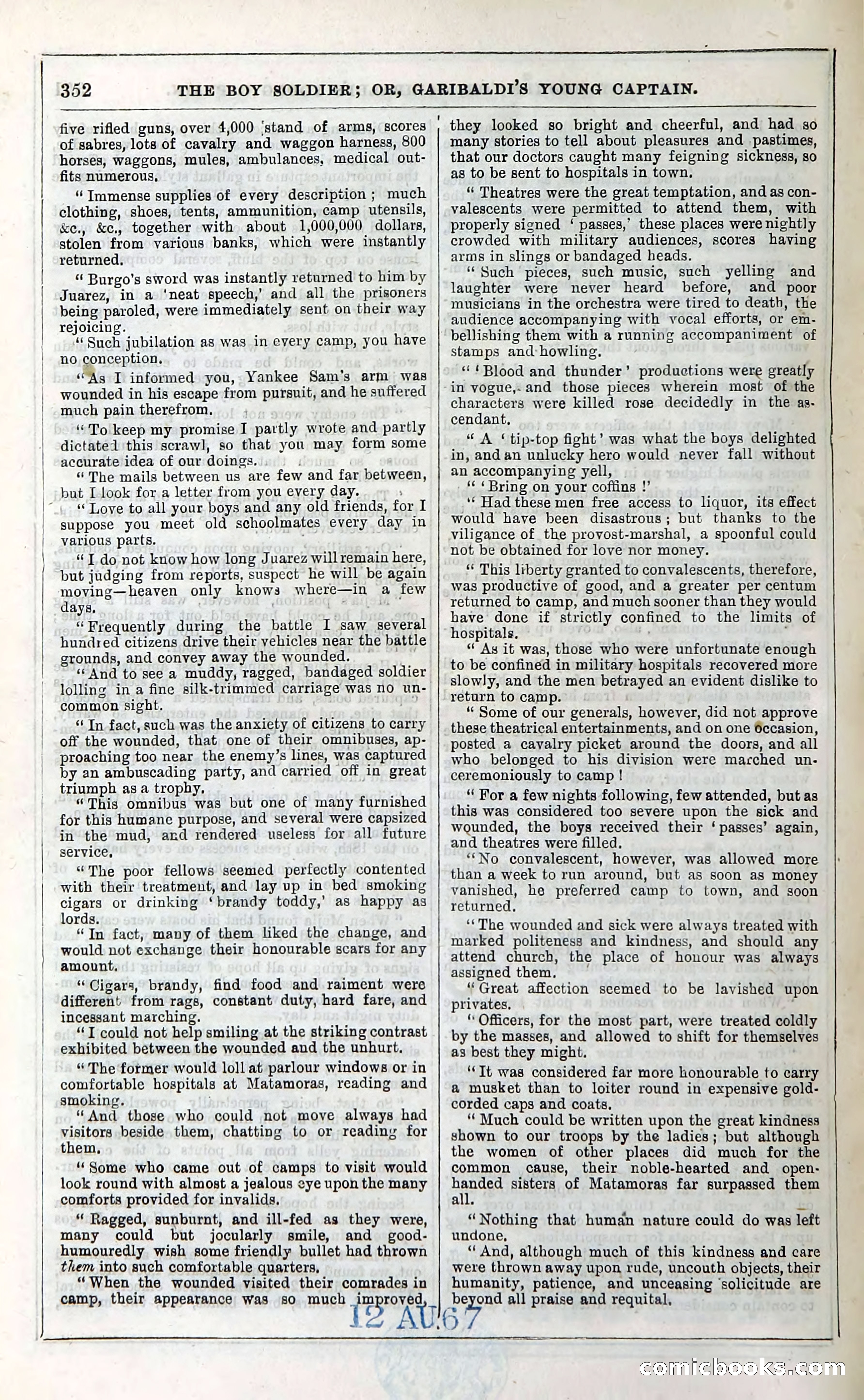
A restored page from Penny Dreadfuls, 1867. Page through the whole issue in the reader above.
📄 Transcribed text from this page (OCR, searchable)
Machine-transcribed from the original scan — historical spelling and the odd misread are preserved.
ABLE 352 eee THE BOY SOLDIER; OR, GARIBALDI’'S YOUNG CAPTAIN. a five rifled guns, over 4,000 ‘stand of arms, scores of sabres, lots of cavalry and waggon harness, 800 horses, waggons, mules, ambulances, medical out- fits numerous, ‘‘ Tmmense supplies of every description ; much clothing, shoes, tents, ammunition, camp utensils, &e., &c,, together with about 1,000,000 dollars, stolen from various banks, which were instantly returned, “ Burgo’s sword was instantly returned to him by Juarez, in a ‘neat speech,’ and all the prisoners being paroled, were immediately sent on their way rejoicing. ‘Such jubilation as was in every camp, you have no conception. “As I informed you, Yankee Sam’s arm was wounded in his escape from pursuit, and he suffered much pain therefrom. ‘“To keep my promise I partly wrote and partly dictated this scrawl, so that you may form some accurate idea of our doings. i “ The mails between us are few and far between, _ but [look for a letter from you every day. ‘Toye to all your boys and any old friends, for I suppose you meet old schoolmates every day in various parts. ; | “T do not know how long Juarez willremain here, but judging from reports, suspect he will be again moving—heaven only knows where—in a few days, : ne: “Frequently during the battle I saw several hundred citizens drive their yehicles near the battle grounds, and convey away the wounded. _ | ‘And to see a muddy, ragged, bandaged soldier lolling in a fine silk-trimmed carriage was no un- common sight. ‘In fact, such was the anxiety of citizens to carry off the wounded, that one of their omnibuses, ap- proaching too near the enemy’s lines, was captured by an ambuscading party, and carried off in great triumph as a trophy, “This omnibus was but one of many furnished for this humane purpose, and several were capsized in the mud, and rendered useless for all future service, “The poor fellows seemed perfectly contented with their treatment, and lay up in bed smoking cigars or drinking ‘brandy toddy,’ as happy as lords. “In fact, many of them liked the change, and would not exchange their honourable scars for any amount, “Cigars, brandy, find food and raiment were different from rags, constant duty, hard fare, and incessant marching. “T could not help smiling at the striking contrast exhibited between the wounded and the unhurt. “ The former would loll at parlour windows or in comfortable hospitals at Matamoras, reading and smoking. “And those who could not move always had visitors beside them, chatting to or reading for them, ‘‘Some who came out of camps to visit would look round with almost a jealous eye upon the many comforts provided for invalids, * Ragged, sunburnt, and ill-fed as they were, many could but jocularly smile, and good- humouredly wish some friendly bullet had thrown them into such comfortable quarters, “When the wounded visited their comrades in | they looked so bright and cheerful, and had so many stories to tell about pleasures and pastimes, that our doctors caught many feigning sickness, so as to be sent to hospitals in town. “ Theatres were the great temptation, and as con- valescents were permitted to attend them, with properly signed ‘ passes,’ these places were nightly crowded with military audiences, scores having arms in slings or bandaged heads. ‘“ Such pieces, such music, such yelling and laughter were never heard before, and poor musicians in the orchestra were tired to death, the audience accompanying with vocal efforts, or em- bellishing them with a running accompaniment of stamps and: howling. ‘¢Blood and thunder’ productions were greatly in vogue,-and those pieces wherein most of the characters were killed rose decidedly in the as- cendant, “ A ‘tip-top fight’ was what the boys delighted in, and an unlucky hero would never fall without an accompanying yell, « «Bring on your coffins !’ ‘* Had these men free access to liquor, its effect would have been disastrous; but thanks to the viligance of the provost-marshal, a spoonful could not be obtained for love nor money. “ This liberty granted to convalescents, therefore, was productive of good, and a greater per centum returned to camp, and much sooner than they would have done if strictly confined to the limits of hospitals, * As it was, those who were unfortunate enough to be confined in military hospitals recovered more slowly, and the men betrayed an evident dislike to return to camp. ‘Some of our generals, however, did not approve these theatrical entertainments, and on one Occasion, posted a cayalry picket around the doors, and all who belonged to his division were marched un- ceremoniously to camp ! “ Hor a few nights following, few attended, but as this was considered too severe upon the sick and wounded, the boys received their ‘ passes’ again, and theatres were filled. ‘*No convalescent, however, was allowed more than a week to run around, but as soon as money vanished, he preferred camp to town, and soon returned. ‘‘The wounded and sick were always treated with marked politeness and kindness, and should any attend church, the place of honour was always assigned them, “Great affection seemed to be lavished upon privates. “ Officers, for the most part, were treated coldly by the masses, and allowed to shift for themselves as best they might. ‘Tt was considered far more honourable to carry a musket than to loiter round in expensive gold- corded caps and coats. “Much could be written upon the great kindness shown to our troops by the ladies; but although the women of other places did much for the common cause, their noble-hearted and open- handes sisters of Matamoras far surpassed them all, “Nothing that human nature could do was left undone, “And, although much of this kindness and care were thrown away upon rude, uncouth objects, their humanity, patience, and unceasing ‘solicitude are camp, their appearance was so much toray dal all praise and requital, —— = catia Eomichbooks (E©)