
Penny Dreadfuls, 1895 · page 314 of 391
Belle-Rose — page 314: what you’re looking at
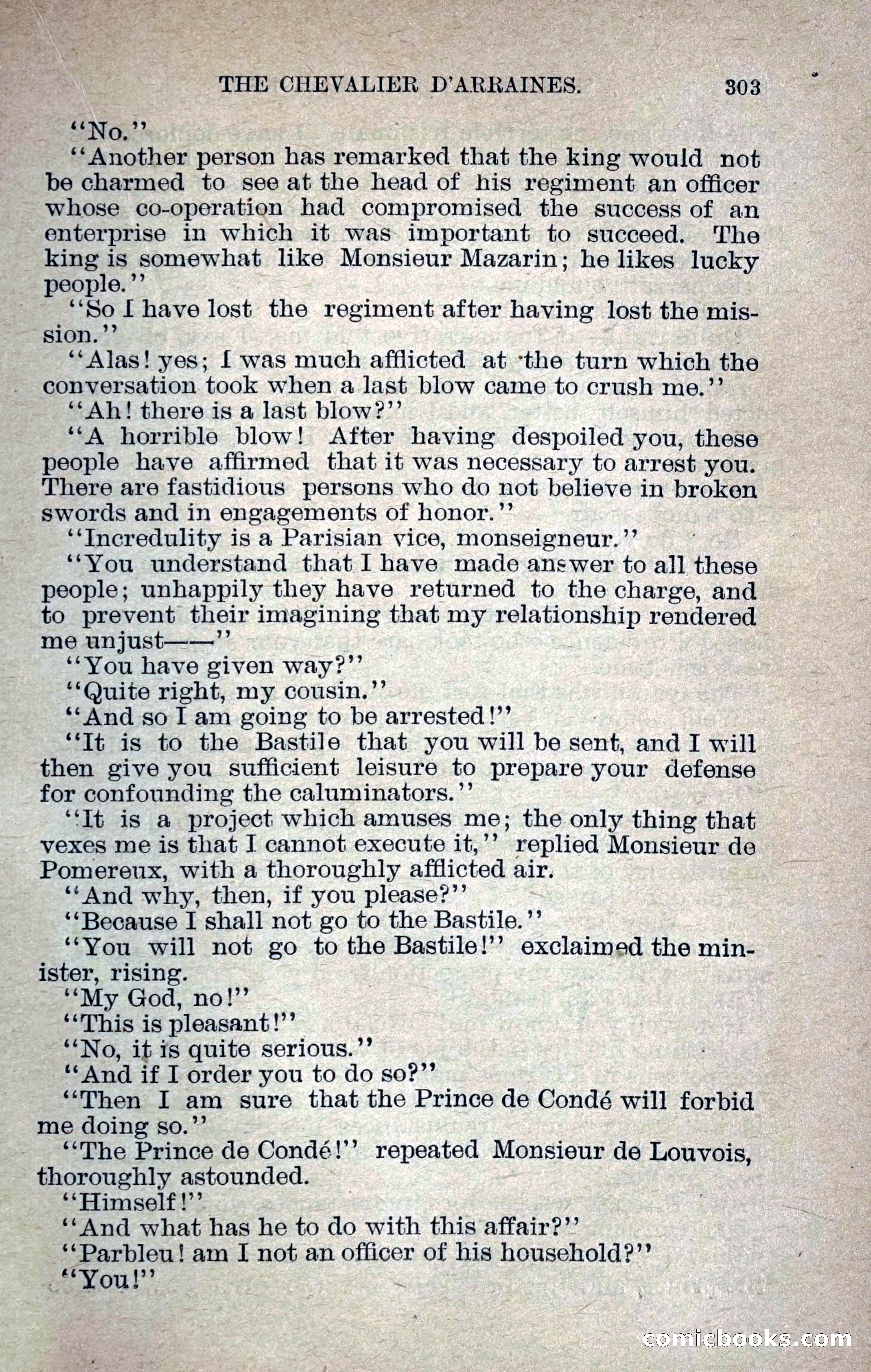
A restored page from Penny Dreadfuls, 1895. Page through the whole issue in the reader above.
📄 Transcribed text from this page (OCR, searchable)
Machine-transcribed from the original scan — historical spelling and the odd misread are preserved.
THE CHEVALIER D’ARRAINES. 803 “CNo.’’ . ‘‘Another person has remarked that the king would not be charmed to see at the head of his regiment an officer whose co-operation had compromised the success of an enterprise in which it was important to succeed. The king is somewhat like Monsieur Mazarin; he likes lucky people. ’”’ So I have lost the regiment after having ‘lost the mis- sion.’ ‘‘Alas! yes; [ was much afflicted at ‘the turn which the conversation took when a last blow came to crush me.’’. ‘“Ah! there is a last blow?’’ ‘‘A horrible blow! After having despoiled you, theta people have affirmed that it was necessary to arrest you. There are fastidious persons who do not believe in broken swords and in engagements of honor.”’ ‘‘Incredulity is a Parisian vice, monseigneur.”’ ‘““You understand that Il have made answer to all these people; unhappily they have returned to the charge, and to prevent their imagining that my relationship rendered me unjust——”’ ‘“You have given way?”’ ‘Quite right, my cousin.’’ ‘‘And so lam going to be arrested!”’ . “It is to the Bastile that you will be sent, and I will then give you sufficient leisure to prepare your defense for confounding the caluminators. ’ ‘It is a project which amuses me; the only thing that vexes me is that I cannot execute it,’’ ‘replied Monsieur de Pomereux, with a thoroughly afflicted air. ** And why, then, if you please?’’ ‘*Because I shall not go to the Bastile.’’ ‘You will not go to the Bastile!’’ exclaimed the min- © ister, rising. “My God, no!’ ‘This is pleasant! i ‘‘No, it is quite serious.’ “And if I order you to i so?”’ “Then I am sure that the Prince de Condé will forbid me doing so.’ “The Prince de Condé!’’ repeated Monsieur de Louvois, thoroughly astounded. ‘Himself !’” ‘‘And what has he to do with this affair?”’ ‘“Parbleu! am I not an officer of his household?’’ (E(oylpalirel ofeve) cS co