
Penny Dreadfuls, 1901 · page 32 of 324
D'Artagnan, the King Maker — page 32: what you’re looking at
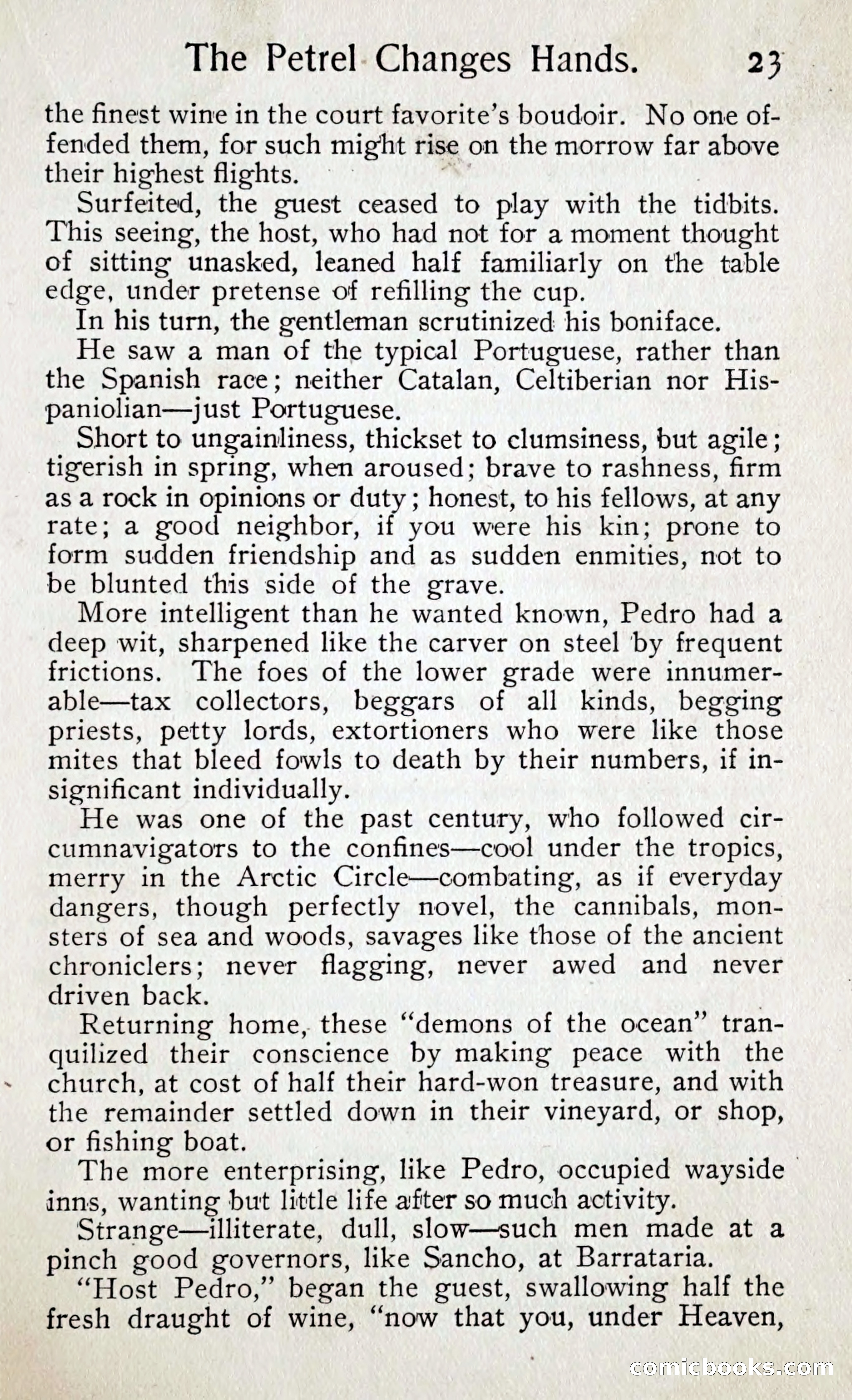
A restored page from Penny Dreadfuls, 1901. Page through the whole issue in the reader above.
📄 Transcribed text from this page (OCR, searchable)
Machine-transcribed from the original scan — historical spelling and the odd misread are preserved.
The Petrel. Changes Hands. 23 the finest wine in the court favorite’s boudoir. No one of- fended them, for such might rise on the morrow far above their highest flights. shal , Surfeited, the guest ceased to play with the tidbits. This seeing, the host, who had not for a moment thought of sitting unasked, leaned half familiarly on the table edge, under pretense of refilling the cup. In his turn, the gentleman scrutinized his boniface. He saw a man of the typical Portuguese, rather than the Spanish race; neither Catalan, Celtiberian nor His- paniolian—just Portuguese. Short to ungainliness, thickset to clumsiness, but agile; tigerish in spring, when aroused; brave to rashness, firm as a rock in opinions or duty; honest, to his fellows, at any rate; a good neighbor, if you were his kin; prone to form sudden friendship and as sudden enmities, not to be blunted this side of the grave. More intelligent than he wanted known, Pedro had a deep wit, sharpened like the carver on steel by frequent frictions. ‘The foes of the lower grade were innumer- able—tax collectors, beggars of all kinds, begging priests, petty lords, extortioners who were like those mites that bleed fowls to death by their numbers, if in- significant individually. He was one of the past century, who followed cir- cumnavigators to the confines—cool under the tropics, merry in the Arctic Circle—combating, as if everyday dangers, though perfectly novel, the cannibals, mon- sters of sea and woods, savages like those of the ancient chroniclers; never flagging, never awed and never driven back. | Returning home, these “demons of the ocean” tran- quilized their conscience by making peace with the church, at cost of half their hard-won treasure, and with the remainder settled down in their vineyard, or shop, or fishing boat. The more enterprising, like Pedro, occupied wayside inns, wanting but little life after so much activity. Strange—illiterate, dull, slow—such men made at a pinch good governors, like Sancho, at Barrataria. “Host Pedro,” began the guest, swallowing half the fresh draught of wine, “now that you, under Heaven, Eomichooksico im