
Penny Dreadfuls, 1900 · page 166 of 336
The Dugdale Millions — page 166: what you’re looking at
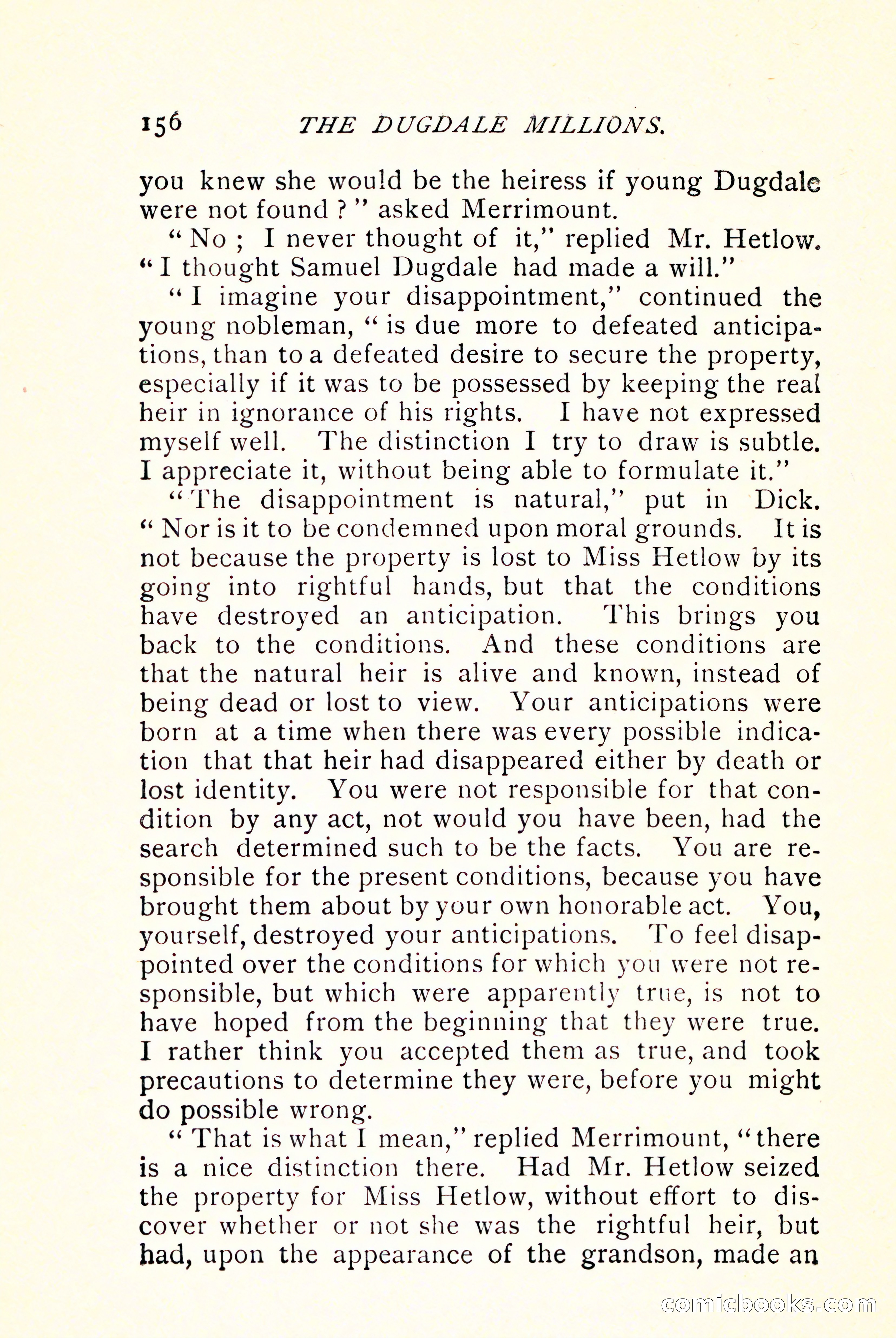
A restored page from Penny Dreadfuls, 1900. Page through the whole issue in the reader above.
📄 Transcribed text from this page (OCR, searchable)
Machine-transcribed from the original scan — historical spelling and the odd misread are preserved.
156 THE DUGDALE MILLIONS. you knew she would be the heiress if young Dugdale were not found ?”’ asked Merrimount. “No; I never thought of it,” replied Mr. Hetlow. “T thought Samuel Dugdale had made a will.” “T imagine your disappointment,” continued the young nobleman, ‘‘is due more to defeated anticipa- tions, than toa defeated desire to secure the property, especially if it was to be possessed by keeping the real heir in ignorance of his rights. I have not expressed myself well. ‘The distinction I try to draw is subtle. I appreciate it, without being able to formulate it.” “The disappointment 1s natural,’ put in Dick. “ Norisit to be condemned upon moral grounds, Itis not because the property is lost to Miss Hetlow by its going into rightful hands, but that the conditions have destroyed an anticipation. This brings you back to the conditions. And these conditions are that the natural heir is alive and known, instead of being dead or lost to view. Your anticipations were born at atime when there was every possible indica- tion that that heir had disappeared either by death or lost identity. You were not responsible for that con- dition by any act, not would you have been, had the search determined such to be the facts. You are re- sponsible for the present conditions, because you have brought them about by your own honorableact. You, yourself, destroyed your anticipations. ‘To feel disap- pointed over the conditions for which you were not re- sponsible, but which were apparently true, is not to have hoped from the beginning that they were true. I rather think you accepted them as true, and took precautions to determine they were, before you might do possible wrong. “ That is what I mean,” replied Merrimount, “there is a nice distinction there. Had Mr. Hetlow seized the property for Miss Hetlow, without effort to dis- cover whether or not she was the rightful heir, but had, upon the appearance of the grandson, made an Comicboolks C@ 3}