
Penny Dreadfuls, 1890 · page 313 of 364
Her Royal Lover: A Novel — page 313: what you’re looking at
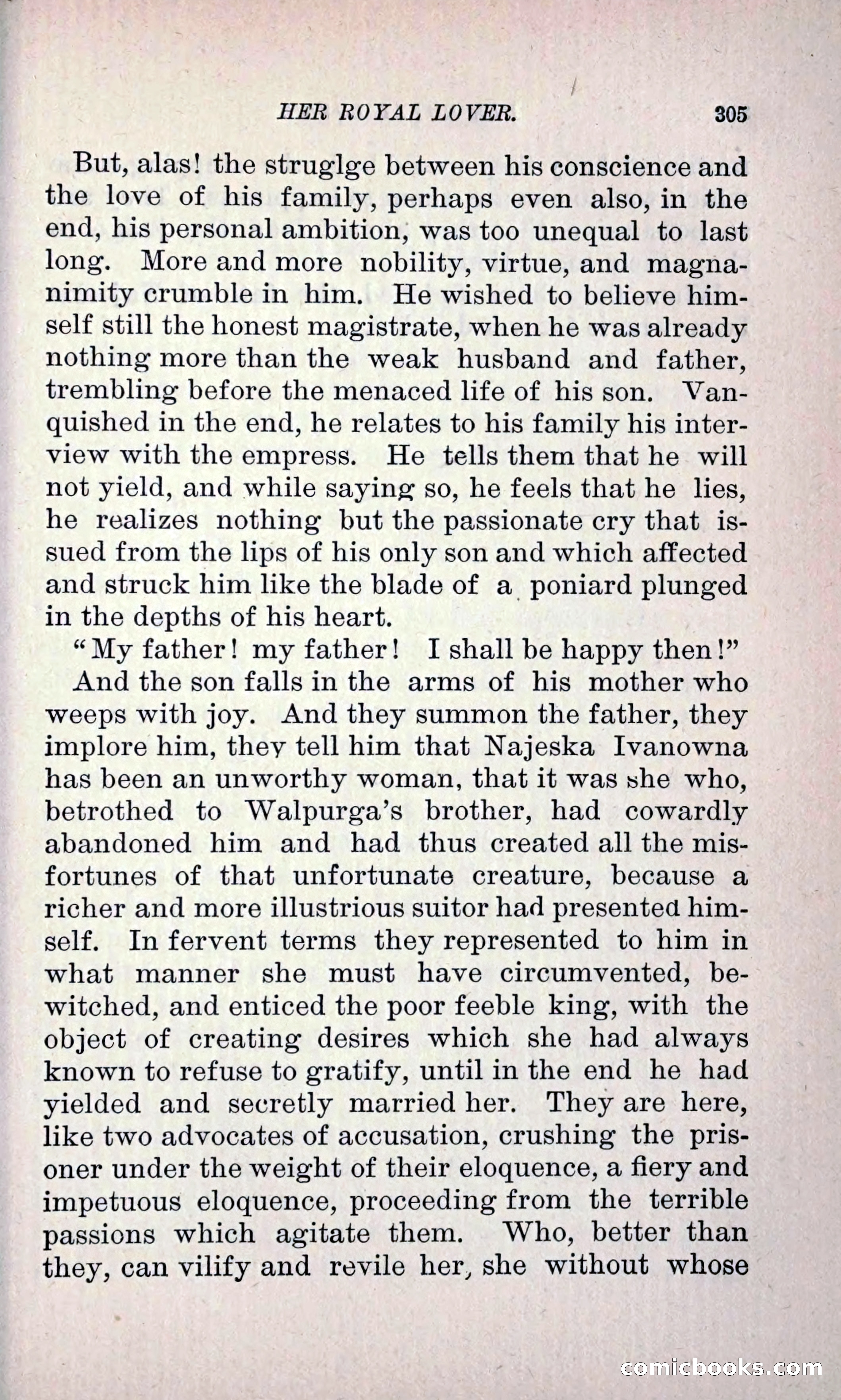
A restored page from Penny Dreadfuls, 1890. Page through the whole issue in the reader above.
📄 Transcribed text from this page (OCR, searchable)
Machine-transcribed from the original scan — historical spelling and the odd misread are preserved.
HER ROYAL LOVER. 305 But, alas! the struglge between his conscience and the love of his family, perhaps even also, in the end, his personal ambition, was too unequal to last long. More and more nobility, virtue, and magna- nimity crumble in him. He wished to believe him- self still the honest magistrate, when he was already nothing more than the weak husband and father, trembling before the menaced life of his son. Van- quished in the end, he relates to his family his inter- view with the empress. He tells them that he will not yield, and while saying so, he feels that he lies, he realizes nothing but the passionate cry that is- sued from the lips of his only son and which affected and struck him like the blade of a poniard plunged in the depths of his heart. “My father! my father! I shall be happy then!” And the son falls in the arms of his mother who weeps with joy. And they summon the father, they implore him, they tell him that Najeska Ivanowna has been an unworthy woman, that it was she who, betrothed to Walpurga’s brother, had cowardly abandoned him and had thus created all the mis- fortunes of that unfortunate creature, because a richer and more illustrious suitor had presented him- self. In fervent terms they represented to him in what manner she must have circumvented, be- witched, and enticed the poor feeble king, with the object of creating desires which she had always known to refuse to gratify, until in the end he had yielded and secretly married her. They are here, like two advocates of accusation, crushing the pris- oner under the weight of their eloquence, a fiery and impetuous eloquence, proceeding from the terrible passions which agitate them. Who, better than they, can vilify and revile her, she without whose (e(oyaniicelevexo <S