
Penny Dreadfuls, 1890 · page 253 of 284
The Illegal Marriage — page 253: what you’re looking at
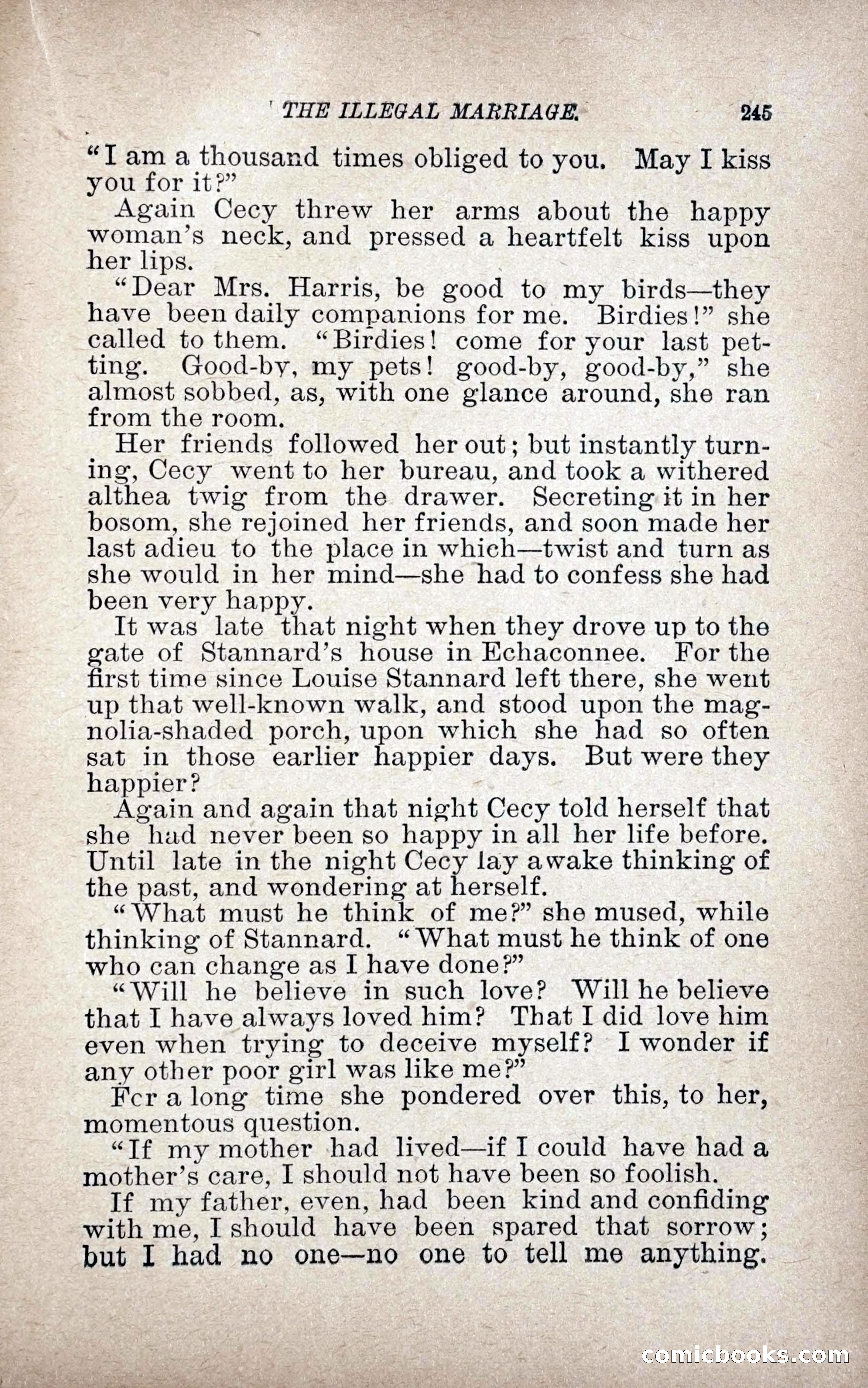
A restored page from Penny Dreadfuls, 1890. Page through the whole issue in the reader above.
📄 Transcribed text from this page (OCR, searchable)
Machine-transcribed from the original scan — historical spelling and the odd misread are preserved.
' THE ILLEGAL MARRIAGE. O45 “Tam a thousand times obliged to you. May I kiss you for it?” Again Cecy threw her arms about the happy woman’s neck, and pressed a heartfelt kiss upon her lips. “Dear Mrs. Harris, be good to my birds—they have been daily companions forme. Birdies!” she called to them. “Birdies! come for your last pet- ting. Good-by, my pets! good-by, good-by,” she almost sobbed, as, with one glance around, she ran from the room. Her friends followed her out; but instantly turn- ing, Cecy went to her bureau, and took a withered althea twig from the drawer. Secreting it in her bosom, she rejoined her friends, and soon made her last adieu to the place in which—twist and turn as she would in her mind—she had to confess she had been very happy. It was late that night when they drove up to the gate of Stannard’s house in Echaconnee. For the first time since Louise Stannard left there, she went up that well-known walk, and stood upon the mag- nolia-shaded porch, upon which she had so often sat in those earlier happier days. But were they happier? Again and again that night Cecy told herself that she had never been so happy in all her life before. Until late in the night Cecy lay awake thinking of the past, and wondering at herself. “What must he think of me?” she mused, while thinking of Stannard. “What must he think of one who can change as I have done?” “Will he believe in such love? Will he believe that I have always loved him? That Idid love him even when trying to deceive myself? I wonder if any other poor girl was like me?” Fcr along time she pondered over this, to her, momentous question. “Tf my mother had lived—if I could have had a mother’s care, I should not have been so foolish. If my father, even, had been kind and confiding with me, I should have been spared that sorrow; but I had no one—no one to tell me anything. Eomicboo S} co