
Penny Dreadfuls, 1854 · page 118 of 394
Joseph Wilmot, or, The Memoirs of a Man-Servant — page 118: what you’re looking at
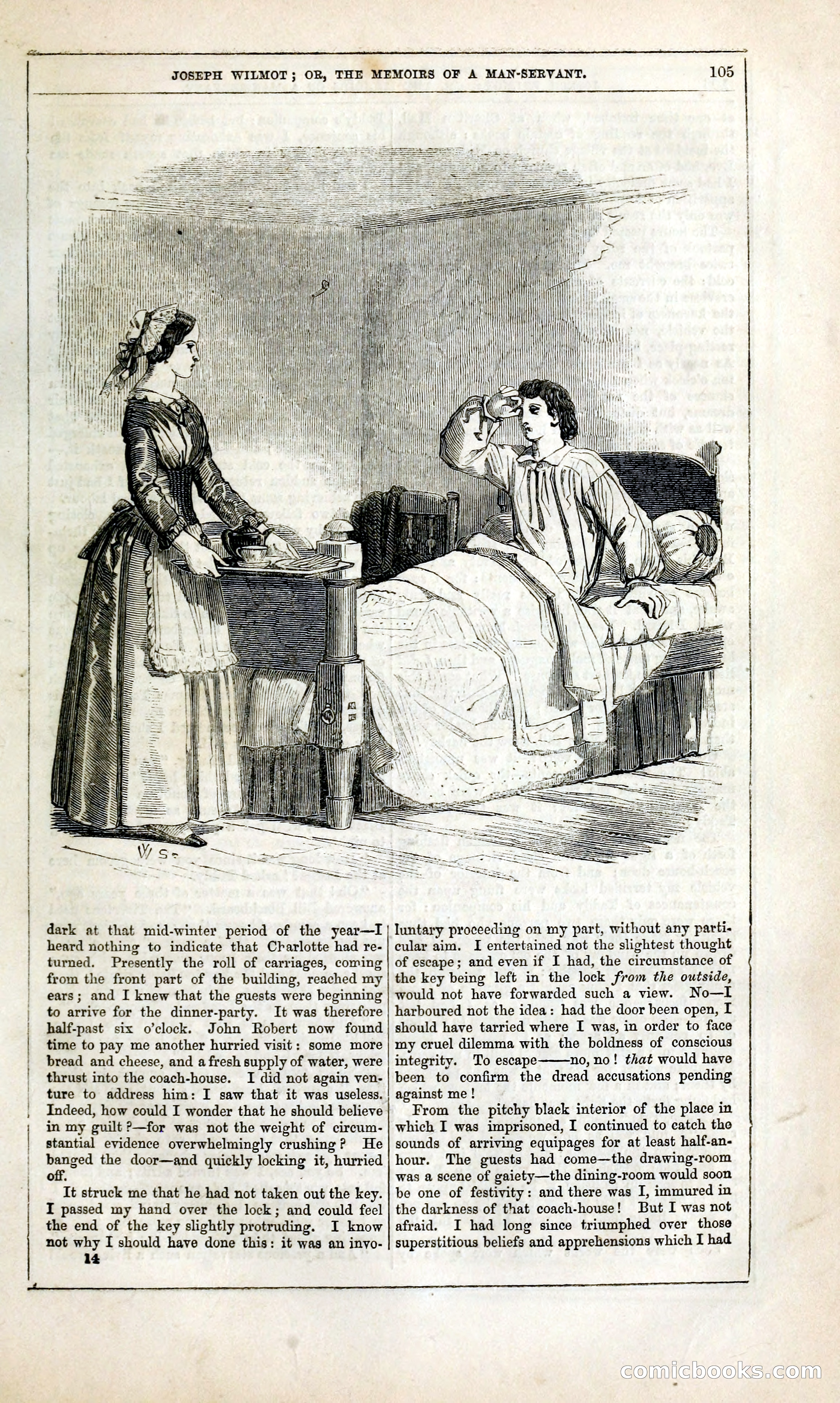
A restored page from Penny Dreadfuls, 1854. Page through the whole issue in the reader above.
📄 Transcribed text from this page (OCR, searchable)
Machine-transcribed from the original scan — historical spelling and the odd misread are preserved.
JOSEPH WILMOT; OR, THE MEMOIRS OF A MAN-SERVANT. —_—_——— (i Hith ile [ He dl ua ba i" ‘ “ 8 cay 4 aa) , ale q es . a of ~ : ay 7 ; i] j Tl Hit +=; Ne \' 2 Thy, nl \ fs y Hi! ~ ‘ ae fs , Wily byy a 2, WALLS \\\\ Wie Aad Hi ~ ‘o Y Y \\\ y ff] / ‘ Ny eT | | ~ \ PES 4 ANY ~s \) ( A ol _— ww = — — . ; = 7 i = . os t { a = = D \ , : : a APA? Jhb Ab AAA \\ o , nad “2 ‘ t © Aa fo , 7 = a | ] ‘ ‘ a 4 "fh ff, y - se al oy i \ \ | \ ‘ : . o - - rie a 2 5 = ln dark at that mid-winter period of the year—I heard nothing to indicate that Charlotte had re- turned. Presently the roll of carriages, coming from the front part of the building, reached my ears; and I knew that the guests were beginning to arrive for the dinner-party. It was therefore half-past six o’clock. John Robert now found time to pay me another hurried visit: some more bread and cheese, and a fresh supply of water, were thrust into the coach-house. I did not again ven- ture to address him: I saw that it was useless. Indeed, how could I wonder that he should believe in my guilt >—for was not the weight of circum- stantial evidence overwhelmingly crushing? He ep the door—and quickly locking it, hurried It struck me that he had not taken out the key. I passed my hand over the lock; and could feel the end of the key slightly protruding. I know not why I should have done this: it was an invo- 14 ue Ht) a uf Me i — 105 ce i < i : +i ae ms — luntary proceeding on my part, without any parti- cular aim. I entertained not the slightest thought of escape; and even if I had, the circumstance of the key being left in the lock from the outside, would not have forwarded such a view. No—I harboured not the idea: had the door been open, I should have tarried where I was, in order to face my cruel dilemma with the boldness of conscious integrity. To escape no, no! that would have been to confirm the dread accusations pending against me! From the pitchy black interior of the place in which I was imprisoned, I continued to eatch the sounds of arriving equipages for at least half-an- hour. The guests had come—the drawing-room was a scene of gaiety—the dining-room would soon be one of festivity: and there was I, immured in the darkness of that coach-house! But I was not afraid. I had long since triumphed over those superstitious beliefs “and apprehensions which I had eae en a a a ana eee ie RES ERIS TTS CGOMICNOO “S co