
Penny Dreadfuls, 1860 · page 98 of 394
The Mysteries of the Court of London — page 98: what you’re looking at
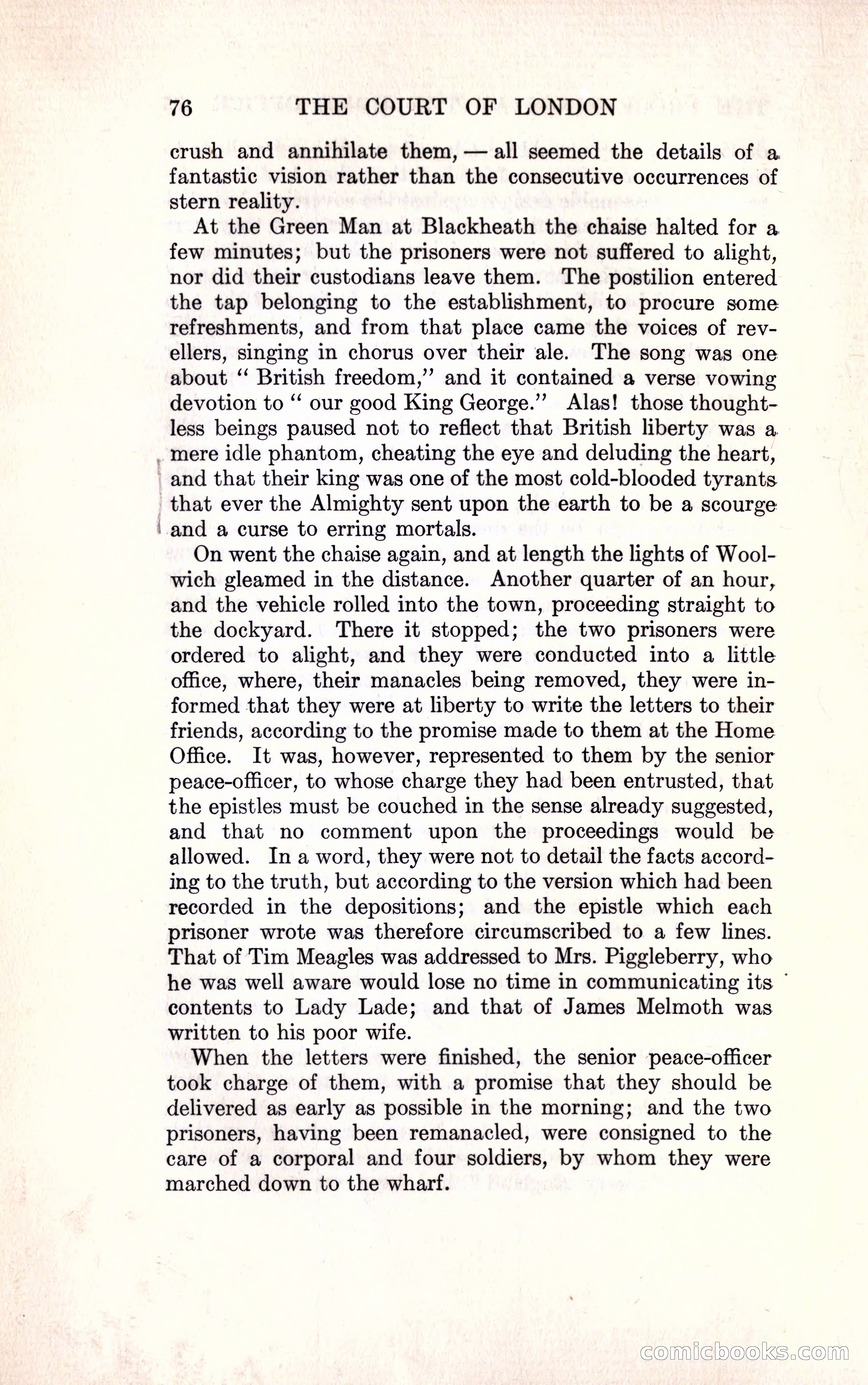
A restored page from Penny Dreadfuls, 1860. Page through the whole issue in the reader above.
📄 Transcribed text from this page (OCR, searchable)
Machine-transcribed from the original scan — historical spelling and the odd misread are preserved.
76 THE COURT OF LONDON crush and annihilate them, — all seemed the details of a fantastic vision rather than the consecutive occurrences of stern reality. At the Green Man at Blackheath the chaise halted for a few minutes; but the prisoners were not suffered to alight, nor did their custodians leave them. The postilion entered the tap belonging to the establishment, to procure some refreshments, and from that place came the voices of rev- ellers, singing in chorus over their ale. The song was one about “‘ British freedom,”’ and it contained a verse vowing devotion to “ our good King George.’”’ Alas! those thought- less beings paused not to reflect that British liberty was a _mere idle phantom, cheating the eye and deluding the heart, tee and that their king was one of the most cold-blooded tyrants that ever the Almighty sent upon the earth to be a scourge and a curse to erring mortals. On went the chaise again, and at length the lights of Wool- wich gleamed in the distance. Another quarter of an hour, and the vehicle rolled into the town, proceeding straight to the dockyard. There it stopped; the two prisoners were ordered to alight, and they were conducted into a little office, where, their manacles being removed, they were in- formed that they were at liberty to write the letters to their friends, according to the promise made to them at the Home Office. It was, however, represented to them by the senior peace-officer, to whose charge they had been entrusted, that the epistles must be couched in the sense already suggested, and that no comment upon the proceedings would be allowed. In a word, they were not to detail the facts accord- ing to the truth, but according to the version which had been recorded in the depositions; and the epistle which each prisoner wrote was therefore circumscribed to a few lines. That of Tim Meagles was addressed to Mrs. Piggleberry, who he was well aware would lose no time in communicating its © contents to Lady Lade; and that of James Melmoth was written to his poor wife. When the letters were finished, the senior peace-officer took charge of them, with a promise that they should be delivered as early as possible in the morning; and the two prisoners, having been remanacled, were consigned to the care of a corporal and four soldiers, by whom they were marched down to the wharf. COmicboooks (C(O)