
Penny Dreadfuls, 1860 · page 239 of 394
The Mysteries of the Court of London — page 239: what you’re looking at
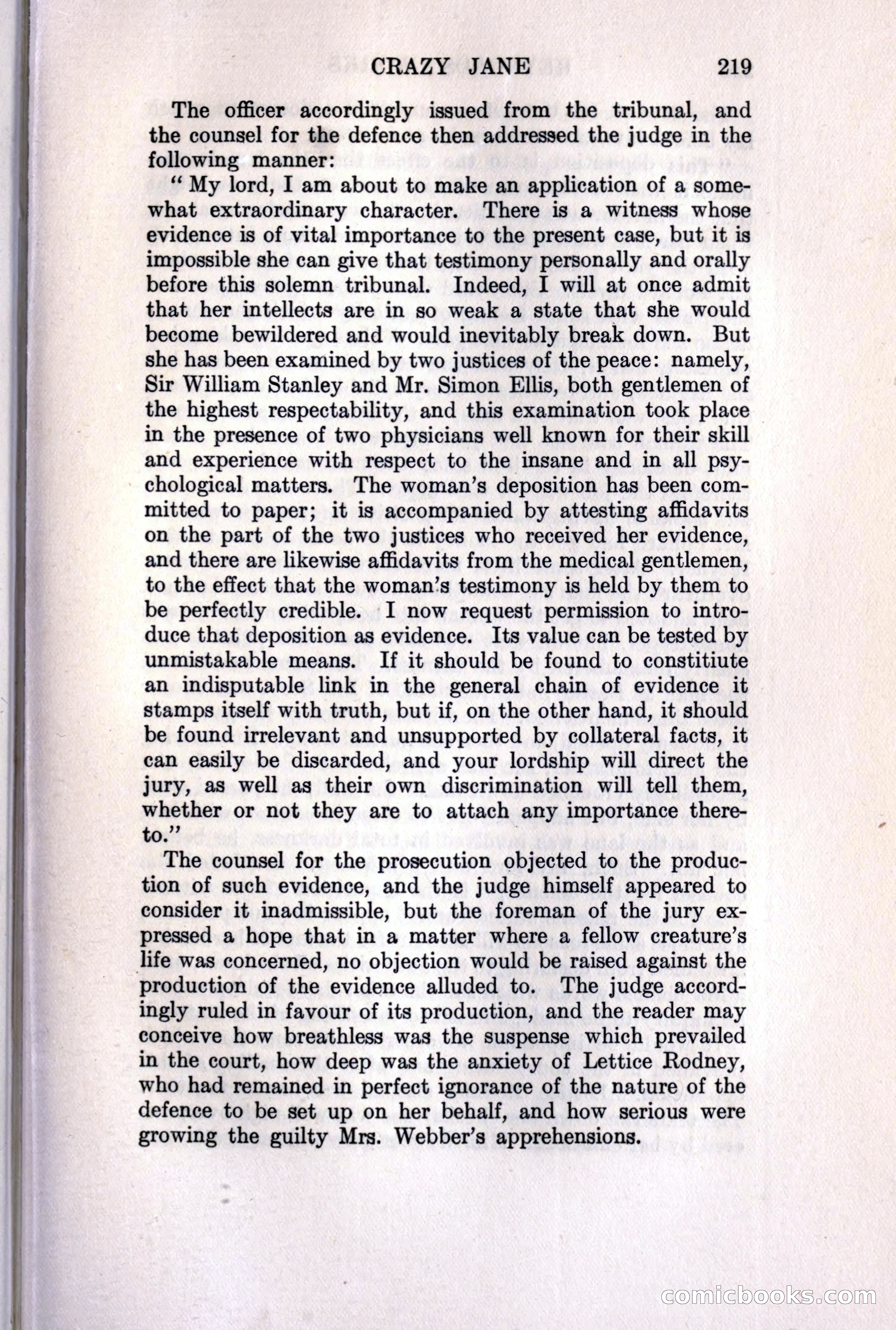
A restored page from Penny Dreadfuls, 1860. Page through the whole issue in the reader above.
📄 Transcribed text from this page (OCR, searchable)
Machine-transcribed from the original scan — historical spelling and the odd misread are preserved.
CRAZY JANE 219 The officer accordingly issued from the tribunal, and the counsel for the defence then addressed the judge in the following manner: “* My lord, I am about to make an application of a some- what extraordinary character. There is a witness whose evidence is of vital importance to the present case, but it is impossible she can give that testimony personally and orally before this solemn tribunal. Indeed, I will at once admit that her intellects are in so weak a state that she would become bewildered and would inevitably break down. But she has been examined by two justices of the peace: namely, Sir William Stanley and Mr. Simon Ellis, both gentlemen of the highest respectability, and this examination took place in the presence of two physicians well known for their skill and experience with respect to the insane and in all psy- chological matters. The woman’s deposition has been com- mitted to paper; it is accompanied by attesting affidavits on the part of the two justices who received her evidence, and there are likewise affidavits from the medical gentlemen, to the effect that the woman’s testimony is held by them to be perfectly credible. I now request permission to intro- duce that deposition as evidence. Its value can be tested by unmistakable means. If it should be found to constitiute an indisputable link in the general chain of evidence it stamps itself with truth, but if, on the other hand, it should be found irrelevant and unsupported by collateral facts, it can easily be discarded, and your lordship will direct the jury, as well as their own discrimination will tell them, whether or not they are to attach any importance there- to.’’ ’ The counsel for the prosecution objected to the produc- tion of such evidence, and the judge himself appeared to consider it inadmissible, but the foreman of the jury ex- pressed a hope that in a matter where a fellow creature’s life was concerned, no objection would be raised against the production of the evidence alluded to. The judge accord- ingly ruled in favour of its production, and the reader may conceive how breathless was the suspense which prevailed in the court, how deep was the anxiety of Lettice Rodney, who had remained in perfect ignorance of the nature of the defence to be set up on her behalf, and how serious were growing the guilty Mrs. Webber’s apprehensions. ECORNICLOO (E©) mM