
Penny Dreadfuls, 1900 · page 132 of 294
Should She Have Left Him? — page 132: what you’re looking at
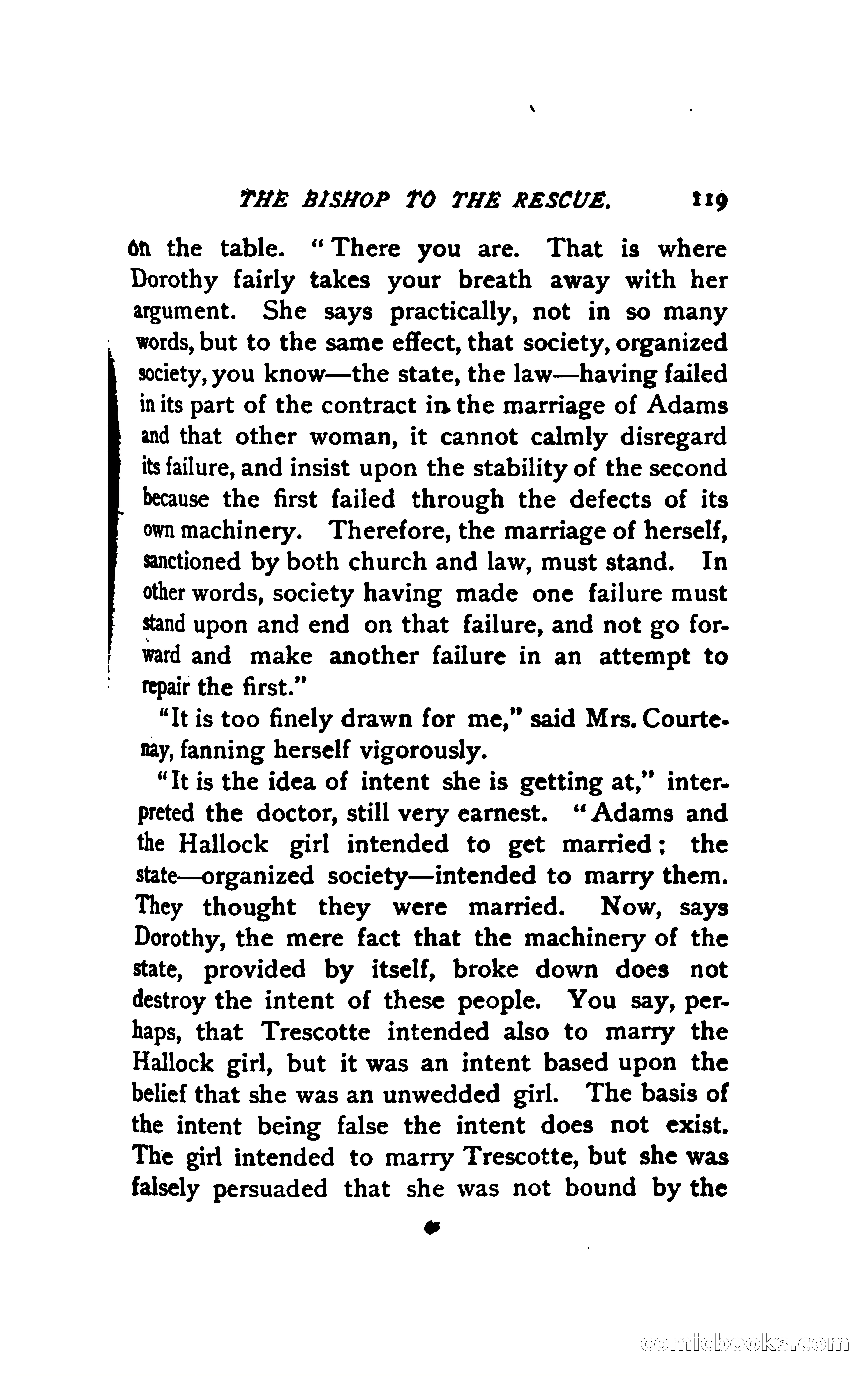
A restored page from Penny Dreadfuls, 1900. Page through the whole issue in the reader above.
📄 Transcribed text from this page (OCR, searchable)
Machine-transcribed from the original scan — historical spelling and the odd misread are preserved.
_. ——; THE BISHOP TO THE RESCUE. 119 6n the table. “There you are. That is where Dorothy fairly takes your breath away with her argument. She says practically, not in so many words, but to the same effect, that society, organized society, you know—the state, the law—having failed nits part of the contract inthe marriage of Adams and that other woman, it cannot calmly disregard its failure, and insist upon the stability of the second because the first failed through the defects of its own machinery. Therefore, the marriage of herself, sanctioned by both church and law, must stand. In other words, society having made one failure must stand upon and end on that failure, and not go for- ward and make another failure in an attempt to repair the first.” “It is too finely drawn for me,” said Mrs. Courte- nay, fanning herself vigorously. “It is the idea of intent she is getting at,” inter- preted the doctor, still very earnest. ‘‘ Adams and the Hallock girl intended to get married; the state—organized society—intended to marry them. They thought they were married. Now, says Dorothy, the mere fact that the machinery of the state, provided by itself, broke down does not destroy the intent of these people. You say, per- haps, that Trescotte intended also to marry the Hallock girl, but it was an intent based upon the belief that she was an unwedded girl. The basis of the intent being false the intent does not exist. The girl intended to marry Trescotte, but she was falsely persuaded that she was not bound by the sd COIN @ LOOO cS (GO)