
Penny Dreadfuls, 1870 · page 239 of 392
The Works of George W. M. Reynolds — page 239: what you’re looking at
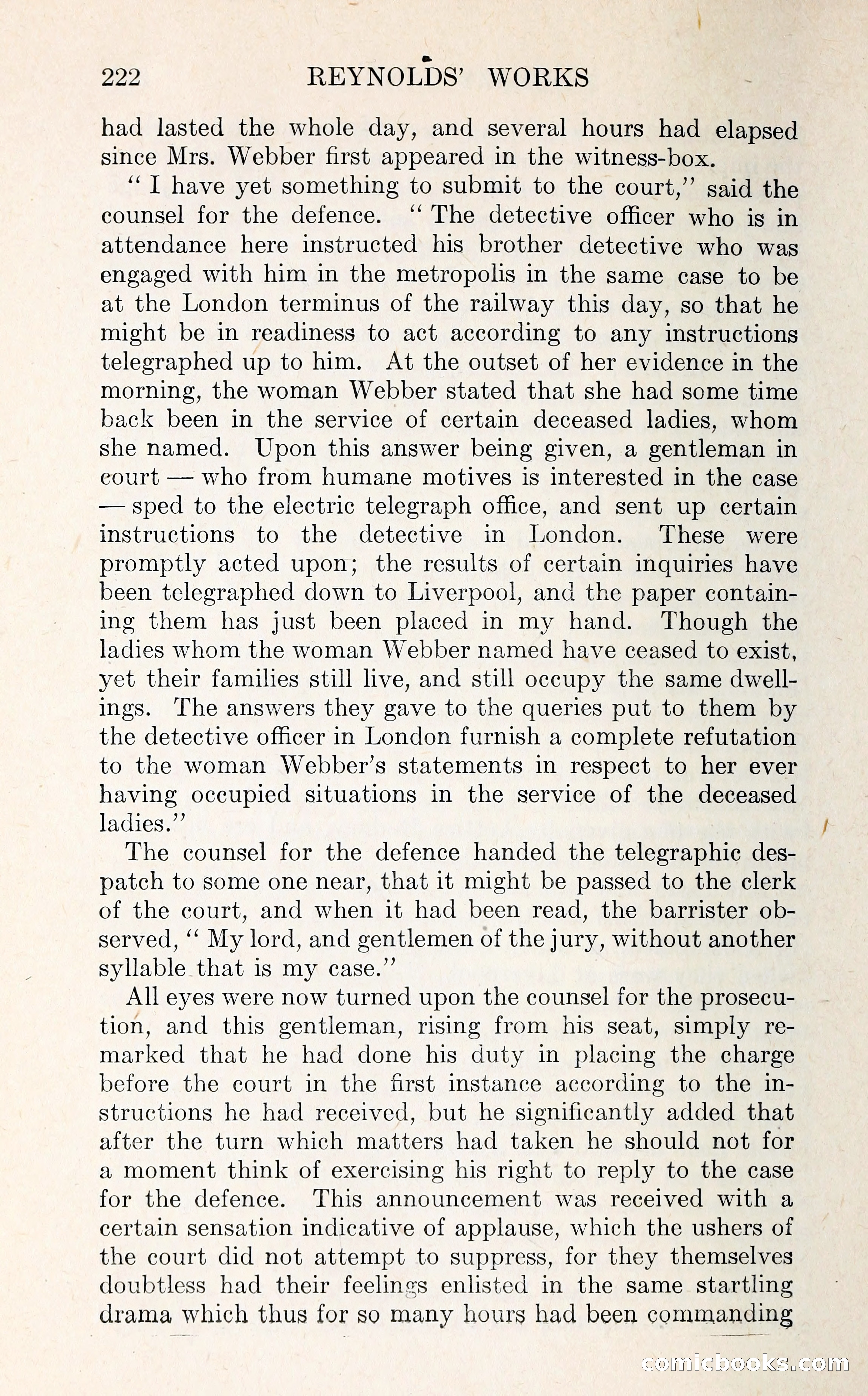
A restored page from Penny Dreadfuls, 1870. Page through the whole issue in the reader above.
📄 Transcribed text from this page (OCR, searchable)
Machine-transcribed from the original scan — historical spelling and the odd misread are preserved.
222 REYNOLDS’ WORKS had lasted the whole day, and several hours had elapsed since Mrs. Webber first appeared in the witness-box. ‘“T have yet something to submit to the court,” said the counsel for the defence. ‘ The detective officer who is in attendance here instructed his brother detective who was engaged with him in the metropolis in the same case to be at the London terminus of the railway this day, so that he might be in readiness to act according to any instructions telegraphed up to him. At the outset of her evidence in the morning, the woman Webber stated that she had some time back been in the service of certain deceased ladies, whom she named. Upon this answer being given, a gentleman in court — who from humane motives is interested in the case — sped to the electric telegraph office, and sent up certain instructions to the detective in London. ‘These were promptly acted upon; the results of certain inquiries have been telegraphed down to Liverpool, and the paper contain- ing them has just been placed in my hand. Though the ladies whom the woman Webber named have ceased to exist, yet their families still live, and still occupy the same dwell- ings. The answers they gave to the queries put to them by the detective officer in London furnish a complete refutation to the woman Webber’s statements in respect to her ever having occupied situations in the service of the deceased ladies.”’ The counsel for the defence handed the telegraphic des- patch to some one near, that it might be passed to the clerk of the court, and when it had been read, the barrister ob- served, ‘‘ My lord, and gentlemen of the jury, without another syllable that is my case.’ All eyes were now turned upon the counsel for the prosecu- tion, and this gentleman, rising from his seat, simply re- marked that he had done his duty in placing the charge before the court in the first instance according to the in- structions he had received, but he significantly added that after the turn which matters had taken he should not for a moment think of exercising his right to reply to the case for the defence. This announcement was received with a certain sensation indicative of applause, which the ushers of the court did not attempt to suppress, for they themselves doubtless had their feelings enlisted in the same startling drama which thus for so many hours had been commanding CONNIE DIOOKS (E(0) m