
Penny Dreadfuls, 1870 · page 85 of 392
The Works of George W. M. Reynolds — page 85: what you’re looking at
A restored page from Penny Dreadfuls, 1870. Page through the whole issue in the reader above.
📄 Transcribed text from this page (OCR, searchable)
Machine-transcribed from the original scan — historical spelling and the odd misread are preserved.
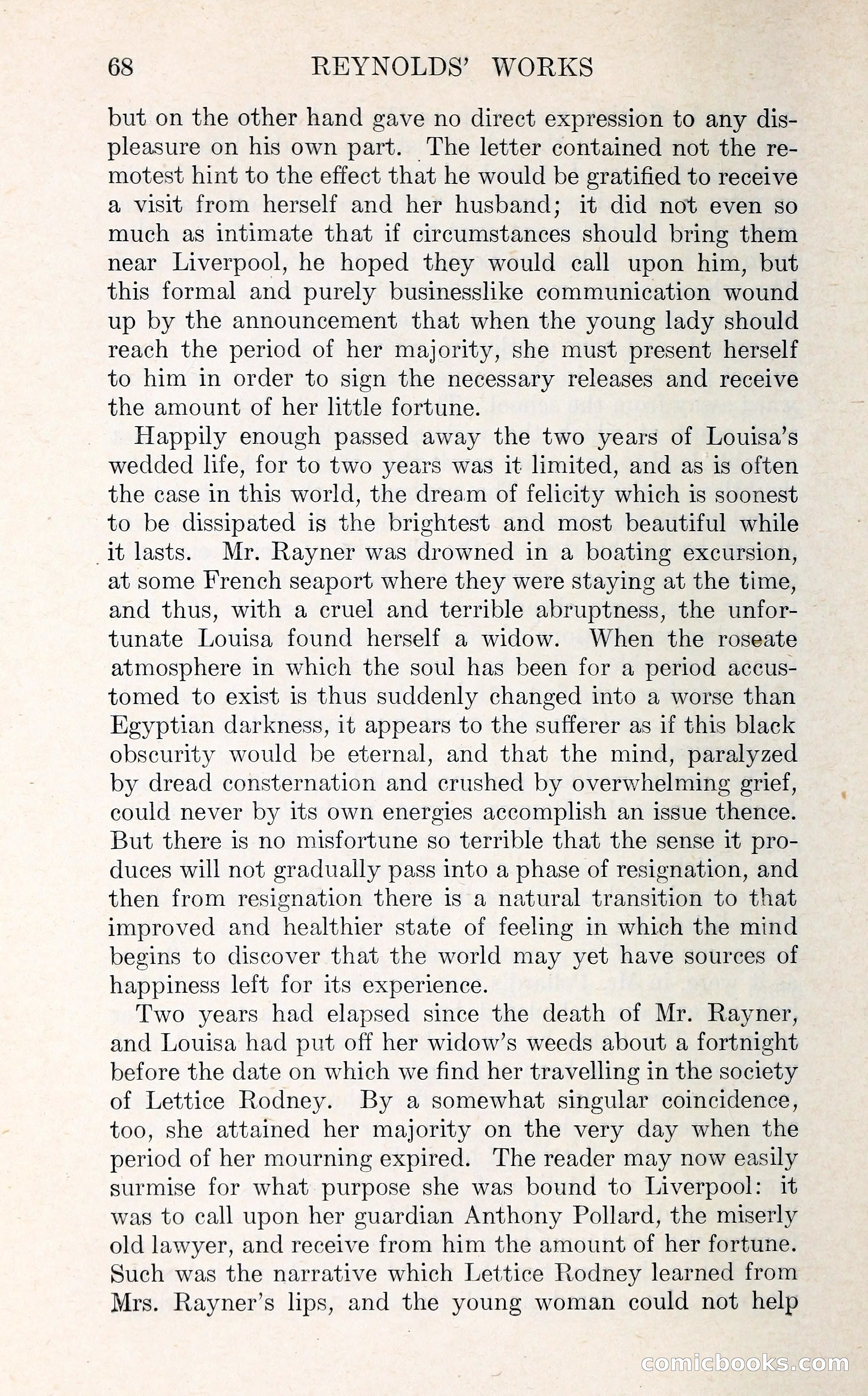
68 REYNOLDS’ WORKS but on the other hand gave no direct expression to any dis- pleasure on his own part. The letter contained not the re- motest hint to the effect that he would be gratified to receive a visit from herself and her husband; it did not even so much as intimate that if circumstances should bring them near Liverpool, he hoped they would call upon him, but this formal and purely businesslike communication wound up by the announcement that when the young lady should reach the period of her majority, she must present herself to him in order to sign the necessary releases and receive the amount of her little fortune. Happily enough passed away the two years of Louisa’s wedded life, for to two years was it limited, and as is often the case in this world, the dream of felicity which is soonest to be dissipated is the brightest and most beautiful while it lasts. Mr. Rayner was drowned in a boating excursion, at some French seaport where they were staying at the time, and thus, with a cruel and terrible abruptness, the unfor- tunate Louisa found herself a widow. When the roseate atmosphere in which the soul has been for a period accus- tomed to exist is thus suddenly changed into a worse than EKeyptian darkness, it appears to the sufferer as if this black obscurity would be eternal, and that the mind, paralyzed by dread consternation and crushed by overwhelming grief, could never by its own energies accomplish an issue thence. But there is no misfortune so terrible that the sense it pro- duces will not gradually pass into a phase of resignation, and then from resignation there is a natural transition to that improved and healthier state of feeling in which the mind begins to discover that the world may yet have sources of happiness left for its experience. Two years had elapsed since the death of Mr. Rayner, and Louisa had put off her widow’s weeds about a fortnight before the date on which we find her travelling in the society of Lettice Rodney. By a somewhat singular coincidence, too, she attained her majority on the very day when the period of her mourning expired. The reader may now easily surmise for what purpose she was bound to Liverpool: it was to call upon her guardian Anthony Pollard, the miserly old lawyer, and receive from him the amount of her fortune. Such was the narrative which Lettice Rodney learned from Mrs. Rayner’s lips, and the young woman could not help Gomichbooks: co m