
Penny Dreadfuls, 1870 · page 179 of 393
The Works of George W. M. Reynolds — page 179: what you’re looking at
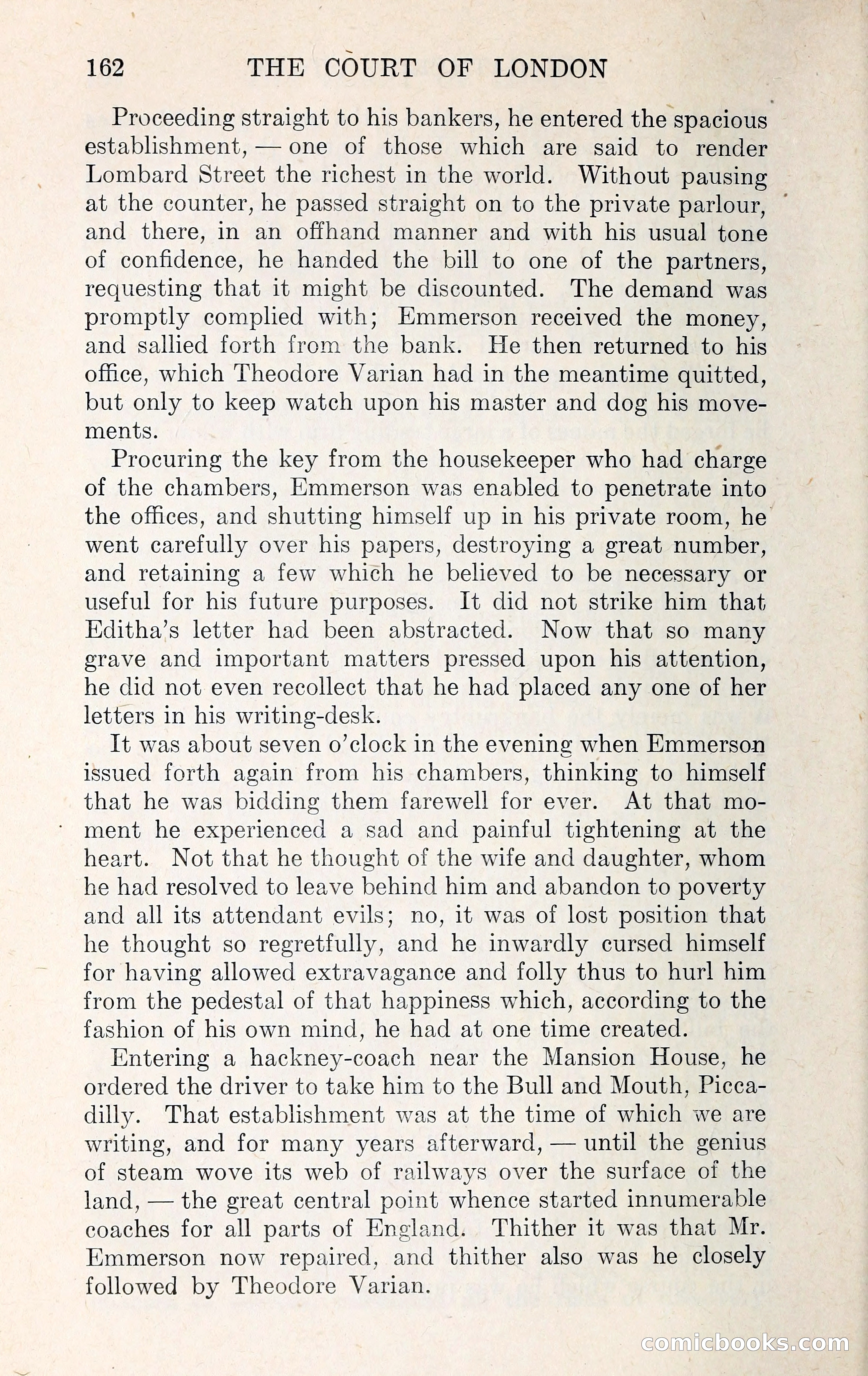
A restored page from Penny Dreadfuls, 1870. Page through the whole issue in the reader above.
📄 Transcribed text from this page (OCR, searchable)
Machine-transcribed from the original scan — historical spelling and the odd misread are preserved.
162 THE COURT OF LONDON Proceeding straight to his bankers, he entered the spacious establishment, — one of those which are said to render Lombard Street the richest in the world. Without pausing at the counter, he passed straight on to the private parlour, ~ and there, in an offhand manner and with his usual tone of confidence, he handed the bill to one of the partners, requesting that it might be discounted. The demand was promptly complied with; Emmerson received the money, and sallied forth from the bank. He then returned to his office, which Theodore Varian had in the meantime quitted, but only to keep watch upon his master and dog his move- ments. Procuring the key from the housekeeper who had charge of the chambers, Emmerson was enabled to penetrate into the offices, and shutting himself up in his private room, he went carefully over his papers, destroying a great number, and retaining a few which he believed to be necessary or useful for his future purposes. It did not strike him that Editha’s letter had been abstracted. Now that so many erave and important matters pressed upon his attention, he did not even recollect that he had placed any one of her letters in his writing-desk. It was about seven o’clock in the evening when Emmerson issued forth again from his chambers, thinking to himself that he was bidding them farewell for ever. At that mo- ment he experienced a sad and painful tightening at the heart. Not that he thought of the wife and daughter, whom he had resolved to leave behind him and abandon to poverty and all its attendant evils; no, it was of lost position that he thought so regretfully, and he inwardly cursed himself for having allowed extravagance and folly thus to hurl him from the pedestal of that happiness which, according to the fashion of his own mind, he had at one time created. Entering a hackney-coach near the Mansion House, he ordered the driver to take him to the Bull and Mouth, Picca- dilly. That establishment was at the time of which we are writing, and for many years afterward, — until the genius of steam wove its web of railways over the surface of the land, — the great central point whence started innumerable coaches for all parts of England. Thither it was that Mr. Emmerson now repaired, and thither also was he closely followed by Theodore Varian. CORNING OCC) cS im