
Penny Dreadfuls, 1900 · page 252 of 399
The Mysteries of the Court of London — page 252: what you’re looking at
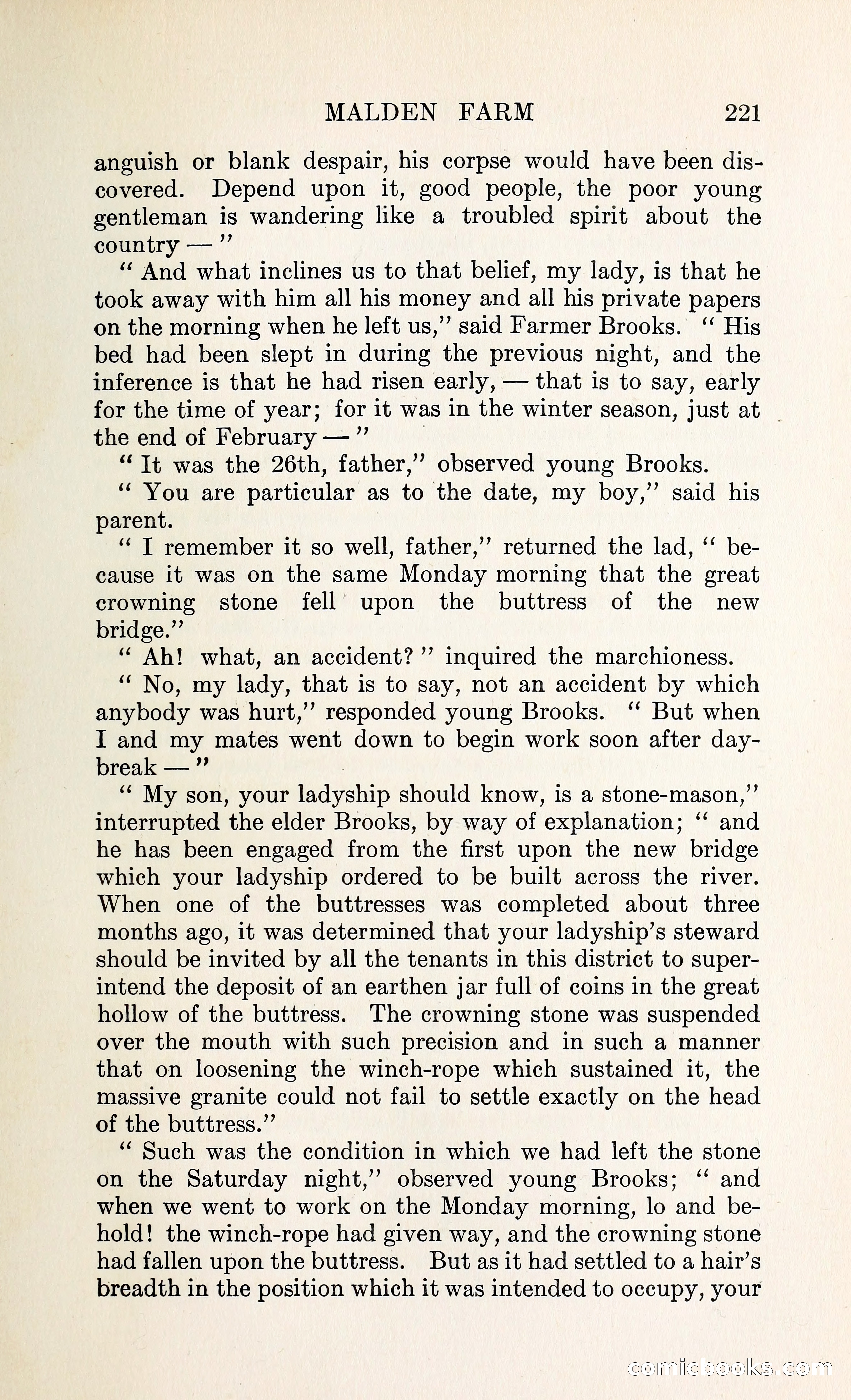
A restored page from Penny Dreadfuls, 1900. Page through the whole issue in the reader above.
📄 Transcribed text from this page (OCR, searchable)
Machine-transcribed from the original scan — historical spelling and the odd misread are preserved.
MALDEN FARM 221 anguish or blank despair, his corpse would have been dis- covered. Depend upon it, good people, the poor young gentleman is wandering like a troubled spirit about the country — ”’ ‘‘ And what inclines us to that belief, my lady, is that he took away with him all his money and all his private papers on the morning when he left us,’’ said Farmer Brooks. ‘ His bed had been slept in during the previous night, and the inference is that he had risen early, — that is to say, early for the time of year; for it was in the winter season, just at _ the end of February — ”’ “It was the 26th, father,’’ observed young Brooks. ‘You are particular as to the date, my boy,” said his parent. “ T remember it so well, father,’ returned the lad, ‘ be- cause it was on the same Monday morning that the great crowning stone fell upon the buttress of the new bridge.” “Ah! what, an accident? ’’ inquired the marchioness. ‘“ No, my lady, that is to say, not an accident by which anybody was hurt,’ responded young Brooks. ‘“‘ But when I and my mates went down to begin work soon after day- break — ”’ | ‘““ My son, your ladyship should know, is a stone-mason,”’ interrupted the elder Brooks, by way of explanation; ‘‘ and he has been engaged from the first upon the new bridge which your ladyship ordered to be built across the river. When one of the buttresses was completed about three months ago, it was determined that your ladyship’s steward should be invited by all the tenants in this district to super- intend the deposit of an earthen jar full of coins in the great hollow of the buttress. The crowning stone was suspended over the mouth with such precision and in such a manner that on loosening the winch-rope which sustained it, the massive granite could not fail to settle exactly on the head of the buttress.”’ “Such was the condition in which we had left the stone on the Saturday night,’’ observed young Brooks; ‘“ and when we went to work on the Monday morning, lo and be- © hold! the winch-rope had given way, and the crowning stone had fallen upon the buttress. But as it had settled to a hair’s breadth in the position which it was intended to occupy, your CORnNICLOOOKS (S©)