
Penny Dreadfuls, 1870 · page 117 of 392
The Works of George W. M. Reynolds — page 117: what you’re looking at
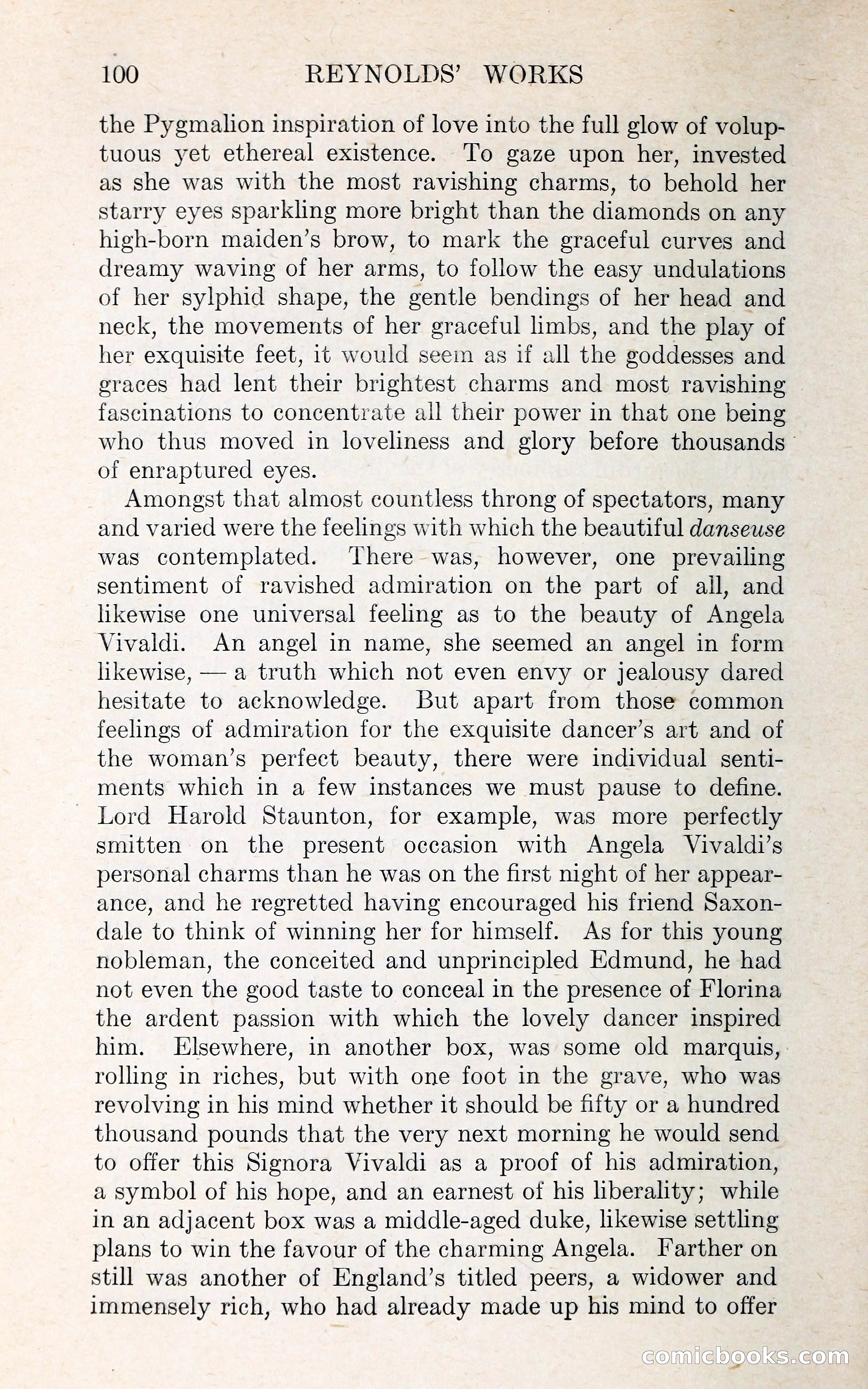
A restored page from Penny Dreadfuls, 1870. Page through the whole issue in the reader above.
📄 Transcribed text from this page (OCR, searchable)
Machine-transcribed from the original scan — historical spelling and the odd misread are preserved.
100 REYNOLDS’ WORKS the Pygmalion inspiration of love into the full glow of volup- tuous yet ethereal existence. To gaze upon her, invested as she was with the most ravishing charms, to behold her starry eyes sparkling more bright than the diamonds on any high-born maiden’s brow, to mark the graceful curves and dreamy waving of her arms, to follow the easy undulations of her sylphid shape, the gentle bendings of her head and neck, the movements of her graceful limbs, and the play of her exquisite feet, 1t would seem as if all the goddesses and graces had lent their brightest charms and most ravishing fascinations to concentrate all their power in that one being who thus moved in loveliness and glory before thousands of enraptured eyes. Amongst that almost countless throng of spectators, many and varied were the feelings with which the beautiful danseuse was contemplated. ‘There was, however, one prevailing sentiment of ravished admiration on the part of all, and likewise one universal feeling as to the beauty of Angela Vivaldi. An angel in name, she seemed an angel in form likewise, — a truth which not even envy or jealousy dared hesitate to acknowledge. But apart from those common feelings of admiration for the exquisite dancer’s art and of the woman’s perfect beauty, there were individual senti- ments which in a few instances we must pause to define. Lord Harold Staunton, for example, was more perfectly smitten on the present occasion with Angela Vivaldi’s personal charms than he was on the first night of her appear- ance, and he regretted having encouraged his friend Saxon- dale to think of winning her for himself. As for this young nobleman, the conceited and unprincipled Edmund, he had not even the good taste to conceal in the presence of Florina the ardent passion with which the lovely dancer inspired him. Elsewhere, in another box, was some old marquis, rolling in riches, but with one foot in the grave, who was revolving in his mind whether it should be fifty or a hundred thousand pounds that the very next morning he would send to offer this Signora Vivaldi as a proof of his admiration, a symbol of his hope, and an earnest of his liberality; while in an adjacent box was a middle-aged duke, likewise settling plans to win the favour of the charming Angela. I arther on still was another of England’s titled peers, a widower and immensely rich, who had already made up his mind to offer CORNICLIOOKS m