
Penny Dreadfuls, 1870 · page 136 of 392
The Works of George W. M. Reynolds — page 136: what you’re looking at
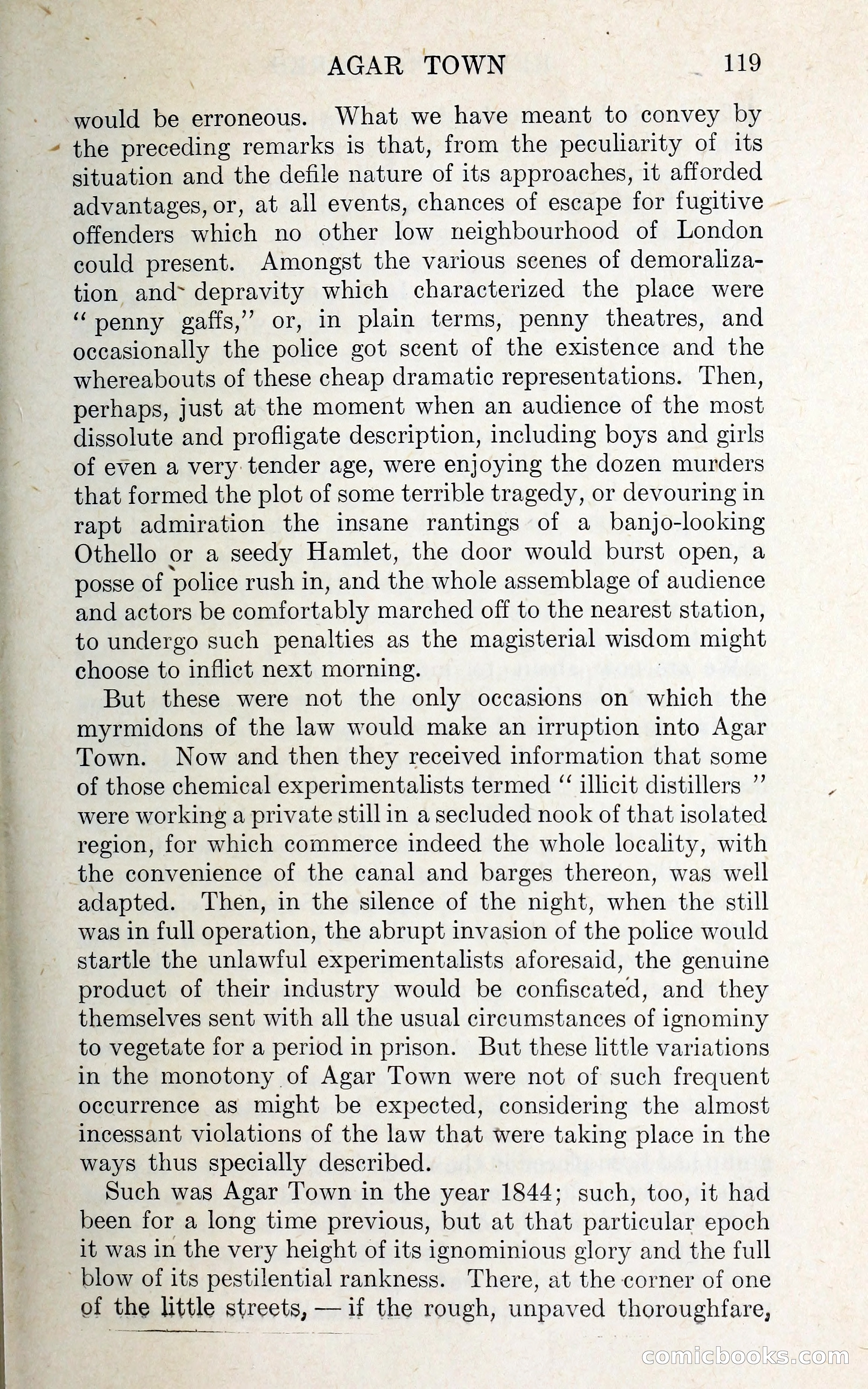
A restored page from Penny Dreadfuls, 1870. Page through the whole issue in the reader above.
📄 Transcribed text from this page (OCR, searchable)
Machine-transcribed from the original scan — historical spelling and the odd misread are preserved.
AGAR TOWN 119 would be erroneous. What we have meant to convey by the preceding remarks is that, from the peculiarity of its situation and the defile nature of its approaches, it afforded advantages, or, at all events, chances of escape for fugitive offenders which no other low neighbourhood of London could present. Amongst the various scenes of demoraliza- tion and~ depravity which characterized the place were “yenny gaffs,” or, in plain terms, penny theatres, and occasionally the police got scent of the existence and the whereabouts of these cheap dramatic representations. ‘Then, perhaps, just at the moment when an audience of the most dissolute and profligate description, including boys and girls of even a very tender age, were enjoying the dozen murders that formed the plot of some terrible tragedy, or devouring in rapt admiration the insane rantings of a banjo-looking Othello or a seedy Hamlet, the door would burst open, a posse of police rush in, and the whole assemblage of audience and actors be pumioxtably marched off to the nearest station, to undergo such penalties as the magisterial wisdom might choose to inflict next morning. But these were not the only occasions on which the myrmidons of the law would make an irruption into Agar Town. Now and then they received information that some of those chemical experimentalists termed “‘ illicit distillers ”’ were working a private still in a secluded nook of that isolated region, for which commerce indeed the whole locality, with the convenience of the canal and barges thereon, was well adapted. ‘Then, in the silence of the night, when the still was in full operation, the abrupt invasion of the police would startle the unlawful experimentalists aforesaid, the genuine product of their industry would be confiscated, and they themselves sent with all the usual circumstances of ignominy to vegetate for a period in prison. But these little variations in the monotony of Agar Town were not of such frequent occurrence as might be expected, considering the almost incessant violations of the law that were taking place in the ways thus specially described. Such was Agar Town in the year 1844; such, too, it had been for a long time previous, but at that particular epoch it was in the very height of its ignominious glory and the full blow of its pestilential rankness. There, at the corner of one of the little streets, —if the rough, unpaved thoroughfare, CONNIE OOOKS (SO)