
Penny Dreadfuls, 1870 · page 247 of 392
The Works of George W. M. Reynolds — page 247: what you’re looking at
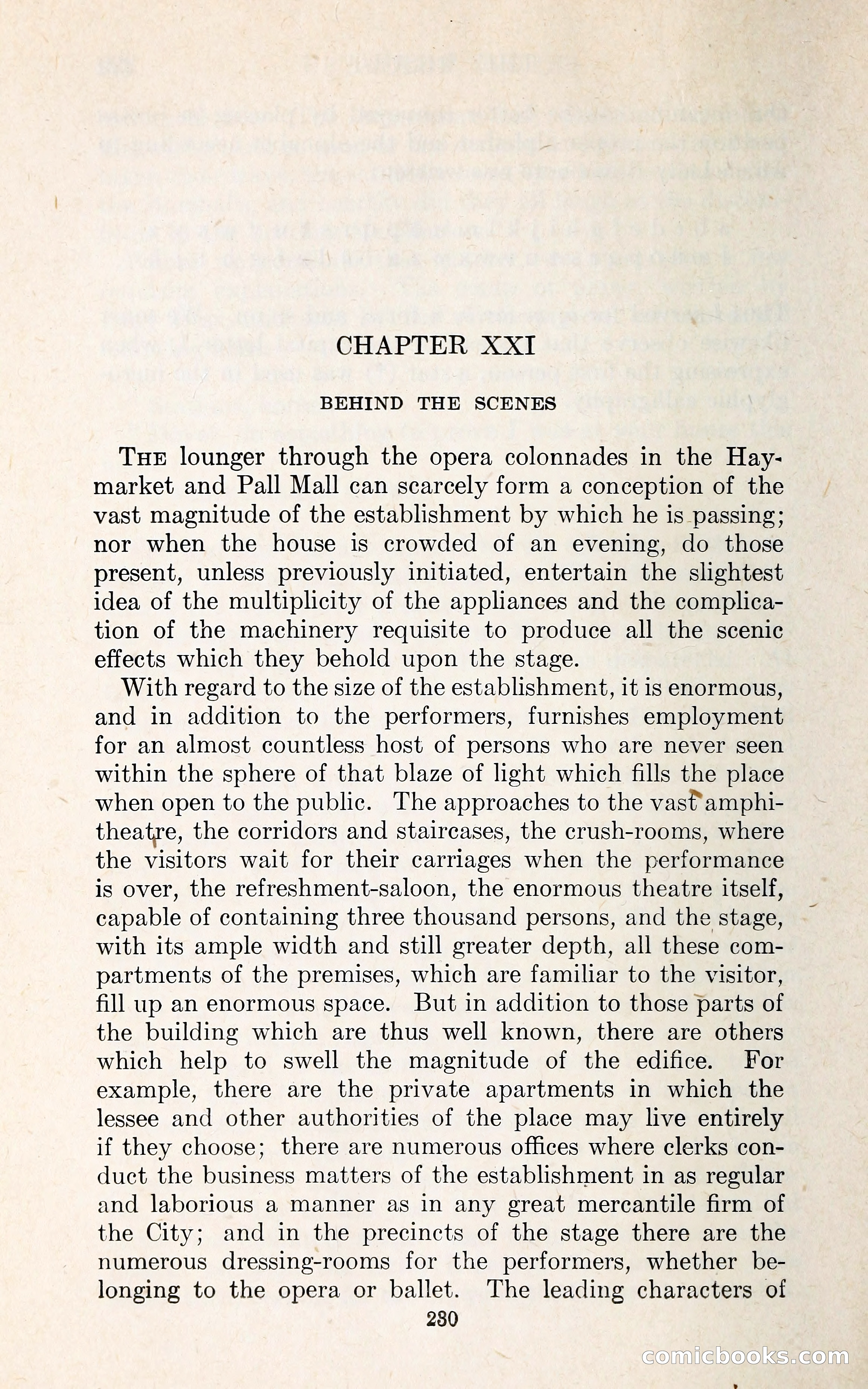
A restored page from Penny Dreadfuls, 1870. Page through the whole issue in the reader above.
📄 Transcribed text from this page (OCR, searchable)
Machine-transcribed from the original scan — historical spelling and the odd misread are preserved.
CHAPTER XXI BEHIND THE SCENES THE lounger through the opera colonnades in the Hay- market and Pall Mall can scarcely form a conception of the vast magnitude of the establishment by which he is passing; nor when the house is crowded of an evening, do those present, unless previously initiated, entertain the slightest idea of the multiplicity of the appliances and the complica- tion of the machinery requisite to produce all the scenic effects which they behold upon the stage. With regard to the size of the establishment, it is enormous, and in addition to the performers, furnishes employment for an almost countless host of persons who are never seen within the sphere of that blaze of light which fills the place when open to the public. The approaches to the vast amphi- theatre, the corridors and staircases, the crush-rooms, where the visitors wait for their carriages when the performance is over, the refreshment-saloon, the enormous theatre itself, capable of containing three thousand persons, and the stage, with its ample width and still greater depth, all these com- partments of the premises, which are familiar to the visitor, fill up an enormous space. But in addition to those parts of the building which are thus well known, there are others which help to swell the magnitude of the edifice. For example, there are the private apartments in which the lessee and other authorities of the place may live entirely if they choose; there are numerous offices where clerks con- duct the business matters of the establishment in as regular and laborious a manner as in any great mercantile firm of the City; and in the precincts of the stage there are the numerous dressing-rooms for the performers, whether be- longing to the opera or ballet. The leading characters of 280 CONNIE NO KS (E(0)