
Penny Dreadfuls, 1870 · page 249 of 392
The Works of George W. M. Reynolds — page 249: what you’re looking at
A restored page from Penny Dreadfuls, 1870. Page through the whole issue in the reader above.
📄 Transcribed text from this page (OCR, searchable)
Machine-transcribed from the original scan — historical spelling and the odd misread are preserved.
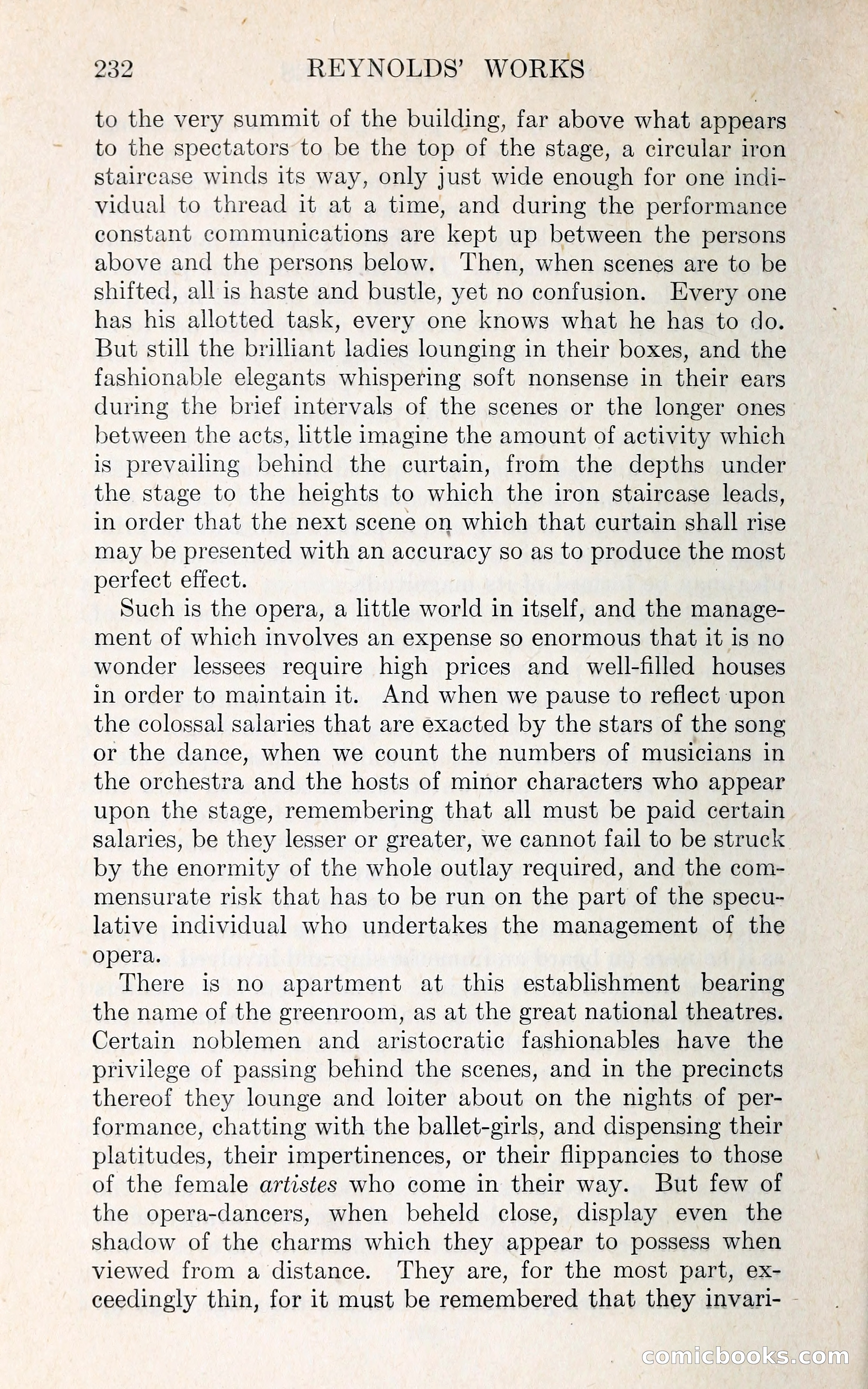
932 REYNOLDS’ WORKS to the very summit of the building, far above what appears to the spectators to be the top of the stage, a circular iron staircase winds its way, only just wide enough for one indi- vidual to thread it at a time, and during the performance constant communications are kept up between the persons above and the persons below. Then, when scenes are to be shifted, all is haste and bustle, yet no confusion. Every one has his allotted task, every one knows what he has to do. But still the brilliant ladies lounging in their boxes, and the fashionable elegants whispering soft nonsense in their ears during the brief intervals of the scenes or the longer ones between the acts, little imagine the amount of activity which is prevailing behind the curtain, from the depths under the stage to the heights to which the iron staircase leads, in order that the next scene on which that curtain shall rise may be presented with an accuracy so as to produce the most perfect effect. | Such is the opera, a little world in itself, and the manage- ment of which involves an expense so enormous that it is no wonder lessees require high prices and well-filled houses in order to maintain it. And when we pause to reflect upon the colossal salaries that are exacted by the stars of the song or the dance, when we count the numbers of musicians in the orchestra and the hosts of minor characters who appear upon the stage, remembering that all must be paid certain salaries, be they lesser or greater, we cannot fail to be struck by the enormity of the whole outlay required, and the com- mensurate risk that has to be run on the part of the specu- lative individual who undertakes the management of the opera. There is no apartment at this establishment bearing the name of the greenroom, as at the great national theatres. Certain noblemen and aristocratic fashionables have the privilege of passing behind the scenes, and in the precincts thereof they lounge and loiter about on the nights of per- formance, chatting with the ballet-girls, and dispensing their platitudes, their impertinences, or their flippancies to those of the female artistes who come in their way. But few of the opera-dancers, when beheld close, display even the shadow of the charms which they appear to possess when viewed from a distance. They are, for the most part, ex- ceedingly thin, for it must be remembered that they invari- ~ CONNIE NO KS (E(0)