
Penny Dreadfuls, 1870 · page 255 of 392
The Works of George W. M. Reynolds — page 255: what you’re looking at
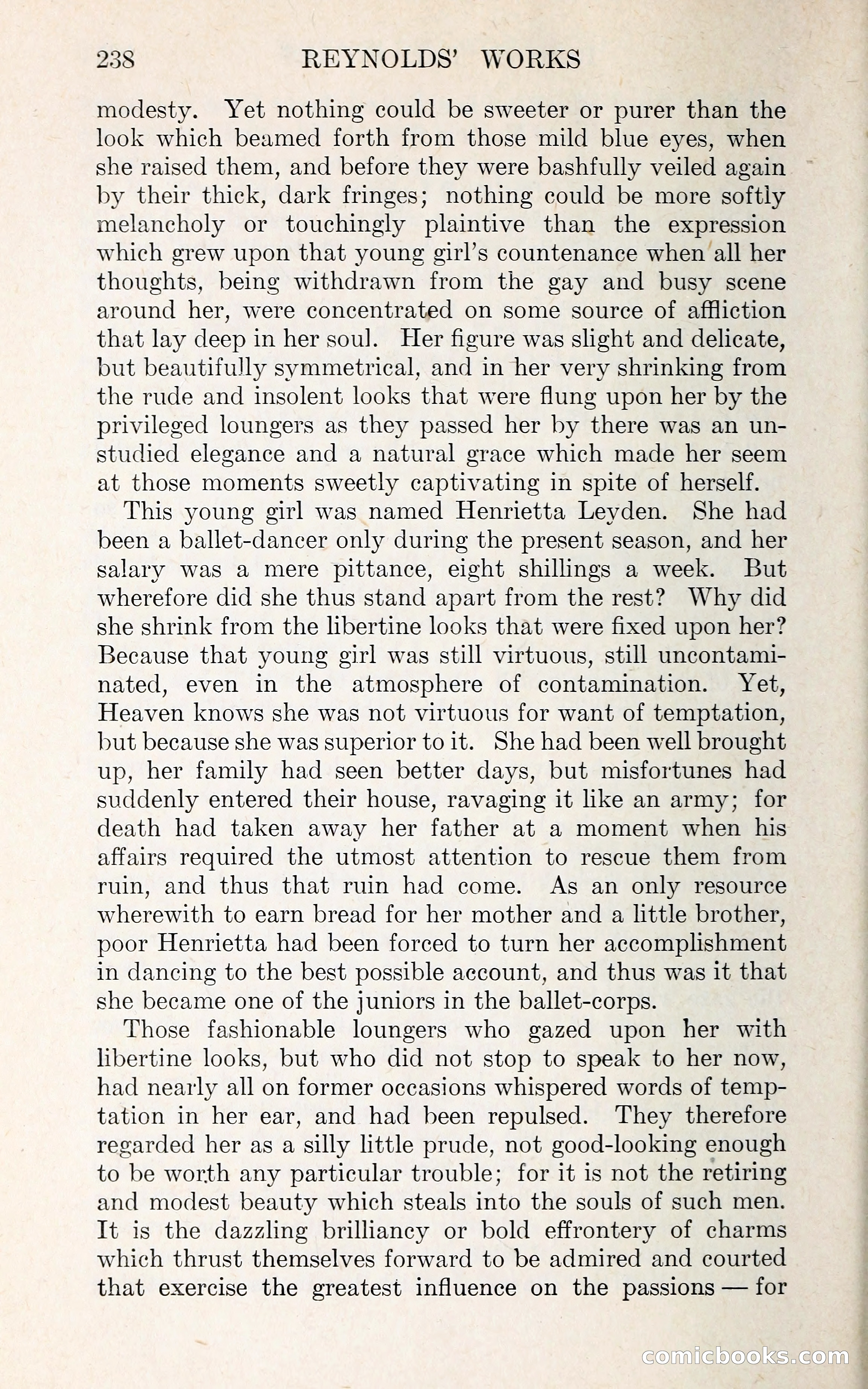
A restored page from Penny Dreadfuls, 1870. Page through the whole issue in the reader above.
📄 Transcribed text from this page (OCR, searchable)
Machine-transcribed from the original scan — historical spelling and the odd misread are preserved.
238 REYNOLDS’ WORKS modesty. Yet nothing could be sweeter or purer than the look which beamed forth from those mild blue eyes, when she raised them, and before they were bashfully veiled again by their thick, dark fringes; nothing could be more softly melancholy or touchingly plaintive than the expression which grew upon that young girl’s countenance when all her thoughts, being withdrawn from the gay and busy scene around her, were concentrated on some source of affliction that lay deep in her soul. Her figure was slight and delicate, but beautifully symmetrical, and in her very shrinking from the rude and insolent looks that were flung upon her by the privileged loungers as they passed her by there was an un- studied elegance and a natural grace which made her seem at those moments sweetly captivating in spite of herself. This young girl was named Henrietta Leyden. She had been a ballet-dancer only during the present season, and her salary was a mere pittance, eight shillings a week. But wherefore did she thus stand apart from the rest? Why did she shrink from the libertine looks that were fixed upon her? Because that young girl was still virtuous, still uncontami- nated, even in the atmosphere of contamination. Yet, Heaven knows she was not virtuous for want of temptation, but because she was superior to it. She had been well brought up, her family had seen better days, but misfortunes had suddenly entered their house, ravaging it like an army; for death had taken away her father at a moment when his affairs required the utmost attention to rescue them from ruin, and thus that ruin had come. As an only resource wherewith to earn bread for her mother and a little brother, poor Henrietta had been forced to turn her accomplishment in dancing to the best possible account, and thus was it that she became one of the juniors in the ballet-corps. Those fashionable loungers who gazed upon her with libertine looks, but who did not stop to speak to her now, had nearly all on former occasions whispered words of temp- tation in her ear, and had been repulsed. They therefore regarded her as a silly little prude, not good-looking enough to be worth any particular trouble; for it is not the retiring and modest beauty which steals into the souls of such men. It is the dazzling brilliancy or bold effrontery of charms which thrust themselves forward to be admired and courted that exercise the greatest influence on the passions — for Gomichbooks (E(0)