
Penny Dreadfuls, 1870 · page 266 of 392
The Works of George W. M. Reynolds — page 266: what you’re looking at
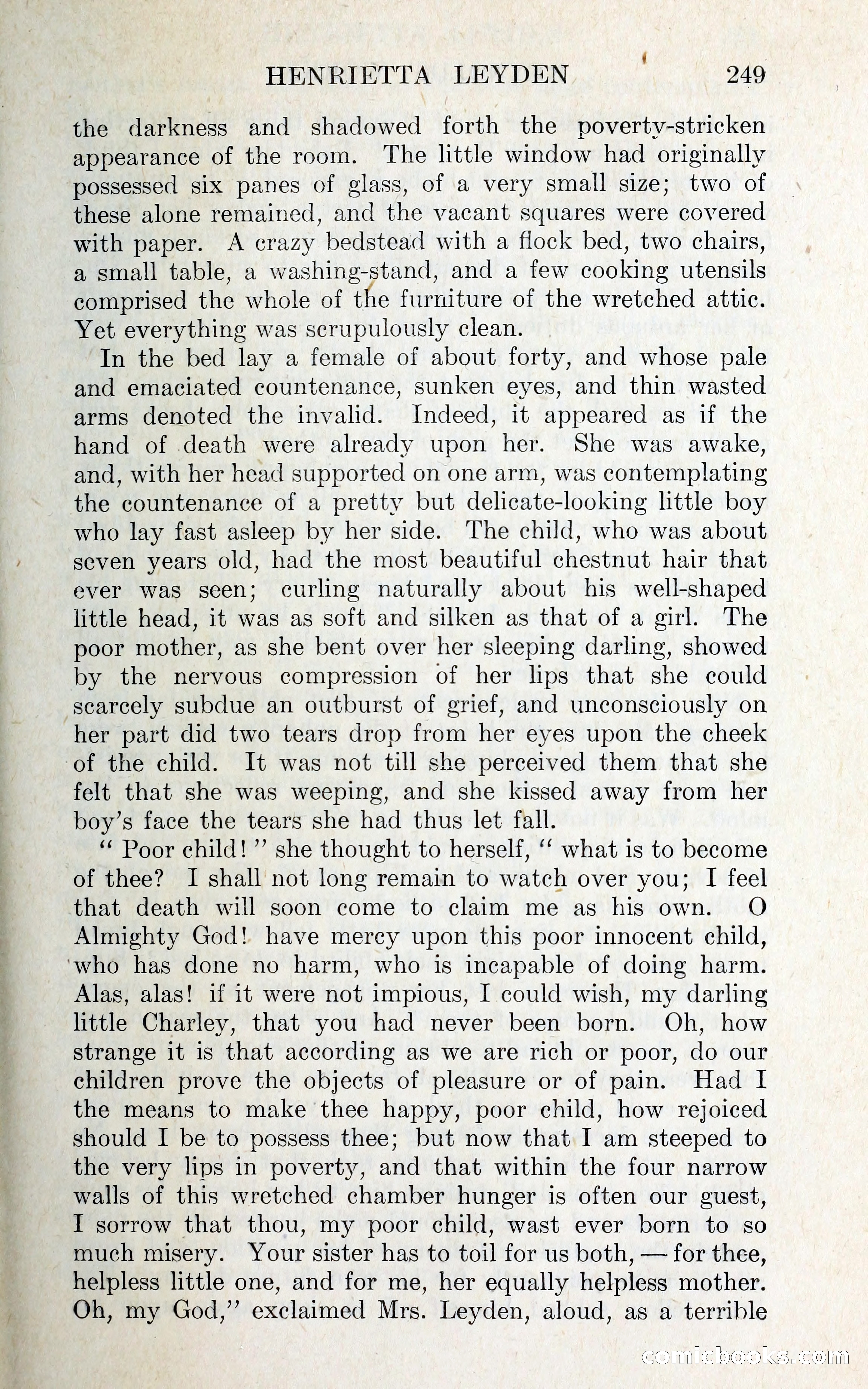
A restored page from Penny Dreadfuls, 1870. Page through the whole issue in the reader above.
📄 Transcribed text from this page (OCR, searchable)
Machine-transcribed from the original scan — historical spelling and the odd misread are preserved.
‘ HENRIETTA LEYDEN 249 the darkness and shadowed forth the poverty-stricken appearance of the room. The little window had originally possessed six panes of glass, of a very small size; two of these alone remained, and the vacant squares were covered with paper. A crazy bedstead with a flock bed, two chairs, a small table, a washing-stand, and a tew cooking utensils comprised the whole of the furniture of the wretched attic. Yet everything was scrupulously clean. In the bed lay a female of about forty, and whose pale and emaciated countenance, sunken eyes, and thin wasted arms denoted the invalid. Indeed, it appeared as if the hand of death were already upon her. She was awake, and, with her head supported on one arm, was contemplating the countenance of a pretty but delicate-looking little boy who lay fast asleep by her side. The child, who was about seven years old, had the most beautiful chestnut hair that ever was seen; curling naturally about his well-shaped little head, it was as soft and silken as that of a girl. The poor mother, as she bent over her sleeping darling, showed by the nervous compression of her lips that she could scarcely subdue an outburst of grief, and unconsciously on her part did two tears drop from her eyes upon the cheek of the child. It was not till she perceived them that she felt that she was weeping, and she kissed away from her boy’s face the tears she had thus let fall. “ Poor child! ”’ she thought to herself, ‘‘ what is to become of thee? I shall not long remain to watch over you; I feel that death will soon come to claim me as his own. O Almighty God! have mercy upon this poor innocent child, ‘who has done no harm, who is incapable of doing harm. Alas, alas! if it were not impious, I could wish, my darling little Charley, that you had never been born. Oh, how strange it 1s that according as we are rich or poor, do our children prove the objects of pleasure or of pain. Had I the means to make thee happy, poor child, how rejoiced should I be to possess thee; but now that I am steeped to the very lips in poverty, and that within the four narrow walls of this wretched chamber hunger is often our guest, I sorrow that thou, my poor child, wast ever born to so much misery. Your sister has to toil for us both, — for thee, helpless little one, and for me, her equally helpless mother. Oh, my God,”’ exclaimed Mrs. Leyden, aloud, as a terrible GOmiicdoo SS (S(O)