
Penny Dreadfuls, 1870 · page 312 of 392
The Works of George W. M. Reynolds — page 312: what you’re looking at
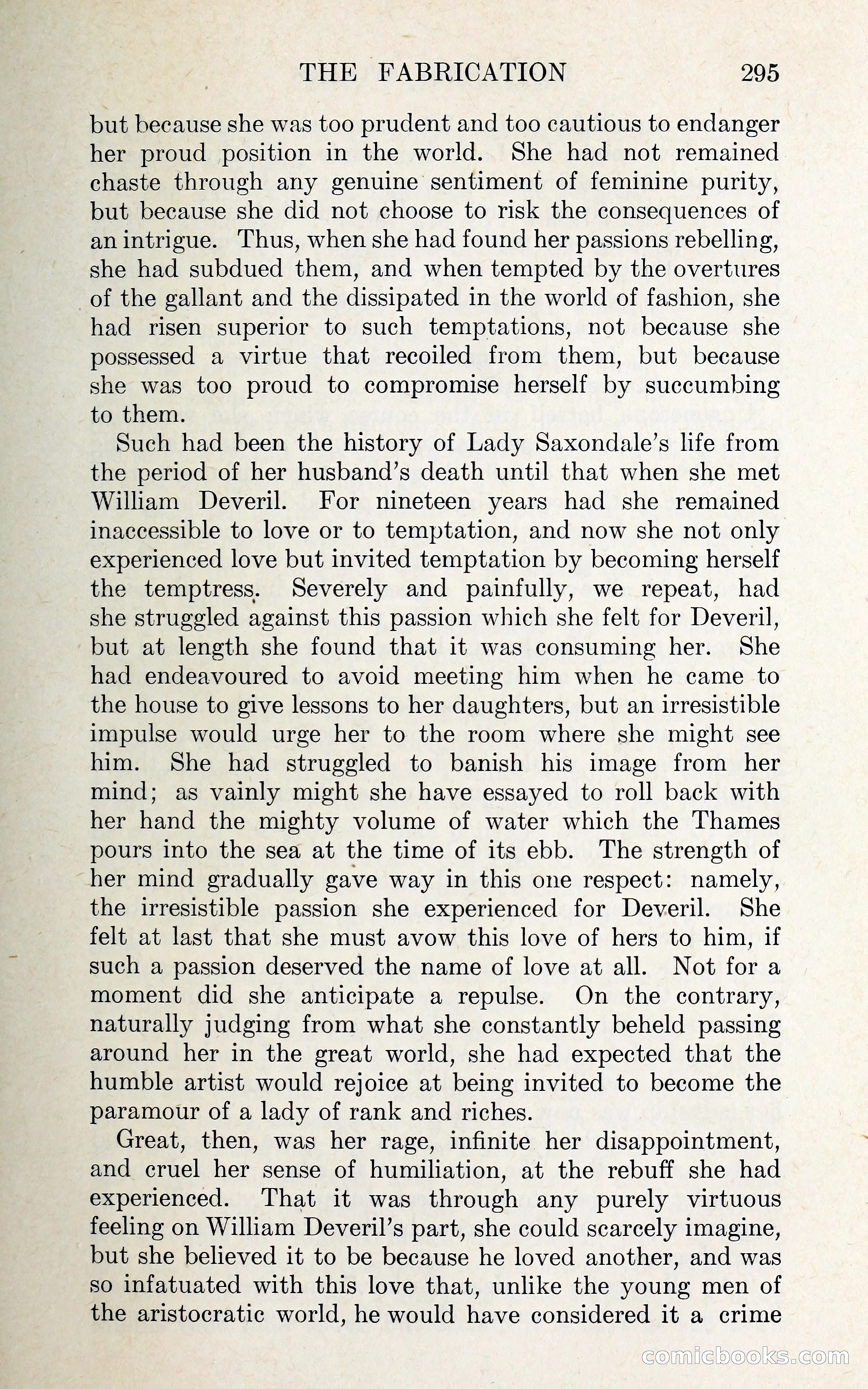
A restored page from Penny Dreadfuls, 1870. Page through the whole issue in the reader above.
📄 Transcribed text from this page (OCR, searchable)
Machine-transcribed from the original scan — historical spelling and the odd misread are preserved.
THE FABRICATION 295 but because she was too prudent and too cautious to endanger her proud position in the world. She had not remained chaste through any genuine sentiment of feminine purity, but because she did not choose to risk the consequences of anintrigue. Thus, when she had found her passions rebelling, she had subdued them, and when tempted by the overtures of the gallant and the dissipated in the world of fashion, she had risen superior to such temptations, not because she possessed a virtue that recoiled from them, but because she was too proud to compromise herself by succumbing to them. Such had been the history of Lady Saxondale’s life from the period of her husband’s death until that when she met Wiliam Deveril. For nineteen years had she remained inaccessible to love or to temptation, and now she not only experienced love but invited temptation by becoming herself the temptress. Severely and painfully, we repeat, had she struggled against this passion which she felt for Deveril, but at length she found that it was consuming her. She had endeavoured to avoid meeting him when he came to the house to give lessons to her daughters, but an irresistible impulse would urge her to the room where she might see him. She had struggled to banish his image from her mind; as vainly might she have essayed to roll back with her hand the mighty volume of water which the Thames pours into the sea at the time of its ebb. The strength of her mind gradually gave way in this one respect: namely, the irresistible passion she experienced for Deveril. She felt at last that she must avow this love of hers to him, if such a passion deserved the name of love at all. Not for a moment did she anticipate a repulse. On the contrary, naturally judging from what she constantly beheld passing around her in the great world, she had expected that the humble artist would rejoice at being invited to become the paramour of a lady of rank and riches. Great, then, was her rage, infinite her disappointment, and cruel her sense of humiliation, at the rebuff she had experienced. That it was through any purely virtuous feeling on William Deveril’s part, she could scarcely imagine, but she believed it to be because he loved another, and was so infatuated with this love that, unlike the young men of the aristocratic world, he would have considered it a crime COnnNIEOOOkKS (SO)