
Penny Dreadfuls, 1870 · page 63 of 392
The Works of George W. M. Reynolds — page 63: what you’re looking at
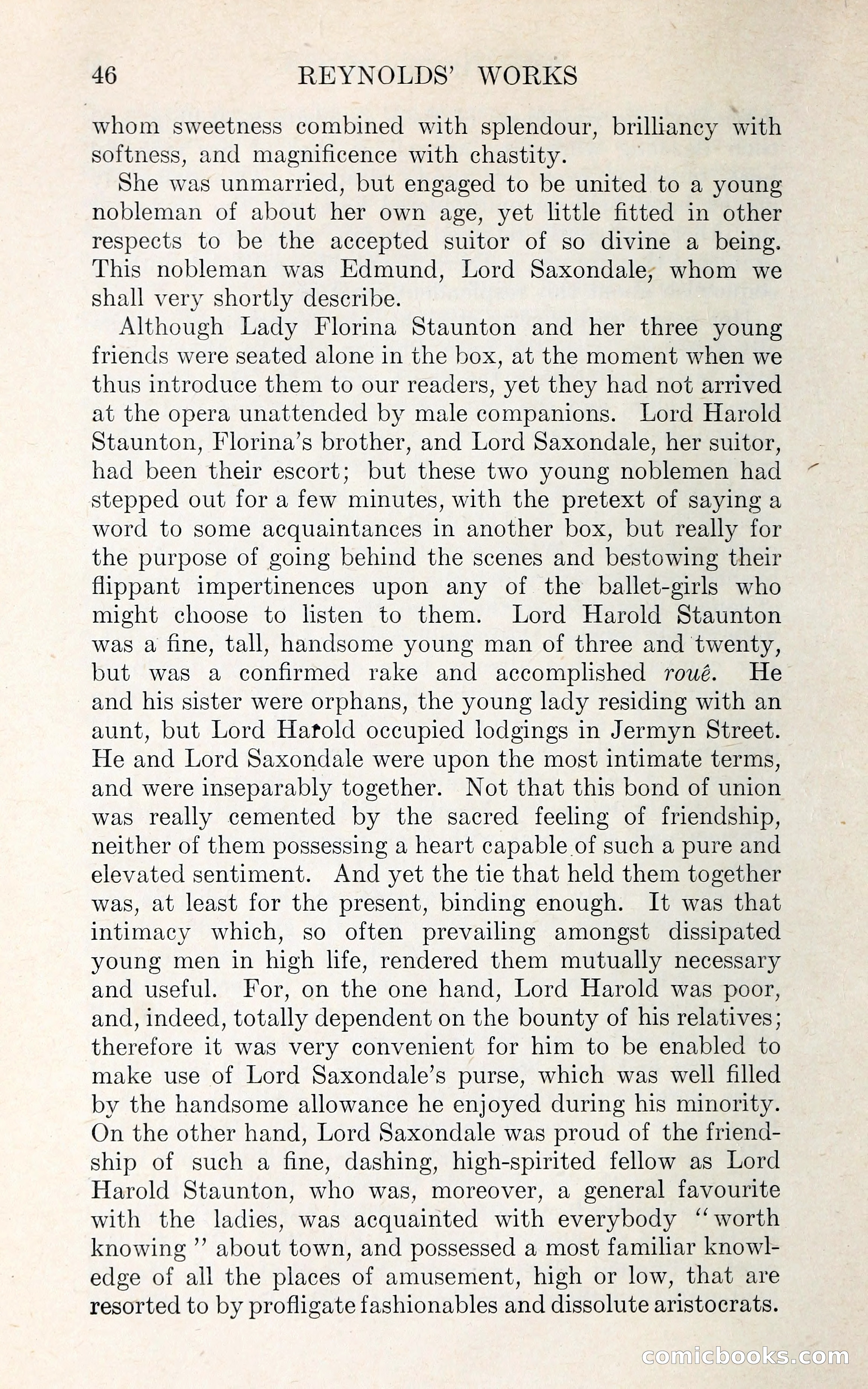
A restored page from Penny Dreadfuls, 1870. Page through the whole issue in the reader above.
📄 Transcribed text from this page (OCR, searchable)
Machine-transcribed from the original scan — historical spelling and the odd misread are preserved.
46 REYNOLDS’ WORKS whom sweetness combined with splendour, brilliancy with softness, and magnificence with chastity. She was unmarried, but engaged to be united to a young nobleman of about her own age, yet little fitted in other respects to be the accepted suitor of so divine a being. This nobleman was Edmund, Lord Saxondaley whom we shall very shortly describe. Although Lady Florina Staunton and her three young friends were seated alone in the box, at the moment when we thus introduce them to our readers, yet they had not arrived at the opera unattended by male companions. Lord Harold Staunton, Florina’s brother, and Lord Saxondale, her suitor, had been their escort; but these two young noblemen had stepped out for a few minutes, with the pretext of saying a word to some acquaintances in another box, but really for the purpose of going behind the scenes and bestowing their flippant impertinences upon any of the ballet-girls who might choose to listen to them. Lord Harold Staunton was a fine, tall, handsome young man of three and twenty, but was a confirmed rake and accomplished roué. He and his sister were orphans, the young lady residing with an aunt, but Lord Hafold occupied lodgings in Jermyn Street. He and Lord Saxondale were upon the most intimate terms, and were inseparably together. Not that this bond of union was really cemented by the sacred feeling of friendship, neither of them possessing a heart capable of such a pure and elevated sentiment. And yet the tie that held them together was, at least for the present, binding enough. It was that intimacy which, so often prevailing amongst dissipated young men in high life, rendered them mutually necessary and useful. For, on the one hand, Lord Harold was poor, and, indeed, totally dependent on the bounty of his relatives; therefore it was very convenient for him to be enabled to make use of Lord Saxondale’s purse, which was well filled by the handsome allowance he enjoyed during his minority. On the other hand, Lord Saxondale was proud of the friend- ship of such a fine, dashing, high-spirited fellow as Lord Harold Staunton, who was, moreover, a general favourite with the ladies, was acquainted with everybody “worth knowing ”’ about town, and possessed a most familiar knowl- edge of all the places of amusement, high or low, that are resorted to by profligate fashionables and dissolute aristocrats. CONNIE OO KS