
Penny Dreadfuls, 1870 · page 238 of 400
Penny Blood Serial Fiction — page 238: what you’re looking at
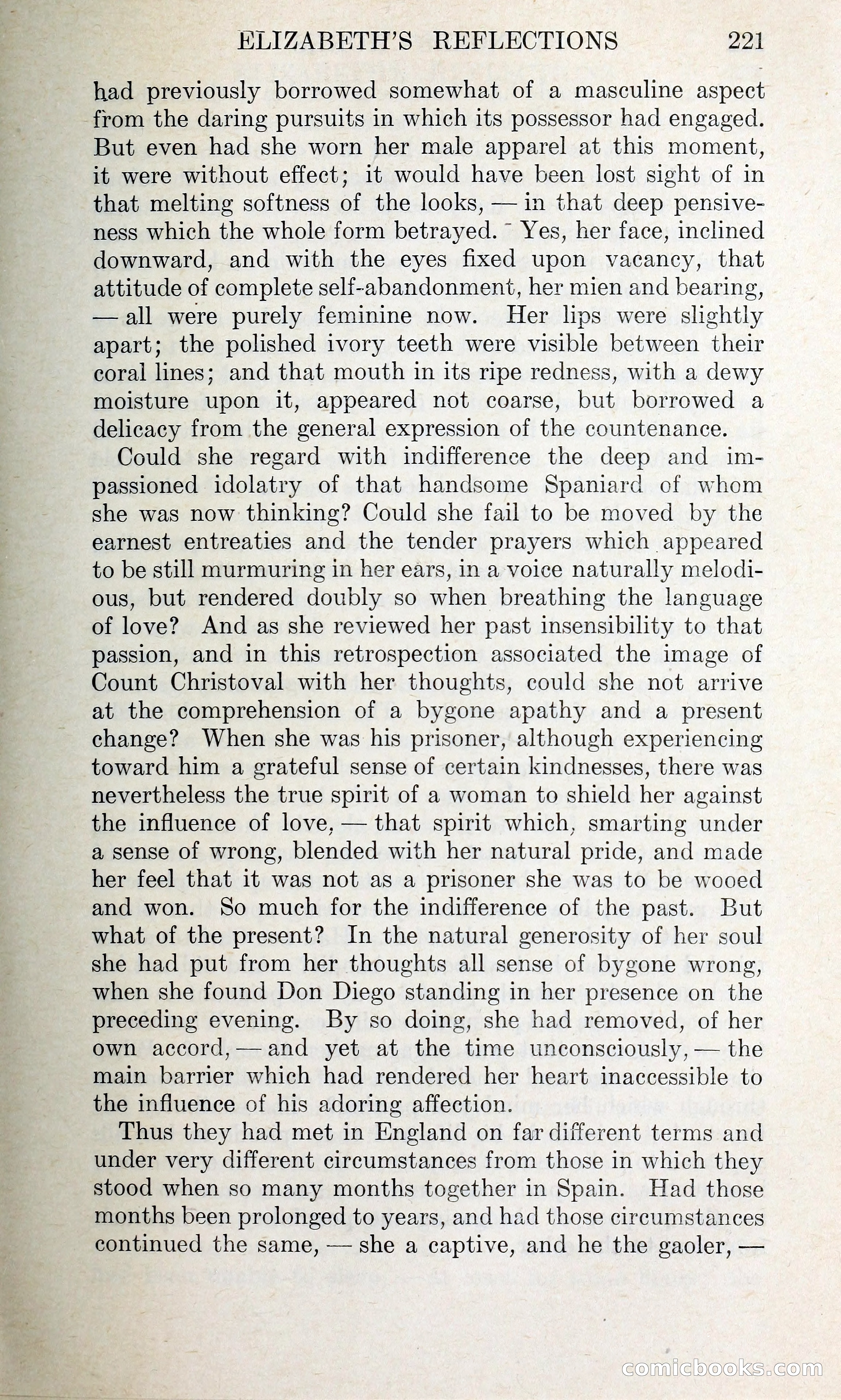
A restored page from Penny Dreadfuls, 1870. Page through the whole issue in the reader above.
📄 Transcribed text from this page (OCR, searchable)
Machine-transcribed from the original scan — historical spelling and the odd misread are preserved.
EKLIZABETH’S REFLECTIONS 221 had previously borrowed somewhat of a masculine aspect from the daring pursuits in which its possessor had engaged. But even had she worn her male apparel at this moment, it were without effect; 1t would have been lost sight of in that melting softness of the looks, — in that deep pensive- ness which the whole form betrayed.” Yes, her face, inclined downward, and with the eyes fixed upon vacancy, that attitude of complete self-abandonment, her mien and bearing, —all were purely feminine now. Her lips were slightly apart; the polished ivory teeth were visible between their coral lines; and that mouth in its ripe redness, with a dewy moisture upon it, appeared not coarse, but borrowed a delicacy from the general expression of the countenance. Could she regard with indifference the deep and im- passioned idolatry of that handsome Spaniard of whom she was now thinking? Could she fail to be moved by the earnest entreaties and the tender prayers which appeared to be still murmuring in her ears, in a voice naturally melodi- ous, but rendered doubly so when breathing the language of love? And as she reviewed her past insensibility to that passion, and in this retrospection associated the image of Count Christoval with her thoughts, could she not arrive at the comprehension of a bygone apathy and a present change? When she was his prisoner, although experiencing toward him a grateful sense of certain kindnesses, there was nevertheless the true spirit of a woman to shield her against the influence of love, — that spirit which, smarting under a sense of wrong, blended with her natural pride, and made her feel that it was not as a prisoner she was to be wooed and won. So much for the indifference of the past. But what of the present? In the natural generosity of her soul she had put from her thoughts all sense of bygone wrong, when she found Don Diego standing in her presence on the preceding evening. By so doing, she had removed, of her own accord,—and yet at the time unconsciously, — the main barrier which had rendered her heart inaccessible to the influence of his adoring affection. Thus they had met in England on far different terms and under very different circumstances from those in which they stood when so many months together in Spain. Had those months been prolonged to years, and had those circumstances continued the same, — she a captive, and he the gaoler, — CONNIE DOOKS (C(O)