
Penny Dreadfuls, 1900 · page 195 of 400
The Mysteries of the Court of London — page 195: what you’re looking at
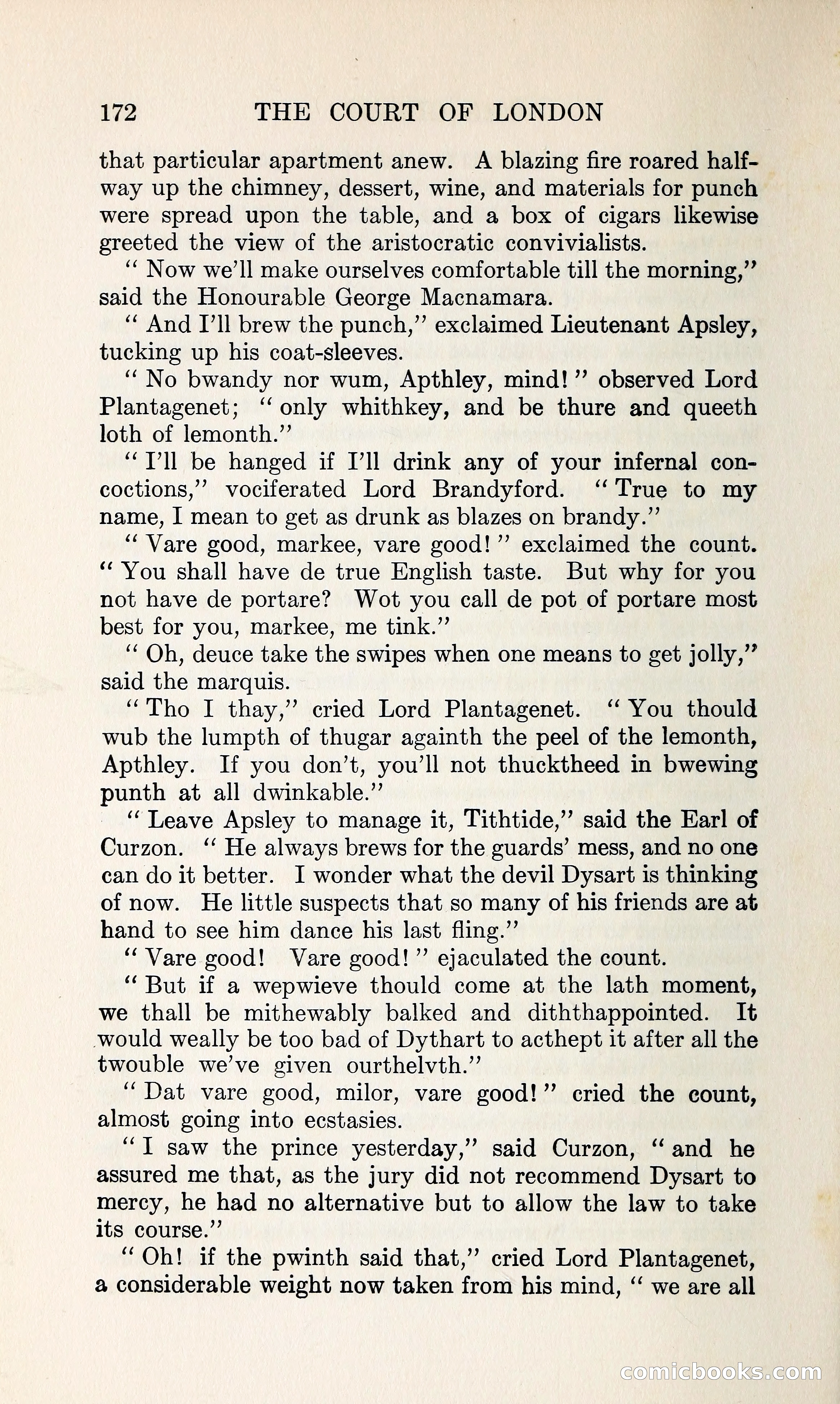
A restored page from Penny Dreadfuls, 1900. Page through the whole issue in the reader above.
📄 Transcribed text from this page (OCR, searchable)
Machine-transcribed from the original scan — historical spelling and the odd misread are preserved.
172 THE COURT OF LONDON that particular apartment anew. A blazing fire roared half- way up the chimney, dessert, wine, and materials for punch were spread upon the table, and a box of cigars likewise greeted the view of the aristocratic convivialists. ‘“ Now we'll make ourselves comfortable till the morning,” said the Honourable George Macnamara. “And I'll brew the punch,”’ exclaimed Lieutenant Apsley, tucking up his coat-sleeves. “No bwandy nor wum, Apthley, mind!’’ observed Lord Plantagenet; ‘only whithkey, and be thure and queeth loth of lemonth.”’ “Tl be hanged if Ill drink any of your infernal con- coctions,’’ vociferated Lord Brandyford. ‘“‘ True to my name, I mean to get as drunk as blazes on brandy.” ‘“Vare good, markee, vare good! ’’ exclaimed the count. ‘You shall have de true English taste. But why for you not have de portare? Wot you call de a of portare most best for you, markee, me tink.” ‘Oh, deuce take the swipes when one means to get jolly,” said the marquis. “Tho I thay,” cried Lord Plantagenet. ‘‘ You thould wub the lumpth of thugar againth the peel of the lemonth, Apthley. If you don’t, you’ll not thucktheed in bwewing punth at all dwinkable.” ‘Leave Apsley to manage it, Tithtide,”’ said the Earl of Curzon. ‘‘ He always brews for the guards’ mess, and no one can do it better. I wonder what the devil Dysart is thinking of now. He little suspects that so many of his friends are at hand to see him dance his last fling.” ““Vare good! Vare good!” ejaculated the count. “But if a wepwieve thould come at the lath moment, we thall be mithewably balked and diththappointed. It would weally be too bad of Dythart to acthept it after all the twouble we’ve given ourthelvth.”’ ‘Dat vare good, milor, vare good!” cried the count, almost going into ecstasies. “I saw the prince yesterday,” said Curzon, “and he assured me that, as the jury did not recommend Dysart to mercy, he had no alternative but to allow the law to take its course.”’ “Oh! if the pwinth said that,” cried Lord Plantagenet, a considerable weight now taken from his mind, “ we are all (COU () IDooks (E@)