
Pulp Fiction, 1952 · page 6 of 132
5 Detective Novels Magazine Cover — page 6: what you’re looking at
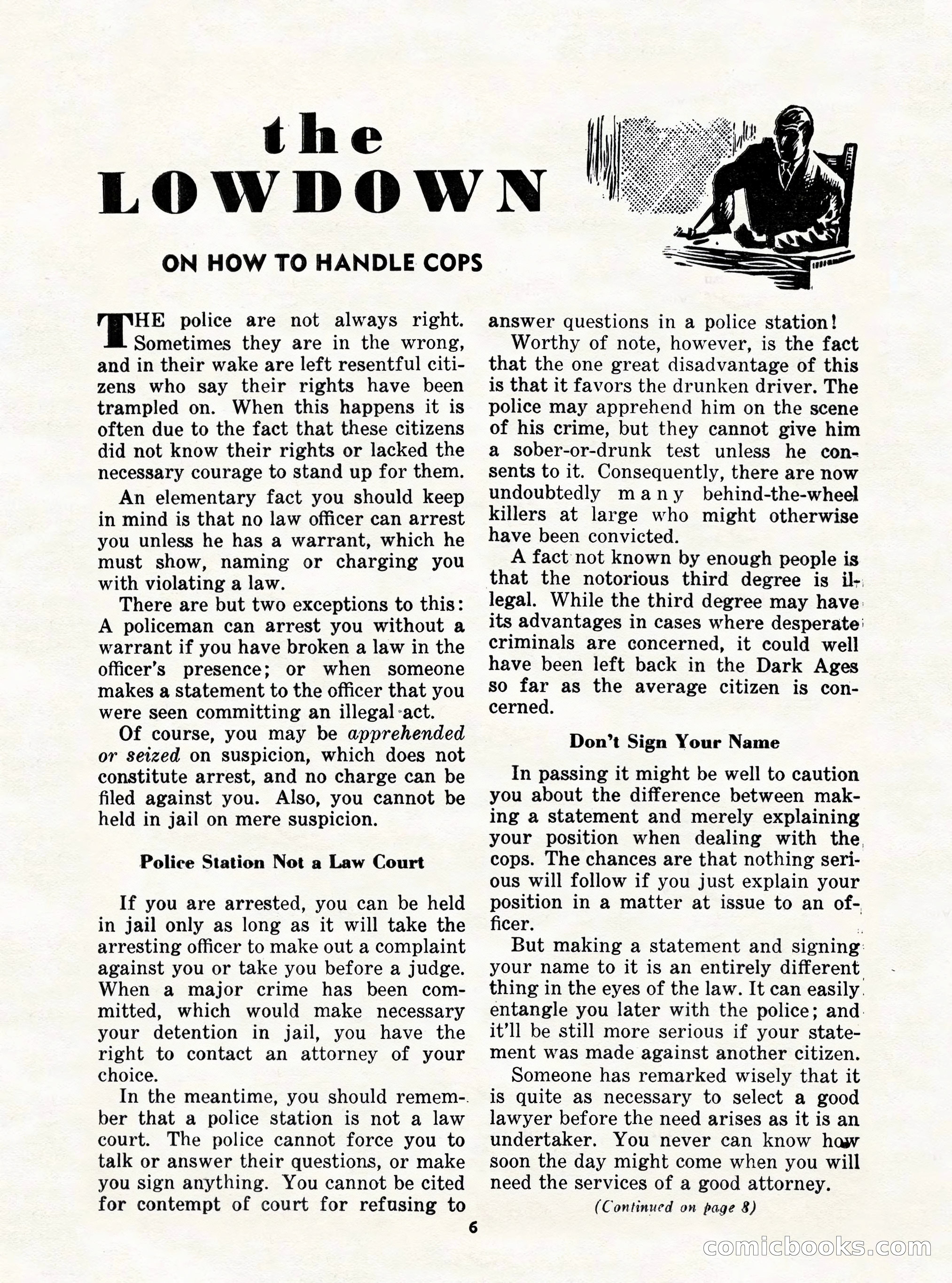
A restored page from Pulp Fiction, 1952. Page through the whole issue in the reader above.
📄 Transcribed text from this page (OCR, searchable)
Machine-transcribed from the original scan — historical spelling and the odd misread are preserved.
LOWDOWN. ON HOW TO HANDLE COPS HE police are not always right. Sometimes they are in the wrong, and in their wake are left resentful citi- zens who say their rights have been trampled on. When this happens it is often due to the fact that these citizens did not know their rights or lacked the necessary courage to stand up for them. An elementary fact you should keep in mind is that no law officer can arrest you unless he has a warrant, which he must show, naming or charging you with violating a law. There are but two exceptions to this: A policeman can arrest you without a warrant if you have broken a law in the officer’s presence; or when someone makes a statement to the officer that you were seen committing an illegal -act. Of course, you may be apprehended or seized on suspicion, which does not constitute arrest, and no charge can be filed against you. Also, you cannot be held in jail on mere suspicion. Police Station Not a Law Court If you are arrested, you can be held in jail only as long as it will take the arresting officer to make out a complaint against you or take you before a judge. When a major crime has been com- mitted, which would make necessary your detention in jail, you have the right to contact an attorney of your choice. In the meantime, you should remem-. ber that a police station is not a law court. The police cannot force you to talk or answer their questions, or make you sign anything. You cannot be cited for contempt of court for refusing to answer questions in a police station! Worthy of note, however, is the fact that the one great disadvantage of this is that it favors the drunken driver. The police may apprehend him on the scene of his crime, but they cannot give him a sober-or-drunk test unless he con- sents to it. Consequently, there are now undoubtedly many _ behind-the-wheel killers at large who might otherwise have been convicted. A fact not known by enough people is that the notorious third degree is il-; legal. While the third degree may have. its advantages in cases where desperate’ criminals are concerned, it could well have been left back in the Dark Ages so far as the average citizen is con- cerned. Don’t Sign Your Name In passing it might be well to caution you about the difference between mak- ing a statement and merely explaining your position when dealing with the. cops. The chances are that nothing seri- ous will follow if you just explain your position in a matter at issue to an of- ficer. But making a statement and signing: your name to it is an entirely different. thing in the eyes of the law. It can easily. entangle you later with the police; and: it’ll be still more serious if your state- ment was made against another citizen. Someone has remarked wisely that it is quite as necessary to select a good lawyer before the need arises as it is an undertaker. You never can know haw soon the day might come when you will need the services of a good attorney. (Continued on page 8) eomicoooks (C(O)