
Pulp Fiction, 1915 · page 177 of 228
Adventure, November 1915 — page 177: what you’re looking at
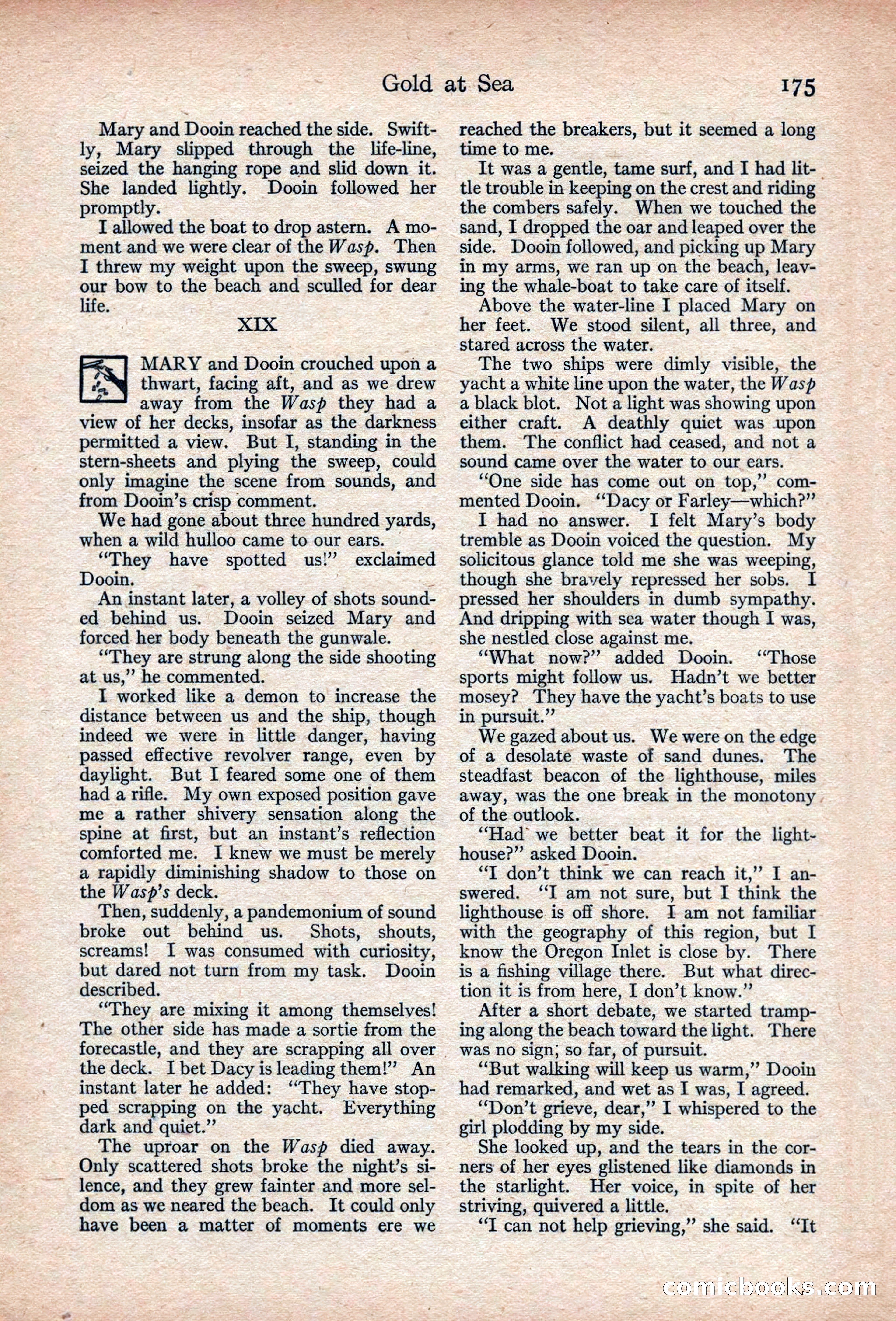
A restored page from Pulp Fiction, 1915. Page through the whole issue in the reader above.
📄 Transcribed text from this page (OCR, searchable)
Machine-transcribed from the original scan — historical spelling and the odd misread are preserved.
Gold at Sea Mary and Dooin reached the side. Swift- ly, Mary slipped through the life-line, seized the hanging rope and slid down it. She landed lightly. Dooin followed her promptly. I allowed the boat to drop astern. A mo- ment and we were clear of the Wasp. Then I threw my weight upon the sweep, swung our bow to the beach and sculled for dear life. : xXIX Se | MARY and Dooin crouched upon a “wy thwart, facing aft, and as we drew away from the Wasp they had a view of her decks, insofar as the darkness permitted a view. But I, standing in the stern-sheets and plying the sweep, could only imagine the scene from sounds, and from Dooin’s crisp comment. We had gone about three hundred yards, when a wild hulloo came to our ears. — “They have spotted us!” exclaimed Dooin. An instant later, a volley of shots sound- ed behind us. Dooin seized Mary and forced her body beneath the gunwale. “They are strung along the side shooting at us,” he commented. I worked like a demon to increase the distance between us and the ship, though indeed we were in little danger, having _ passed effective revolver range, even by daylight. But 1 feared some one of them had a rifle. My own exposed position gave me a rather shivery sensation along the spine at first, but an instant’s reflection comforted me. I knew we must be merely a rapidly diminishing shadow to those on the Wasp’s deck. Then, suddenly, a pandemonium of sound broke out behind us. Shots, shouts, screams! I was consumed with curiosity, but dared not turn from my task. Dooin described. “They are mixing it among themselves! The other side has made a sortie from the forecastle, and they are scrapping all over © the deck. I bet Dacy is leading them!” An instant later he added: “They have stop- ped scrapping on the yacht. Everything dark and quiet.”’ The uproar on the Wasp died away. Only scattered shots broke the night’s si- lence, and they grew fainter and more sel- dom as we neared the beach. It could only have been a matter of moments ere we 175 reached the breakers, but it seemed a long time to me. It was a gentle, tame surf, and I had lit-_ tle trouble in keeping on the crest and riding the combers safely. When we touched the sand, I dropped the oar and leaped over the side. Dooin followed, and picking up Mary in my arms, we ran up on the beach, leav- ing the whale-boat to take care of itself. Above the water-line I placed Mary on her feet. We stood silent, all three, and stared across the water. The two ships were dimly visible, the yacht a white line upon the water, the Wasp a black blot. Not a light was showing upon either craft. A deathly quiet was upon them. The conflict had ceased, and not a sound came over the water to our ears. “One side has come out on top,” com- mented Dooin. ‘“‘Dacy or Farley—which?” I had no answer. I felt Mary’s body tremble as Dooin voiced the question. My solicitous glance told me she was weeping, though she bravely repressed her sobs. I pressed her shoulders in dumb sympathy. And dripping with sea water though I was, she nestled close against me. “What now?” added Dooin. ‘Those sports might follow us. Hadn’t we better mosey? They have the yacht’s boats to use in pursuit.” We gazed about us. We were on the edge of a desolate waste of sand dunes. The steadfast beacon of the lighthouse, miles away, was the one break in the monotony. of the outlook. ““Had we better beat it for the light- house?” asked Dooin. | “TI don’t think we can reach it,” I an- swered. “I am not sure, but I think the lighthouse is off shore. I am not familiar with the geography of this region, but I know the Oregon Inlet is close by. There is a fishing village there. But what direc- tion it is from here, I don’t know.” Aiter a short debate, we started tramp- ing along the beach toward the light. There was no sign; so far, of pursuit. “But walking will keep us warm,”’ Dooin had remarked, and wet as I was, I agreed. “Don’t grieve, dear,’’ I whispered to the girl plodding by my side. She looked up, and the tears in the cor- ners of her eyes glistened like diamonds in the starlight. Her voice, in spite of her striving, quivered a little. “T can not help grieving,” she said. “It Eomichoo S (E@)