
Pulp Fiction, 1920 · page 146 of 208
Adventure Magazine Cover — page 146: what you’re looking at
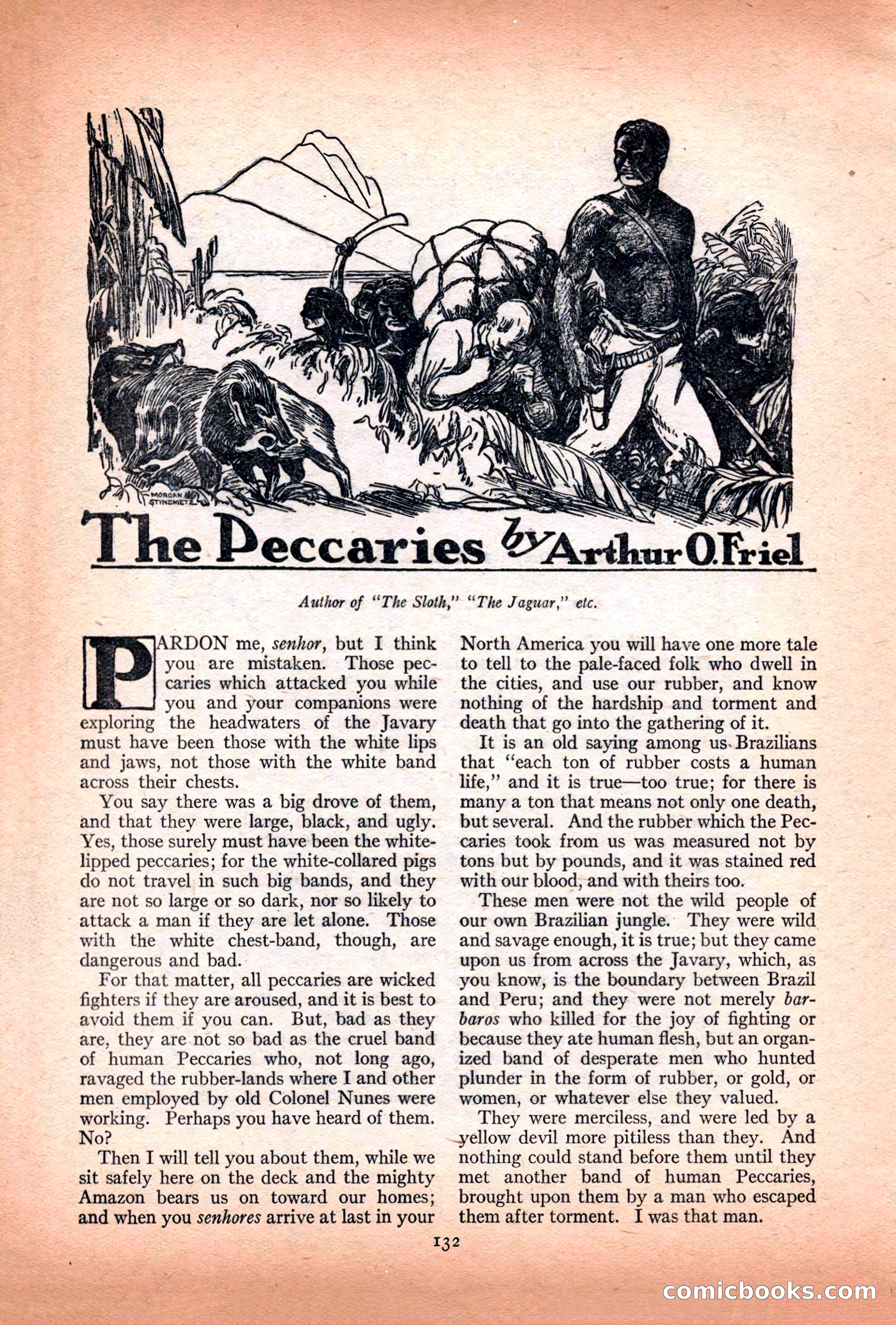
A restored page from Pulp Fiction, 1920. Page through the whole issue in the reader above.
📄 Transcribed text from this page (OCR, searchable)
Machine-transcribed from the original scan — historical spelling and the odd misread are preserved.
Hl f 4) eccar ies 2 Ft . — ; ‘a / y f Eger a WK — “—SS-- ur O. riel Author of “The Sloth,’ “The Jaguar,” etc. RDON me, senhor, but I think you are mistaken. Those pec- caries which attacked you while you and your companions were exploring the headwaters of the Javary must have been those with the white lips and jaws, not those with the white band across their chests. You say there was a big drove of them, and that they were large, black, and ugly. Yes, those surely must have been the white- lipped peccaries; for the white-collared pigs do not travel in such big bands, and they are not so large or so dark, nor so likely to attack a man if they are let alone. Those with the white chest-band, though, are dangerous and bad. For that matter, all peccaries are wicked fighters if they are aroused, and it is best to avoid them if you can. But, bad as they are, they are not so bad as the cruel band of human Peccaries who, not long ago, ravaged the rubber-lands where I and other men employed by old Colonel Nunes were working. Perhaps you have heard of them. No? Then I will tell you about them, while we sit safely here on the deck and the mighty Amazon bears us on toward our homes; and when you sezhores arrive at last in your ~~ = oe ie ied ee ee whe = Ee ae > < as = 2 North America you will have one more tale to tell to the pale-faced folk who dwell in the cities, and use our rubber, and know nothing of the hardship and torment and death that go into the gathering of it. It is an old saying among us. Brazilians that “each ton of rubber costs a human life,’ and it is true—too true; for there is many a ton that means not only one death, but several. And the rubber which the Pec- caries took from us was measured not by tons but by pounds, and it was stained red with our blood, and with theirs too. These men were not the wild people of our own Brazilian jungle. They were wild and savage enough, it is true; but they came upon us from across the Javary, which, as you know, is the boundary between Brazil and Peru; and they were not merely bar- baros who killed for the joy of fighting or because they ate human flesh, but an organ- ized band of desperate men who hunted plunder in the form of rubber, or gold, or women, or whatever else they valued. They were merciless, and were led by a -yellow devil more pitiless than they. And nothing could stand before them until they met another band of human Peccaries, brought upon them by a man who escaped them after torment. I was that man. 132 ee oe = ee - ws set: —_ 2 Aut of eS 2B eee ee 1 j__- a <n Pm TR oa, \/ y " . ow Pa ee a @ @ } DIC. y ) “+ — * — = 1\ di 1h] \ \ 4 IN = a et ae Poi wn Aaa cx =