
Pulp Fiction, 1920 · page 37 of 172
Adventure, December 3, 1920 — page 37: what you’re looking at
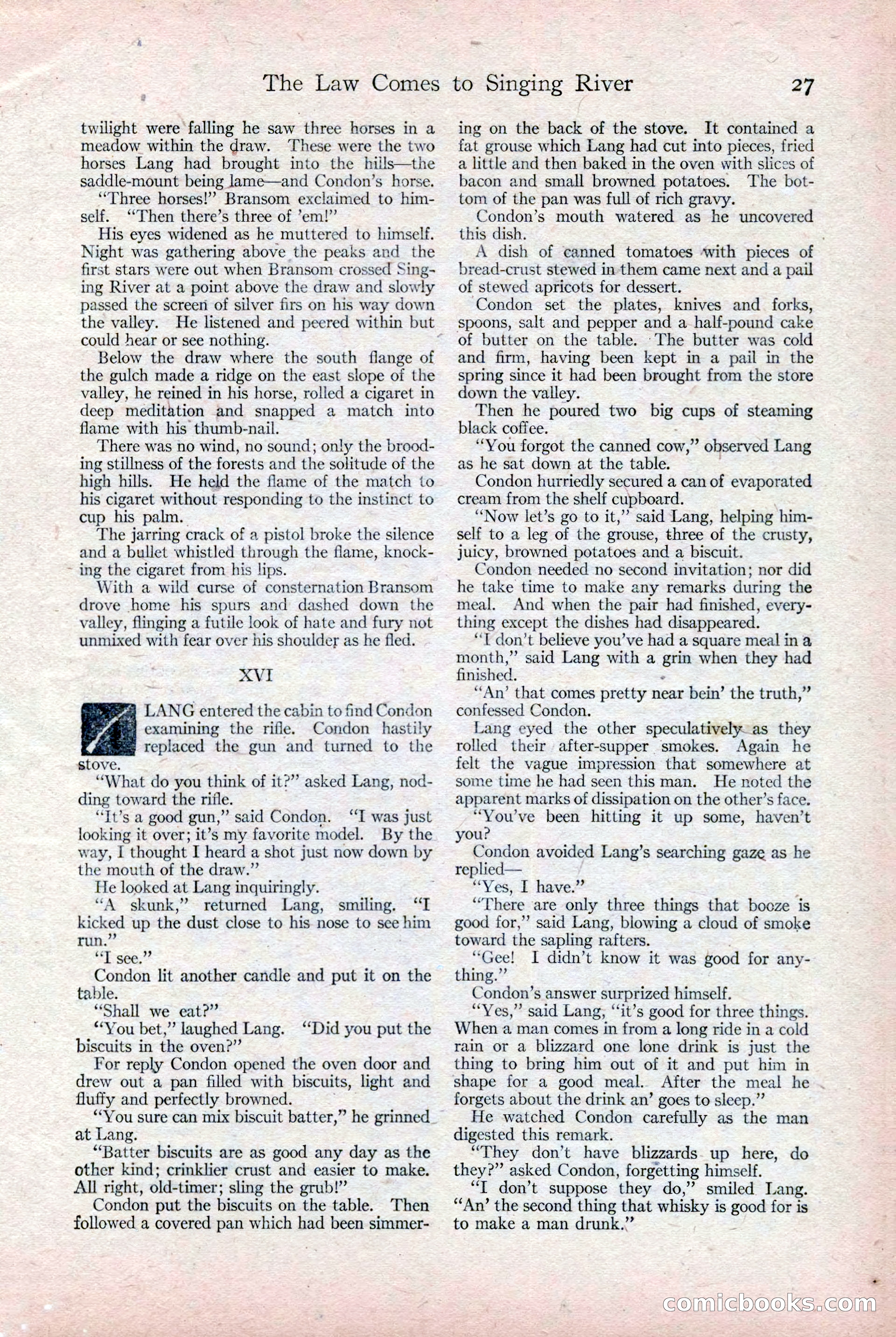
A restored page from Pulp Fiction, 1920. Page through the whole issue in the reader above.
📄 Transcribed text from this page (OCR, searchable)
Machine-transcribed from the original scan — historical spelling and the odd misread are preserved.
The Law Comes to Singing River twilight were falling he saw three horses in a meadow within the draw. These were the two horses Lang had brought into the hills—the saddle-mount being Jame—and Condon’s horse. ‘Three horses!’ Bransom exclaimed to him- self. “Then there’s three of ’em!”’ His eyes widened as he muttered to himself. Night was gathering above the peaks and the first stars were out when Bransom crossed Sing- ing River at a point above the draw and slowly passed the screen of silver firs on his way down the valley. He listened and peered within but could hear or see nothing. Below the draw where the south flange of the gulch made a ridge on the east slope of the valley, he reined in his horse, rolled a cigaret in deep meditation and snapped a match into flame with his thumb-nail. There was no wind, no sound; only the brood- ing stillness of the forests and the solitude of the high hills. He held the flame of the match to his cigaret without responding to the instinct to cup his palm. The jarring crack of a pistol broke the silence and a bullet whistled through the flame, knock- - ing the cigaret from his lips. With a wild curse of consternation Bransom drove home his spurs and dashed down the valley, flinging a futile look of hate and fury not unmixed with fear over his shoulder as he fled. 3 LANG entered the cabin to find Condon stove. examining the rifle. Condon hastily Bones the gun and turned to the “What do you think of it?” asked Lang, nod- ding toward the rifle. “It’s a good gun,’ * said Condon. “TI was just looking it over; it’s my favorite model. By the way, I thought I heard a shot just now down by the mouth of the draw.” He looked at Lang inquiringly. “A skunk,” returned Lang, smiling. “TI kicked up the dust close to his nose to see him run.” ed see,’’ Condon lit another candle and put it on the table. “Shall we eat?” “Vou bet,” laughed Lang. biscuits in the oven?” For reply Condon opened the oven door and drew out a pan filled with biscuits, light and fluffy and perfectly browned. “You sure can mix biscuit batter,” he grinned at Lang. “Batter biscuits are as good any day as the other kind; crinklier crust and easier to make. All right, old-timer; sling the grub!” Condon put the biscuits on the table. Then followed a covered pan which had been simmer- “Did you put the shape for a good meal. — 27 ing on the back of the stove. It contained a fat grouse which Lang had cut into pieces, fried a little and then baked in the oven with slices of bacon and small browned potatoes. The bot- tom of the pan was full of rich gravy. Condon’s mouth watered as he uncovered this dish. A dish of canned tomatoes ‘with pieces of | bread-crust stewed in them came next and a pail of stewed apricots for dessert. Condon set the plates, knives and _ forks, spoons, salt and pepper and a half-pound cake of butter on the table. ‘The butter was cold and firm, having been kept in a pail in the spring since it had been brought from the store down the valley. Then he poured two big cups of steaming black coffee. “You forgot the canned cow,’ ’ observed Lang as he sat down at the table. Condon hurriedly secured a can of evaporated cream from the shelf cupboard. “Now let’s go to it,” said Lang, helping him- self to a leg of the grouse, three of the crusty, juicy, browned potatoes and a biscuit. Condon needed no second invitation; nor did he take time to make any remarks during the meal. And when the pair had finished, every- thing except the dishes had disappeared. ge don’t believe you’ve had a square meal in a month,” said Lang with a co when they had finished. ‘‘An’ that comes pretty near bein’ the truth,” confessed Condon. Lang eyed the other speculativelyoas they rolled their after-supper smokes. Again he felt the vague impression that somewhere at some time he had seen this man. He noted the apparent marks of dissipation on the other’s face. “You've been hitting it up some, haven’t your Condon avoided Lang’s searching gaze as he replied— “Ves, I have.” “There are only three things that booze is good for,” said Lang, blowing a cloud of smoke toward the sapling rafters. “Gee! I didn’t know it was good for any- thing.” Condon’s answer surprized himself. “Yes,” said Lang, “‘it’s good for three things. When a man comes in from a long ride in a cold rain or a blizzard one lone drink is just the thing to bring him out of it and put him in forgets about the drink an’ goes to sleep.” He watched Condon carefully as the man digested this remark. “They don’t have blizzards. up here, do they?” asked Condon, forgetting himself. “T don’t suppose they do,” smiled Lang. ‘An’ the second thing that whisky i is good for is to make a man drunk.” CORMICGLOO© After the meal he . (C@