
Pulp Fiction, 1921 · page 10 of 200
Adventure Magazine Cover, February 3, 1921 — page 10: what you’re looking at
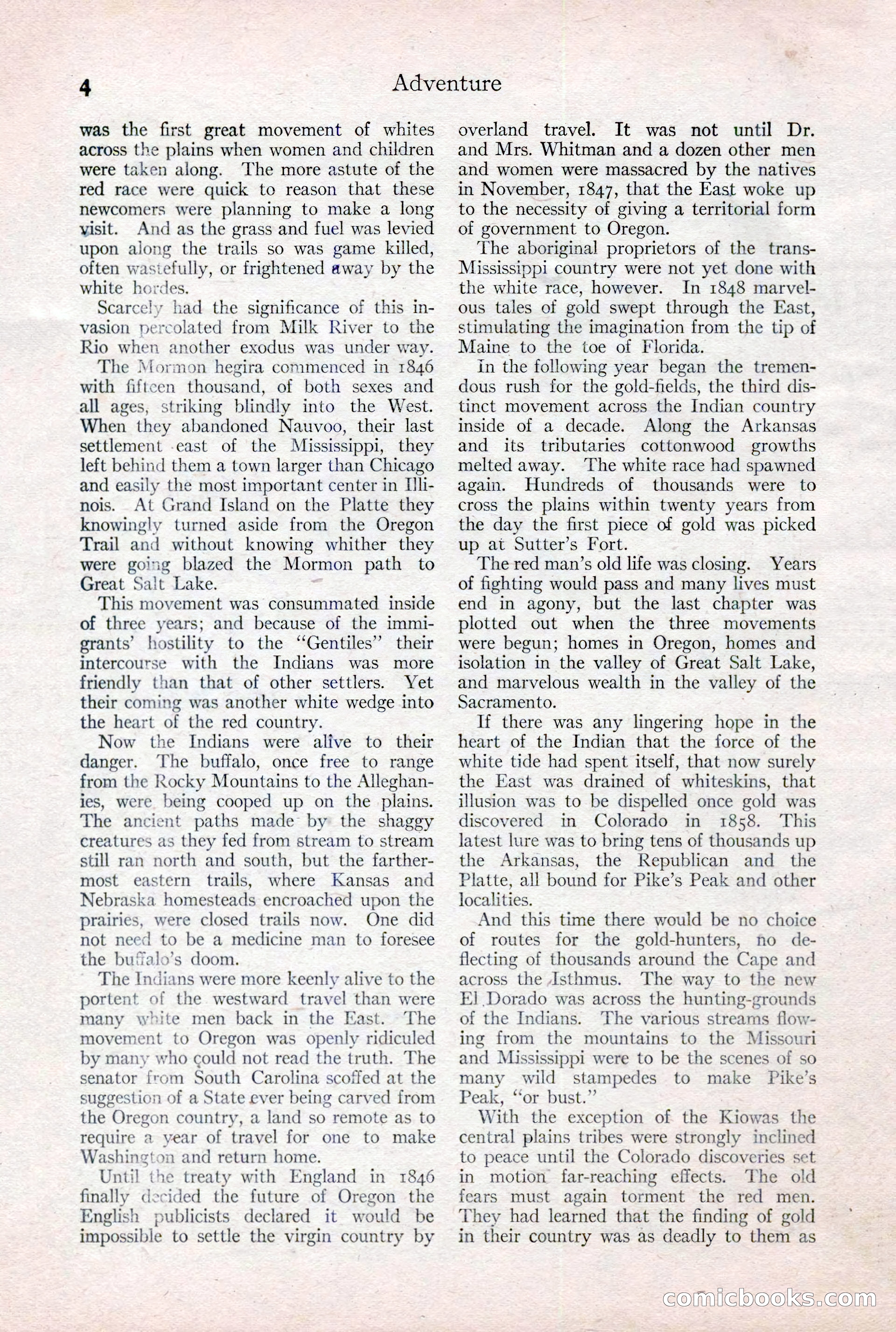
A restored page from Pulp Fiction, 1921. Page through the whole issue in the reader above.
📄 Transcribed text from this page (OCR, searchable)
Machine-transcribed from the original scan — historical spelling and the odd misread are preserved.
4 Adventure was the first great movement of whites across the plains when women and children were taken along. The more astute of the red race were quick to reason that these newcomers were planning to make a long visit. And as the grass and fuel was levied upon along the trails so was game killed, often wasiefully, or frightened away by the white hordes. Scarcely had the significance of this in- vasion percolated from Milk River to the Rio when another exodus was under way. The Mormon hegira commenced in 1846 with fiftcen thousand, of both sexes and all ages, striking blindly into the West. When they abandoned Nauvoo, their last settlement -east of the Mississippi, they left behind them a town larger than Chicago and easily the most important center in I[li- nois. At Grand Island on the Platte they knowingly turned aside from the Oregon Trail and without knowing whither they were going blazed the Mormon path to Great Salt Lake. This movement was consummated inside of three years; and because of the immi- grants’ hostility to the “Gentiles” their intercourse with the Indians was more friendly than that of other settlers. Yet their coming was another white wedge into the heart of the red country. Now the Indians were alive to their danger. The buffalo, once free to range from the Rocky Mountains to the Alleghan- ies, were being cooped up on the plains. The ancient paths made by the shaggy creatures as they fed from stream to stream still ran north and south, but the farther- most eastern trails, where Kansas and Nebraska homesteads encroached upon the prairies, were closed trails now. One did not need to be a medicine man to foresee the bufalo’s doom. The Indians were more keenly alive to the portent of the westward travel than were many white men back in the East. ~The movement to Oregon was openly ridiculed by many who could not read the truth. The senator from South Carolina scoffed at the suggestion of a State ever being carved from the Oregon country, a land so remote as to require a year of travel for one to make Washington and return home. Until the treaty with England in 1846 finally decided the future of Oregon the English publicists declared it would be impossible to settle the virgin country by overland travel. It was not until Dr. and Mrs. Whitman and a dozen other men and women were massacred by the natives in November, 1847, that the East woke up to the necessity of giving a territorial form of government to Oregon. The aboriginal proprietors of the trans- Mississippi country were not yet done with the white race, however. In 1848 marvel- ous tales of gold swept through the East, stimulating the imagination from the tip of Maine to the toe of Florida. in the following year began the tremen- dous rush for the gold-felds, the third dis- tinct movement across the Indian country inside of a decade. Along the Arkansas and its tributaries cottonwood growths melted away. ‘The white race had spawned again. Hundreds of thousands were to cross the plains within twenty years from the day the first piece of gold was picked up at Sutter’s Fort. The red man’s old life was closing. Years of fighting would pass and many lives must end in agony, but the last chapter was plotted out when the three movements were begun; homes in Oregon, homes and isolation in the valley of Great Salt Lake, and marvelous wealth in the valley of the Sacramento. | If there was any lingering hope in the heart of the Indian that the force of the white tide had spent itself, that now surely the East was drained of whiteskins, that illusion was to be dispelled once gold was discovered in Colorado in 1858. This latest lure was to bring tens of thousands up the Arkansas, the Republican and _ the Platte, all bound for Pike’s Peak and other localities. And this time there would be no choice of routes for the gold-hunters, ho de- flecting of thousands around the Cape and across the Isthmus. The way to the new FE] Dorado was across the hunting-grounds of the Indians. The various streams flow- ing from the mountains to the Missouri and Mississippi were to be the scenes of so many wild stampedes to make Pike’s Peak, “or bust.” With the exception of the Kiowas the central plains tribes were strongly inclined to peace until the Colorado discoveries set in motion far-reaching effects. The old fears must again torment the red men. They had learned that the finding of gold in their country was as deadly to them as Gomichboo cS (C@