
Pulp Fiction, 1921 · page 23 of 200
Adventure Magazine Cover, February 3, 1921 — page 23: what you’re looking at
A restored page from Pulp Fiction, 1921. Page through the whole issue in the reader above.
📄 Transcribed text from this page (OCR, searchable)
Machine-transcribed from the original scan — historical spelling and the odd misread are preserved.
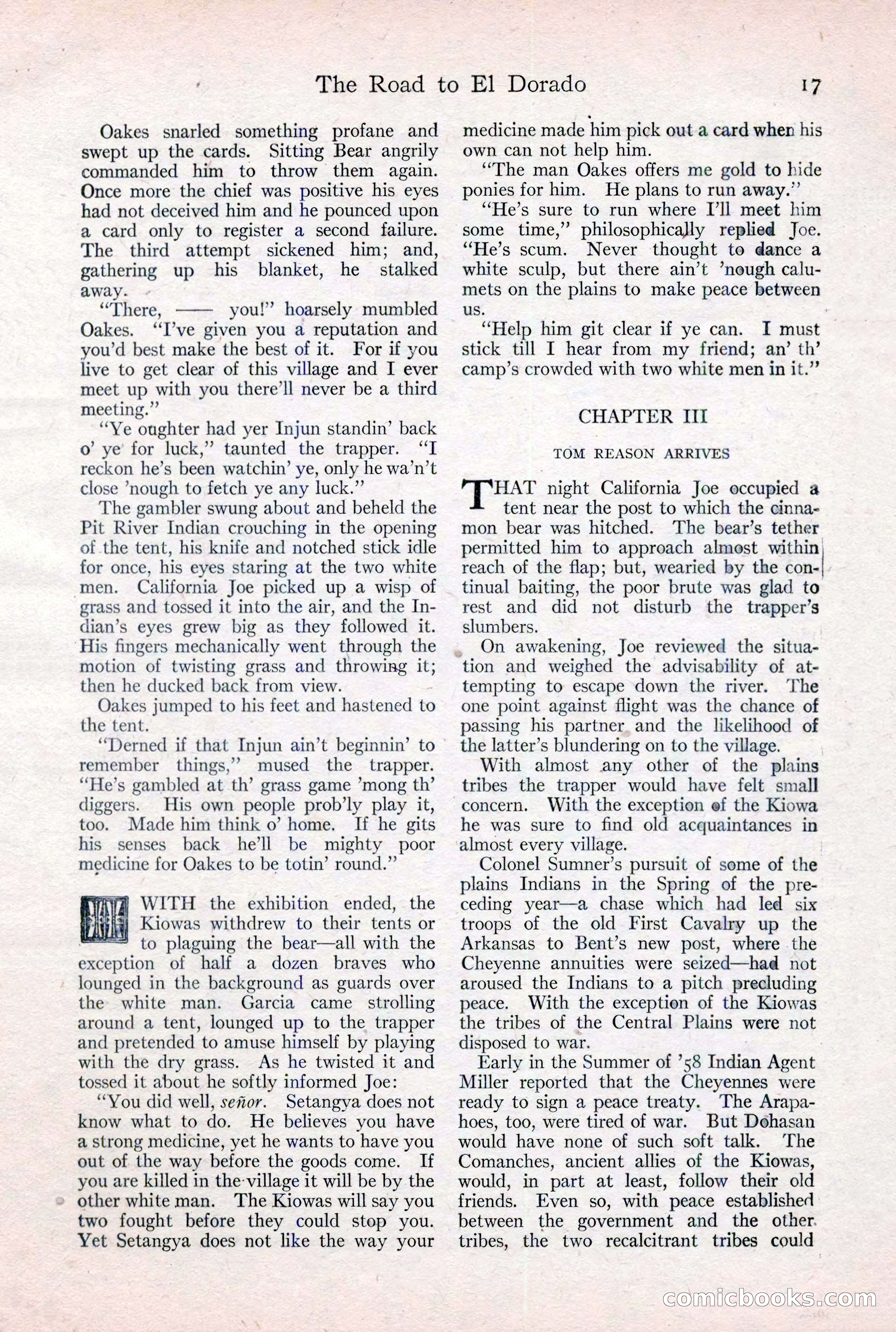
The Road to El Dorado Oakes snarled something profane and swept up the cards. Sitting Bear angrily commanded him to throw them again. Once more the chief was positive his eyes had not deceived him and he pounced upon a card only to register a second failure. The third attempt sickened him; and, gathering up his blanket, he stalked away. “There, —— you!” hoarsely mumbled Oakes. “I’ve given you a reputation and you'd best make the best of it. For if you live to get clear of this village and I ever meet up with you there’ll never be a third meeting.” “Ye oughter had yer Injun standin’ back o’ ye’ for luck,” taunted the trapper. “I reckon he’s been watchin’ ye, only he wa’n’t close ’nough to fetch ye any luck.”’ The gambler swung about and beheld the Pit River Indian crouching in the opening of the tent, his knife and notched stick idle for once, his eyes staring at the two white men. California Joe picked up a wisp of grass and tossed it into the air, and the In- dian’s eyes grew big as they followed it. His fingers mechanically went through the motion of twisting grass and throwing it; then he ducked back from view. Oakes jumped to his feet and hastened to the tent. ‘“Derned if that Injun ain’t beginnin’ to remember things,’ mused the _ trapper. ‘“He’s gambled at th’ grass game ’mong th’ diggers. His own people prob’ly play it, too. Made him think o’ home. [If he gits his senses back he’ll be mighty poor medicine for Oakes to be totin’ round.” Kiowas withdrew to their tents or . to plaguing the bear—all with the exception of half a dozen braves who lounged in the background as guards over the white man. Garcia came strolling around a tent, lounged up to the trapper and pretended to amuse himself by playing with the dry grass. As he twisted it and tossed it about he softly informed Joe: “You did well, sefor. Setangya does not know what to do. He believes you have a strong medicine, yet he wants to have you out of the way before the goods come. If you are killed in the-village it will be by the » other white man. The Kiowas will say you two fought before they could stop you. Yet Setangya does not like the way your vi WITH the exhibition ended, the BD 4) ai 17 medicine made him pick out a card when his own can not help him. “The man Oakes offers me gold to hide ponies for him. He plans to run away.” ‘“Hfe’s sure to run where I'll meet him some time,” philosophically replied Joe. “He’s scum. Never thought to dance a white sculp, but there ain’t ’nough calu- mets on the plains to make peace between us. “Help him git clear if ye can. I must stick till I hear from my friend; an’ th’ camp’s crowded with two white men in it.” CHAPTER III TOM REASON ARRIVES pet night California Joe occupied a tent near the post to which the cinna- mon bear was hitched. The bear’s tether permitted him to approach almest within reach of the flap; but, wearied by the con- tinual baiting, the poor brute was glad to rest and did not disturb the trapper’s slumbers. On awakening, Joe reviewed the situa- ‘tion and weighed the advisability of at- tempting to escape down the river. ‘The one point against flight was the chance of passing his partner. and the likelihood of the latter’s blundering on to the village. With almost any other of the plains tribes the trapper would have felt small concern. With the exception ef the Kiowa he was sure to find old acquaintances in almost every village. Colonel Sumner’s pursuit of some of the plains Indians in the Spring of the pre- ceding year—a chase which had led six troops of the old First Cavalry up the Arkansas to Bent’s new post, where the Cheyenne annuities were seized—had not aroused the Indians to a pitch precluding peace. With the exception of the Kiowas the tribes of the Central Plains were not disposed to war. Early in the Summer of ’58 Indian Agent Miller reported that the Cheyennes were ready to sign a peace treaty. The Arapa- hoes, too, were tired of war. But Dohasan would have none of such soft talk. The Comanches, ancient allies of the Kiowas, would, in part at least, follow their old friends. Even so, with peace established between the government and the other. tribes, the two recalcitrant tribes could CORMICLOOOKS (C@