
Pulp Fiction, 1921 · page 150 of 204
Adventure Magazine Cover — page 150: what you’re looking at
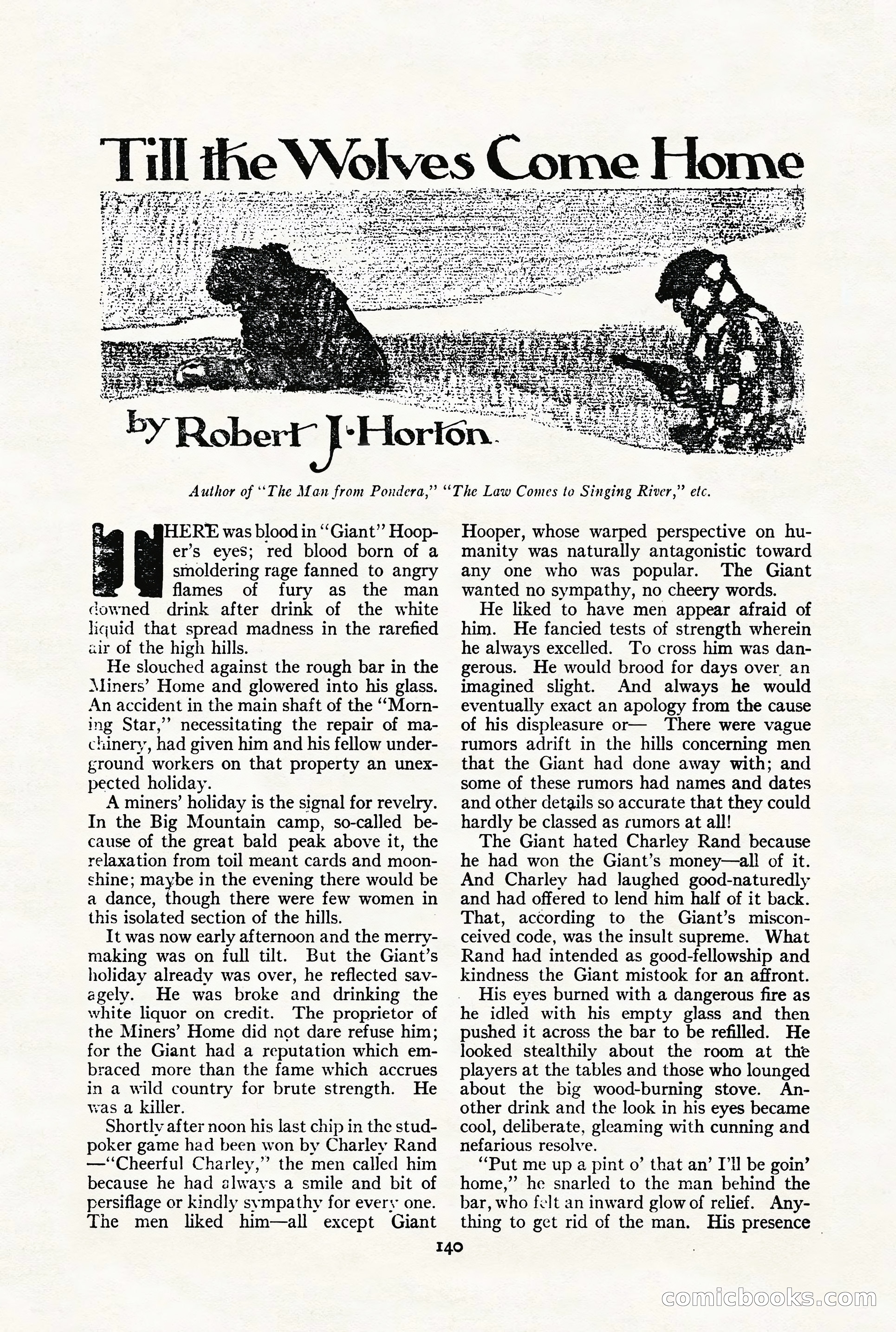
A restored page from Pulp Fiction, 1921. Page through the whole issue in the reader above.
📄 Transcribed text from this page (OCR, searchable)
Machine-transcribed from the original scan — historical spelling and the odd misread are preserved.
Ail ihe Wolves C ome Tome Author of ‘The Man from Pondera,”’ “The Law Comes to Singing River,” etc. HERE was blood in ‘‘Giant”’ Hoop- er’s eyes; red blood born of a smoldering rage fanned to angry nie flames of fury as the man downed drink after drink of the white liquid that spread madness in the rarefied air of the high hills. He slouched against the rough bar in the Miners’ Home and glowered into his glass. An accident in the main shaft of the ‘‘Morn- ing Star,’ necessitating the repair of ma- chinery, had given him and his fellow under- ground workers on that property an unex- pected holiday. A miners’ holiday is the signal for revelry. In the Big Mountain camp, so-called be- cause of the great bald peak above it, the relaxation from toil meant cards and moon- chine; maybe in the evening there would be a dance, though there were few women in this isolated section of the hills. It was now early afternoon and the merry- making was on full tilt. But the Giant’s holiday already was over, he reflected sav- agely. He was broke and drinking the white liquor on credit. The proprietor of the Miners’ Home did not dare refuse him; for the Giant had a reputation which em- braced more than the fame which accrues in a wild country for brute strength. He was a killer. Shortlv after noon his last chip in the stud- poker game had been won by Charley Rand —‘‘Cheerful Charley,’’ the men called him because he had slwavs a smile and bit of persiflage or kindly sympathy for every one. The men liked him—all except Giant Hooper, whose warped perspective on hu- manity was naturally antagonistic toward any one who was popular. The Giant wanted no sympathy, no cheery words. He liked to have men appear afraid of him. He fancied tests of strength wherein he always excelled. To cross him was dan- gerous. He would brood for days over an imagined slight. And always he would eventually exact an apology from the cause of his displeasure or— There were vague rumors adrift in the hills concerning men that the Giant had done away with; and some of these rumors had names and dates and other details so accurate that they could hardly be classed as rumors at all! The Giant hated Charley Rand because he had won the Giant’s money—all of it. And Charley had laughed good-naturedly and had offered to lend him half of it back. That, according to the Giant’s miscon- ceived code, was the insult supreme. What Rand had intended as good-fellowship and kindness the Giant mistook for an affront. His eyes burned with a dangerous fire as he idled with his empty glass and then pushed it across the bar to be refilled. He looked stealthily about the room at the players at the tables and those who lounged about the big wood-burning stove. An- other drink and the look in his eyes became cool, deliberate, gleaming with cunning and nefarious resolve. “Put me up a pint o’ that an’ I'll be goin’ home,” he snarled to the man behind the bar, who felt an inward glow of relief. Any- thing to get rid of the man. His presence | 140 CO MICLOOKS © 5}