
Pulp Fiction, 1921 · page 59 of 204
Adventure Magazine Cover — page 59: what you’re looking at
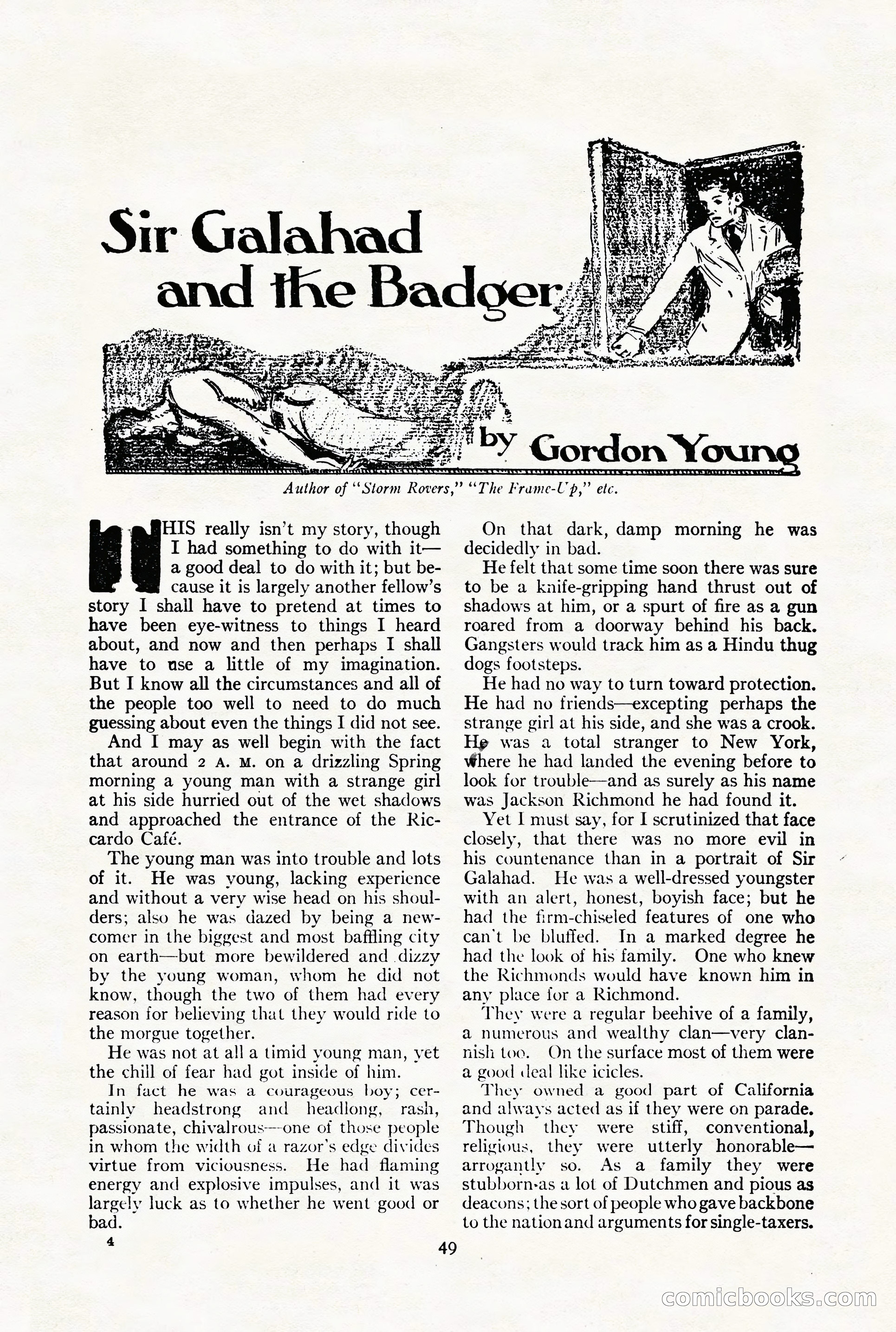
A restored page from Pulp Fiction, 1921. Page through the whole issue in the reader above.
📄 Transcribed text from this page (OCR, searchable)
Machine-transcribed from the original scan — historical spelling and the odd misread are preserved.
Sir Galahad Lt os , Heads ae — the Badger “hg : 2 gusa-s A? A y eseltere ty 33 Ss i Same. t ios Xe PRR at an Vi aht eo f) & y) . ’ - a Author of ‘‘Storm Rovers,” “The Fraume-U p,” ete. HIS really isn’t my story, though I had something to do with it— a good deal to do with it; but be- cause it is largely another fellow’s story I shail have to pretend at times to have been eye-witness to things I heard about, and now and then perhaps I shall have to use a little of my imagination. But I know all the circumstances and all of the people too well to need to do much guessing about even the things I did not see. And I may as well begin with the fact that around 2 A. M. on a drizzling Spring morning a young man with a strange girl at his side hurried out of the wet shadows and approached the entrance of the Ric- cardo Café. The young man was into trouble and lots of it. He was young, lacking experience and without a very wise head on his shoul- ders; also he was dazed by being a new- comer in the biggest and most baffling city on earth—but more bewildered and dizzy by the young woman, whom he did not know, though the two of them had every reason for believing that they would ride to the morgue together. He was not at all a timid young man, vet the chill of fear had got inside of him. In fact he was a courageous boy; cer- tainly headstrong and headlong, rash, passionate, chivalrous—-one of those people in whom the width of a razor’s edge divides virtue from viciousness. He had flaming energy and explosive impulses, and it was largely luck as to whether he went good or bad. 5 49 On that dark, damp morning he was decidedly in bad. He felt that some time soon there was sure to be a knife-gripping hand thrust out of shadows at him, or a spurt of fire as a gun roared from a doorway behind his back. Gangsters would track him as a Hindu thug dogs footsteps. He had no way to turn toward protection. He had no friends—excepting perhaps the strange girl at his side, and she was a crook. Hg was a total stranger to New York, Where he had landed the evening before to look for trouble—and as surely as his name was Jackson Richmond he had found it. Yet | must say, for I scrutinized that face closely, that there was no more evil in his countenance than in a portrait of Sir Galahad. He was a well-dressed youngster with an alert, honest, boyish face; but he had the firm-chiseled features of one who can't be bluffed. In a marked degree he had the look of his family. One who knew the Richmonds would have known him in any place for a Richmond. They were a regular beehive of a family, a numerous and wealthy clan—very clan- nish toe. On the surface most of them were a good deal like icicles. They owned a good part of California and always acted as if they were on parade. Though they were stiff, conventional, religious, they were utterly honorable— arrogantly so. As a family they were stubborn-as a lot of Dutchmen and pious as deacons; the sort of people who gave backbone to the nation and arguments for single-taxers. cComicloooks C©