
Pulp Fiction, 1921 · page 35 of 200
Adventure Magazine Cover, August 18, 1921 — page 35: what you’re looking at
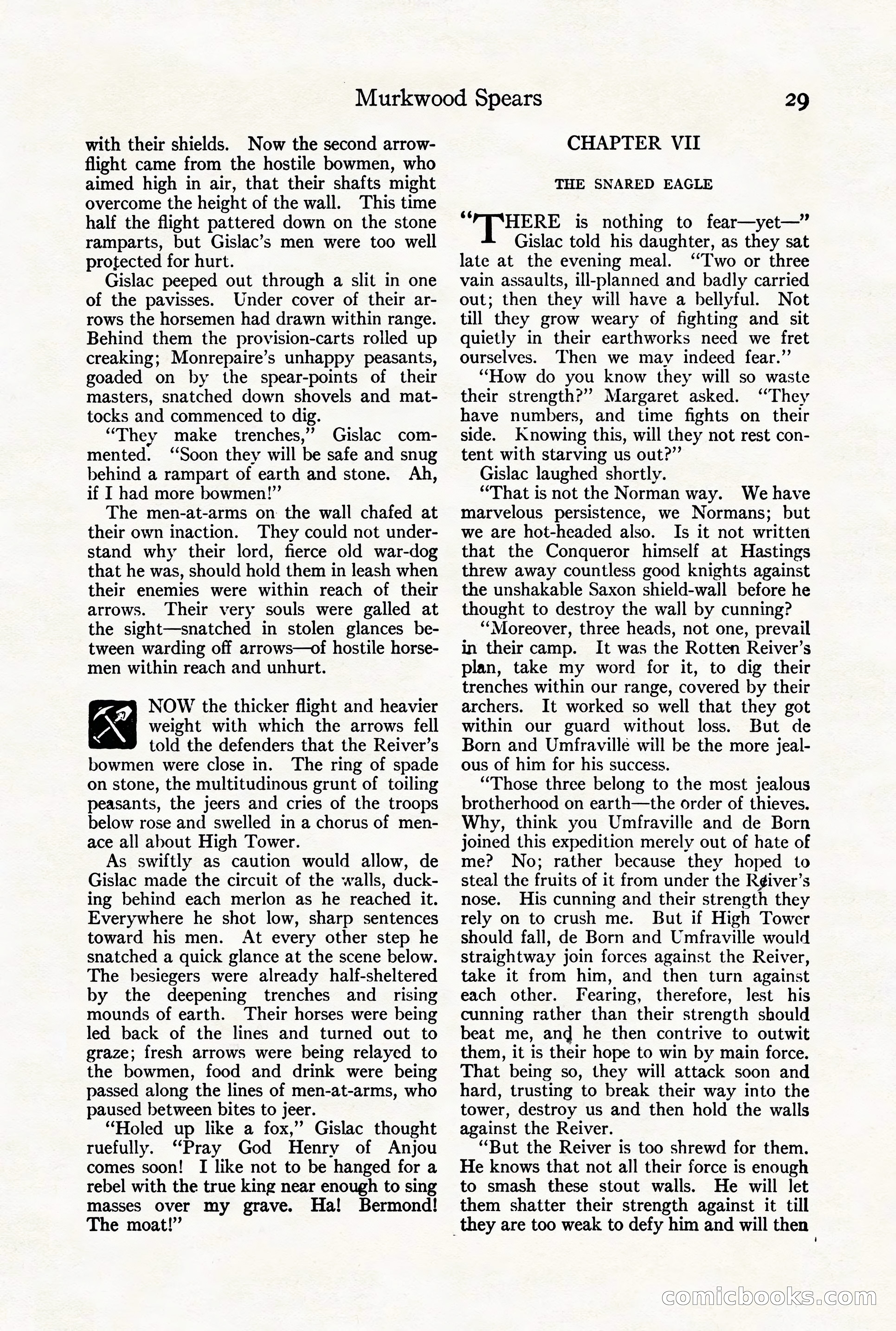
A restored page from Pulp Fiction, 1921. Page through the whole issue in the reader above.
📄 Transcribed text from this page (OCR, searchable)
Machine-transcribed from the original scan — historical spelling and the odd misread are preserved.
~Murkwood Spears with their shields. Now the second arrow- flight came from the hostile bowmen, who aimed high in air, that their shafts might overcome the height of the wall. This time half the flight pattered down on the stone ramparts, but Gislac’s men were too well protected for hurt. Gislac peeped out through a slit in one of the pavisses. Under cover of their ar- rows the horsemen had drawn within range. Behind them the provision-carts rolled up creaking; Monrepaire’s unhappy peasants, goaded on by the spear-points of their masters, snatched down shovels and mat- tocks and commenced to dig. “They make trenches,’ Gislac com- mented. “Soon they will be safe and snug behind a rampart of earth and stone. Ah, if I had more bowmen!”’ The men-at-arms on the wall chafed at their own inaction. They could not under- stand why their lord, fierce old war-dog that he was, should hold them in leash when their enemies were within reach of their arrows. Their very souls were galled at the sight—snatched in stolen glances be- tween warding off arrows—of hostile horse- men within reach and unhurt. NOW the thicker flight and heavier weight with which the arrows fell told the defenders that the Reiver’s bowmen were close in. The ring of spade on stone, the multitudinous grunt of toiling peasants, the jeers and cries of the troops below rose and swelled in a chorus of men- ace all about High Tower. As swiftly as caution would allow, de Gislac made the circuit of the walls, duck- ing behind each merlon as he reached it. Everywhere he shot low, sharp sentences toward his men. At every other step he snatched a quick glance at the scene below. The besiegers were already half-sheltered by the deepening trenches and rising mounds of earth. Their horses were being led back of the lines and turned out to graze; fresh arrows were being relayed to the bowmen, food and drink were being passed along the lines of men-at-arms, who paused between bites to jeer. “Holed up like a fox,” Gislac thought ruefully. “Pray God Henry of Anjou comes soon! I like not to be hanged for a rebel with the true king near enough to sing masses over my grave. Ha! Bermond! The moat!’ AD 29 CHAPTER VII THE SNARED EAGLE VT THERE is nothing to fear—yet—” Gislac told his daughter, as they sat late at the evening meal. ‘‘Two or three vain assaults, ill-planned and badly carried out; then they will have a bellyful. Not till they grow weary of fighting and sit quietly in their earthworks need we fret ourselves. Then we may indeed fear.”’ “How do you know they will so waste their strength?” Margaret asked. ‘They have numbers, and time fights on their side. Knowing this, will they not rest con- tent with starving us out?” Gislac laughed shortly. ‘That is not the Norman way. We have marvelous persistence, we Normans; but we are hot-headed also. Is it not written that the Conqueror himself at Hastings threw away countless good knights against the unshakable Saxon shield-wall before he thought to destroy the wall by cunning? ‘Moreover, three heads, not one, prevail in their camp. It was the Rotten Reiver’s plan, take my word for it, to dig their trenches within our range, covered by their archers. It worked so well that they got within our guard without loss. But de Born and Umfraville will be the more jeal- ous of him for his success. “Those three belong to the most jealous brotherhood on earth—the order of thieves. Why, think you Umfraville and de Born joined this expedition merely out of hate of me? No; rather because they hoped to steal the fruits of it from under the R¢iver’s nose. His cunning and their strength they rely on to crush me. But if High Tower should fall, de Born and Umfraville would straightway join forces against the Reiver, take it from him, and then turn against each other. Fearing, therefore, lest his cunning rather than their strength should beat me, and he then contrive to outwit them, it is their hope to win by main force. That being so, they will attack soon and hard, trusting to break their way into the tower, destroy us and then hold the walls against the Reiver. “But the Reiver is too shrewd for them. He knows that not all their force is enough to smash these stout walls. He will let them shatter their strength against it till _they are too weak to defy him and will then CO CEloOOLKKS C©