
Pulp Fiction, 1921 · page 50 of 200
Adventure Magazine Cover, August 18, 1921 — page 50: what you’re looking at
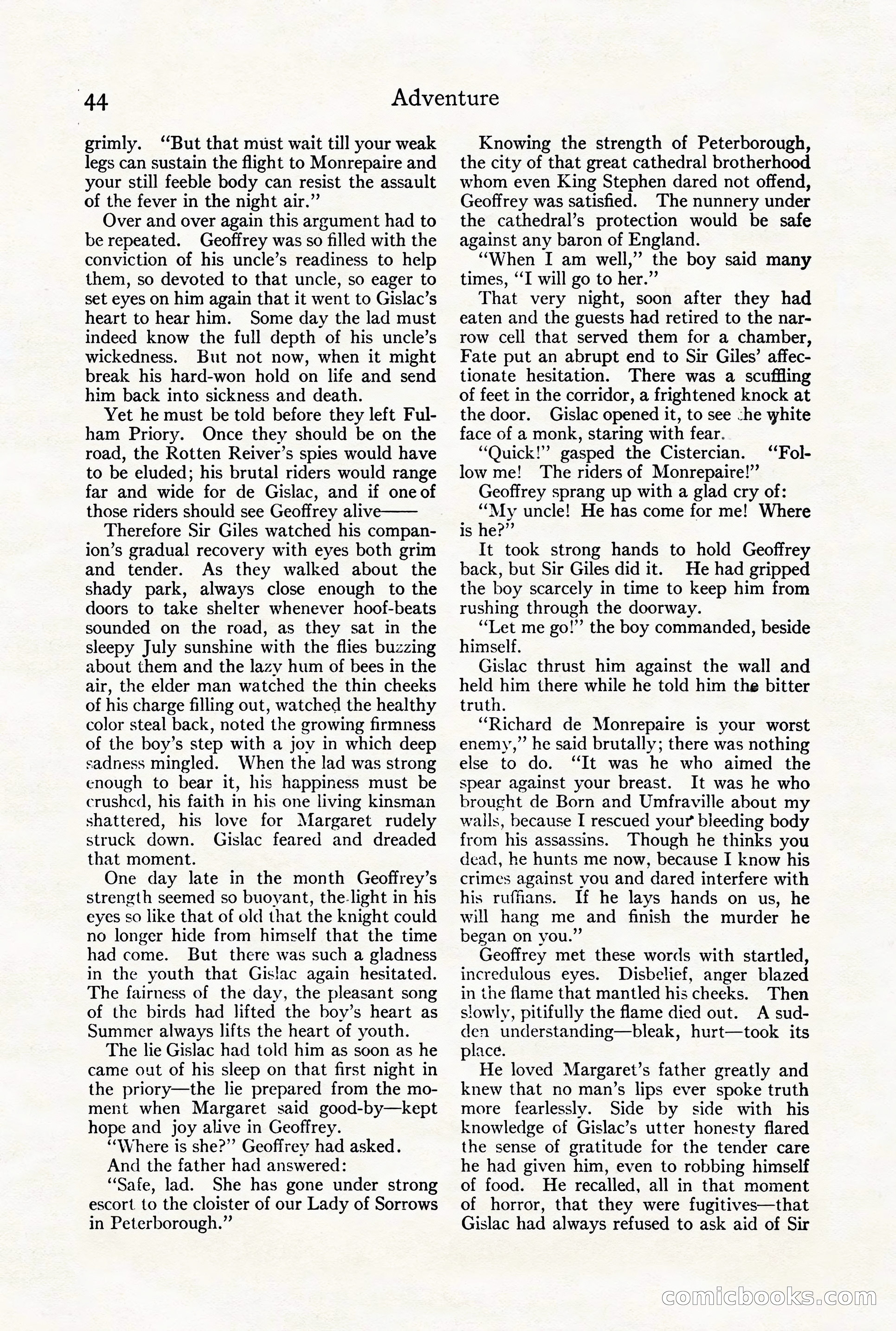
A restored page from Pulp Fiction, 1921. Page through the whole issue in the reader above.
📄 Transcribed text from this page (OCR, searchable)
Machine-transcribed from the original scan — historical spelling and the odd misread are preserved.
44 grimly. ‘But that must wait till your weak legs can sustain the flight to Monrepaire and your still feeble body can resist the assault of the fever in the night air.” Over and over again this argument had to be repeated. Geoffrey was so filled with the conviction of his uncle’s readiness to help them, so devoted to that uncle, so eager to set eyes on him again that it went to Gislac’s heart to hear him. Some day the lad must indeed know the full depth of his uncle’s wickedness. But not now, when it might break his hard-won hold on life and send him back into sickness and death. Yet he must be told before they left Ful- ham Priory. Once they should be on the road, the Rotten Reiver’s spies would have to be eluded; his brutal riders would range far and wide for de Gislac, and if oneof those riders should see Geoffrey alrve-—— Therefore Sir Giles watched his compan- ion’s gradual recovery with eyes both grim and tender. As they walked about the shady park, always close enough to the doors to take shelter whenever hoof-beats sounded on the road, as they sat in the sleepy July sunshine with the flies buzzing about them and the lazy hum of bees in the air, the elder man watched the thin cheeks of his charge filling out, watched the healthy color steal back, noted the growing firmness of the boy’s step with a jov in which deep sadness mingled. When the lad was strong enough to bear it, his happiness must be crushed, his faith in his one living kinsman shattered, his love for Margaret rudely struck down. Gislac feared and dreaded that moment. One day late in the month Geoffrey’s strength seemed so buoyant, the.light in his eyes so like that of old that the knight could no longer hide from himself that the time had come. But there was such a gladness in the youth that Gislac again hesitated. The fairness of the day, the pleasant song of the birds had lifted the boy’s heart as Summer always lifts the heart of youth. The lie Gislac had told him as soon as he came out of his sleep on that first night in the priory—the le prepared from the mo- ment when Margaret said good-by—kept hope and joy alive in Geoffrey. ‘Where is she?”’ Geoffrey had asked. And the father had answered: “Safe, lad. She has gone under strong escort to the cloister of our Lady of Sorrows in Peterborough.” Adventure Knowing the strength of Peterborough, the city of that great cathedral brotherhood whom even King Stephen dared not offend, Geoffrey was satisfied. The nunnery under the cathedral’s protection would be safe against any baron of England. “When I am well,” the boy said many times, “I will go to her.” That very night, soon after they had eaten and the guests had retired to the nar- row cell that served them for a chamber, Fate put an abrupt end to Sir Giles’ affec- tionate hesitation. There was a scuffling of feet in the corridor, a frightened knock at the door. Gislac opened it, to see -he white face of a monk, staring with fear. “Quick!” gasped the Cistercian. low me! The riders of Monrepaire!”’ Geoffrey sprang up with a glad cry of: “My uncle! He has come for me! Where is he?”’ It took strong hands to hold Geoffrey back, but Sir Giles did it. He had gripped the boy scarcely in time to keep him from rushing through the doorway. “Let me go!”’ the boy commanded, beside himself. Gislac thrust him against the wall and held him there while he told him the bitter truth. “Richard de Monrepaire is your worst enemy,” he said brutally; there was nothing else to do. ‘It was he who aimed the spear against your breast. It was he who brought de Born and Umfraville about my walls, because I rescued your bleeding body from his assassins. Though he thinks you dead, he hunts me now, because I know his crimes against vou and dared interfere with his ruffans. If he lays hands on us, he will hang me and finish the murder he began on you.” Geoffrey met these words with startled, incredulous eyes. Disbelief, anger blazed in the flame that mantled his cheeks. Then slowly, pitifully the flame died out. A sud- den understanding—bleak, hurt—took its place. He loved Margaret’s father greatly and knew that no man’s lips ever spoke truth more fearlessly. Side by side with his knowledge of Gislac’s utter honesty flared the sense of gratitude for the tender care he had given him, even to robbing himself of food. He recalled, all in that moment of horror, that they were fugitives—that Gislac had always refused to ask aid of Sir “Fol- COmiclbook (©