
Pulp Fiction, 1921 · page 55 of 204
Adventure Magazine Cover — page 55: what you’re looking at
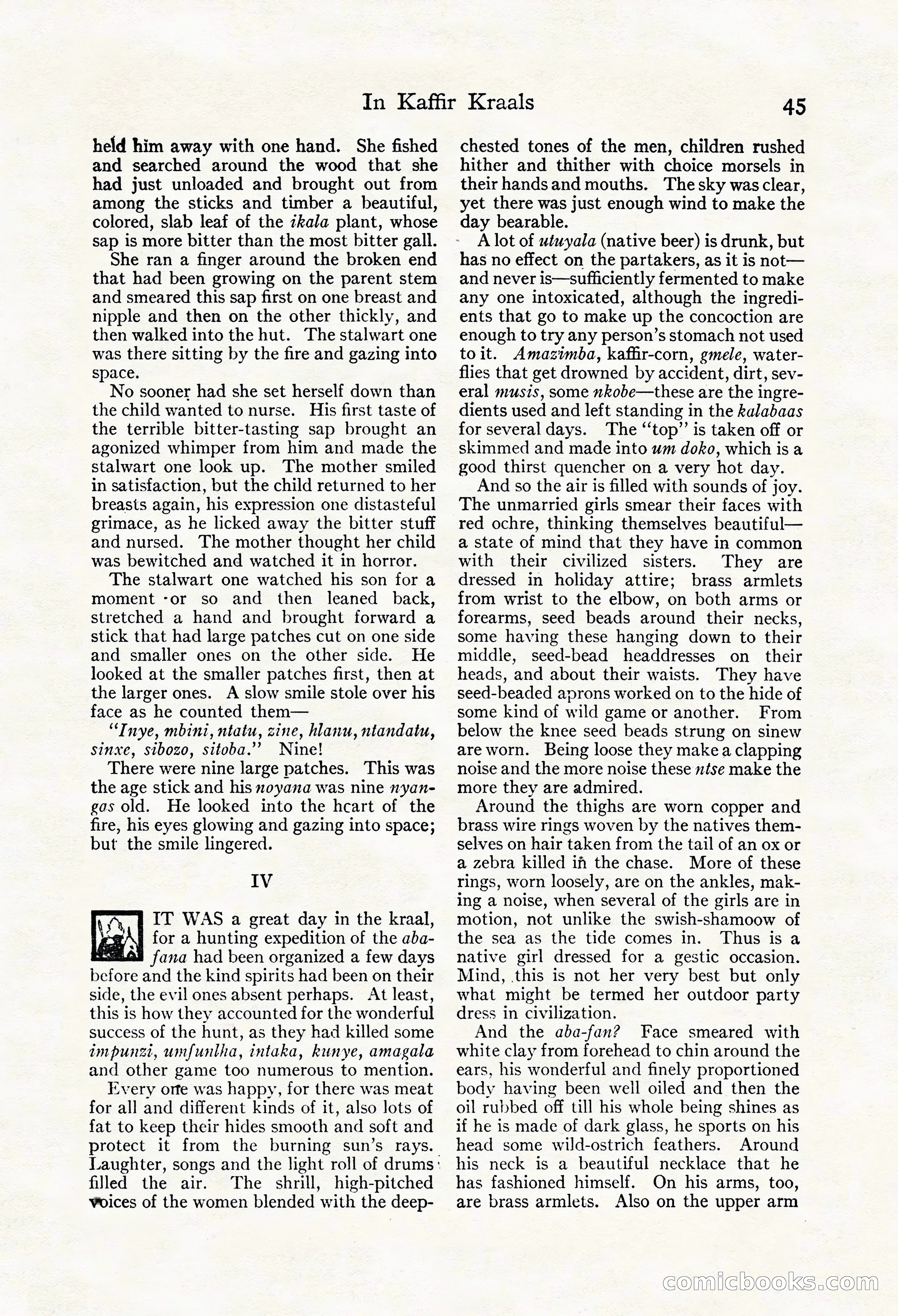
A restored page from Pulp Fiction, 1921. Page through the whole issue in the reader above.
📄 Transcribed text from this page (OCR, searchable)
Machine-transcribed from the original scan — historical spelling and the odd misread are preserved.
In Kaffir Kraals held him away with one hand. She fished and searched around the wood that she had just unloaded and brought out from among the sticks and timber a beautiful, colored, slab leaf of the zkala plant, whose sap is more bitter than the most bitter gall. She ran a finger around the broken end that had been growing on the parent stem and smeared this sap first on one breast and nipple and then on the other thickly, and then walked into the hut. The stalwart one was there sitting by the fire and gazing into space. No sooner had she set herself down than the child wanted to nurse. His first taste of the terrible bitter-tasting sap brought an agonized whimper from him and made the stalwart one look up. The mother smiled in satisfaction, but the child returned to her breasts again, his expression one distasteful grimace, as he licked away the bitter stuff and nursed. The mother thought her child was bewitched and watched it in horror. The stalwart one watched his son for a moment -or so and then leaned back, stretched a hand and brought forward a stick that had large patches cut on one side and smaller ones on the other side. He looked at the smaller patches first, then at the larger ones. A slow smile stole over his face as he counted them— “Inye, mbini, ntatu, zine, hlanu, ntandatu, sinxe, sibozo, sitoba.”’ Nine! There were nine large patches. This was the age stick and his noyana was nine nyan- gas old. He looked into the heart of the fire, his eyes glowing and gazing into space; but the smile lingered. IV IT WAS a great day in the kraal, Gas for a hunting expedition of the aba- SanQs fana had been organized a few days before and the kind spirits had been on their side, the evil ones absent perhaps. At least, this is how they accounted for the wonderful success of the hunt, as they had killed some impunzt, umfuntha, intaka, kunye, amagala and other game too numerous to mention. Every orfe was happy, for there was meat for all and different kinds of it, also lots of fat to keep their hides smooth and soft and protect it from the burning sun’s rays. Laughter, songs and the light roll of drums: filled the air. The shrill, high-pitched voices of the women blended with the deep- 45 chested tones of the men, children rushed hither and thither with choice morsels in their handsand mouths. Thesky was clear, yet there was just enough wind to make the day bearable. A lot of utwyala (native beer) is drunk, but has no effect on the partakers, as it is not— and never is—sufficiently fermented to make any one intoxicated, although the ingredi- ents that go to make up the concoction are enough to try any person’s stomach not used toit. Amazimba, kaffir-corn, gmele, water- flies that get drowned by accident, dirt, sev- eral musis, some nkobe—these are the ingre- dients used and left standing in the kalabaas for several days. The ‘‘top”’ is taken off or skimmed and made into um doko, which is a good thirst quencher on a very hot day. And so the air is filled with sounds of joy. The unmarried girls smear their faces with red ochre, thinking themselves beautiful— a state of mind that they have in common with their civilized sisters. They are dressed in holiday attire; brass armlets from wrist to the elbow, on both arms or forearms, seed beads around their necks, some having these hanging down to their middle, seed-bead headdresses on their heads, and about their waists. They have seed-beaded aprons worked on to the hide of some kind of wild game or another. From below the knee seed beads strung on sinew are worn. Being loose they make a clapping noise and the more noise these ntse make the more they are admired. Around the thighs are worn copper and brass wire rings woven by the natives them- selves on hair taken from the tail of an ox or a zebra killed in the chase. More of these rings, worn loosely, are on the ankles, mak- ing a noise, when several of the girls are in motion, not unlike the swish-shamoow of the sea as the tide comes in. Thus is a native girl dressed for a gestic occasion. Mind, this is not her very best but only what might be termed her outdoor party dress in civilization. And the aba-fan? Face smeared with white clay from forehead to chin around the ears, his wonderful and finely proportioned body having been well oiled and then the oil rubbed off till his whole being shines as if he is made of dark glass, he sports on his head some wild-ostrich feathers. Around his neck is a beautiful necklace that he has fashioned himself. On his arms, too, are brass armlets. Also on the upper arm C@ DOOKS (© iin