
Pulp Fiction, 1921 · page 65 of 204
Adventure Magazine Cover — page 65: what you’re looking at
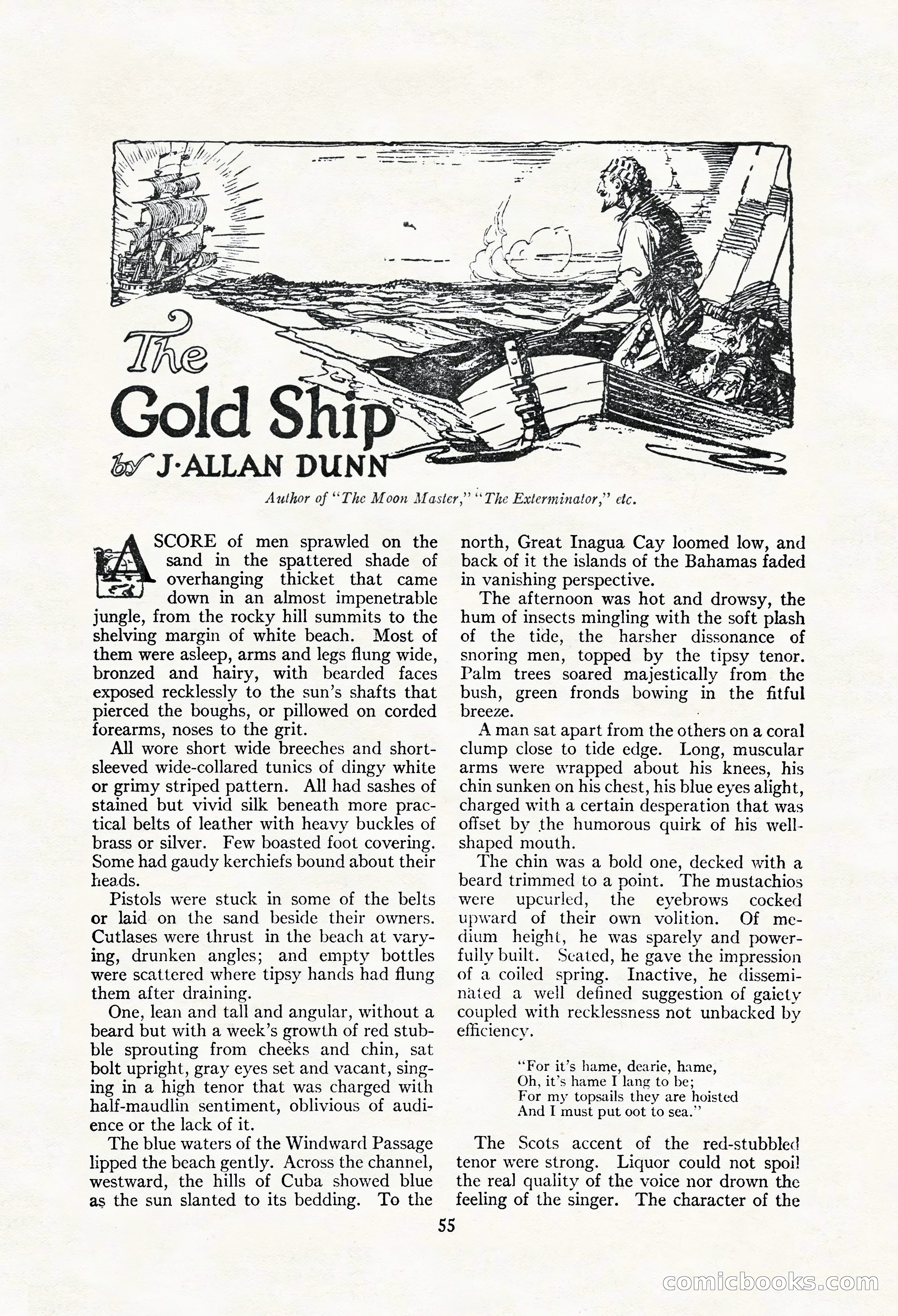
A restored page from Pulp Fiction, 1921. Page through the whole issue in the reader above.
📄 Transcribed text from this page (OCR, searchable)
Machine-transcribed from the original scan — historical spelling and the odd misread are preserved.
b/ J‘-ALLAN DUN > 8 ee f- aan ate: Author of ““The Moon Master,” “The Exterminator,” etc. _ & SCORE of men sprawled on the AQ sand in the spattered shade of Eas overhanging thicket that came ' down in an almost impenetrable jungle, from the rocky hill summits to the shelving margin of white beach. Most of them were asleep, arms and legs flung wide, bronzed and hairy, with bearded faces exposed recklessly to the sun’s shafts that pierced the boughs, or pillowed on corded forearms, noses to the grit. All wore short wide breeches and short- sleeved wide-collared tunics of dingy white or grimy striped pattern. All had sashes of stained but vivid silk beneath more prac- tical belts of leather with heavy buckles of brass or silver. Few boasted foot covering. Some had gaudy kerchiefs bound about their heads. Pistols were stuck in some of the belts or laid on the sand beside their owners. Cutlases were thrust in the beach at vary- ing, drunken angles; and empty bottles were scattered where tipsy hands had flung them after draining. One, lean and tall and angular, without a beard but with a week’s growth of red stub- ble sprouting from cheeks and chin, sat bolt upright, gray eyes set and vacant, sing- ing in a high tenor that was charged with half-maudlin sentiment, oblivious of audi- ence or the lack of it. The blue waters of the Windward Passage lipped the beach gently. Across the channel, westward, the hills of Cuba showed blue as the sun slanted to its bedding. To the 55 north, Great Inagua Cay loomed low, and back of it the islands of the Bahamas faded in vanishing perspective. The afternoon was hot and drowsy, the hum of insects mingling with the soft plash of the tide, the harsher dissonance of snoring men, topped by the tipsy tenor. Palm trees soared majestically from the bush, green fronds bowing in the fitful breeze. A man sat apart from the others on a coral clump close to tide edge. Long, muscular arms were wrapped about his knees, his chin sunken on his chest, his blue eyes alight, charged with a certain desperation that was offset by the humorous quirk of his well- shaped mouth. The chin was a bold one, decked with a beard trimmed to a point. The mustachios were upcurled, the eyebrows cocked upward of their own volition. Of me- dium height, he was sparely and power- fully built. Scated, he gave the impression of a coiled spring. Inactive, he dissemi- nated a well defined suggestion of gaiety coupled with recklessness not unbacked by efficiency. ‘For it’s hame, dearie, hame, Oh, it’s hame I lang to be; For my topsails they are hoisted And I must put oot to sea.” The Scots accent of the red-stubbled tenor were strong. Liquor could not spoil the rea] quality of the voice nor drown the feeling of the singer. The character of the Ghook S (© iin