
Pulp Fiction, 1922 · page 37 of 200
Adventure Magazine Cover — page 37: what you’re looking at
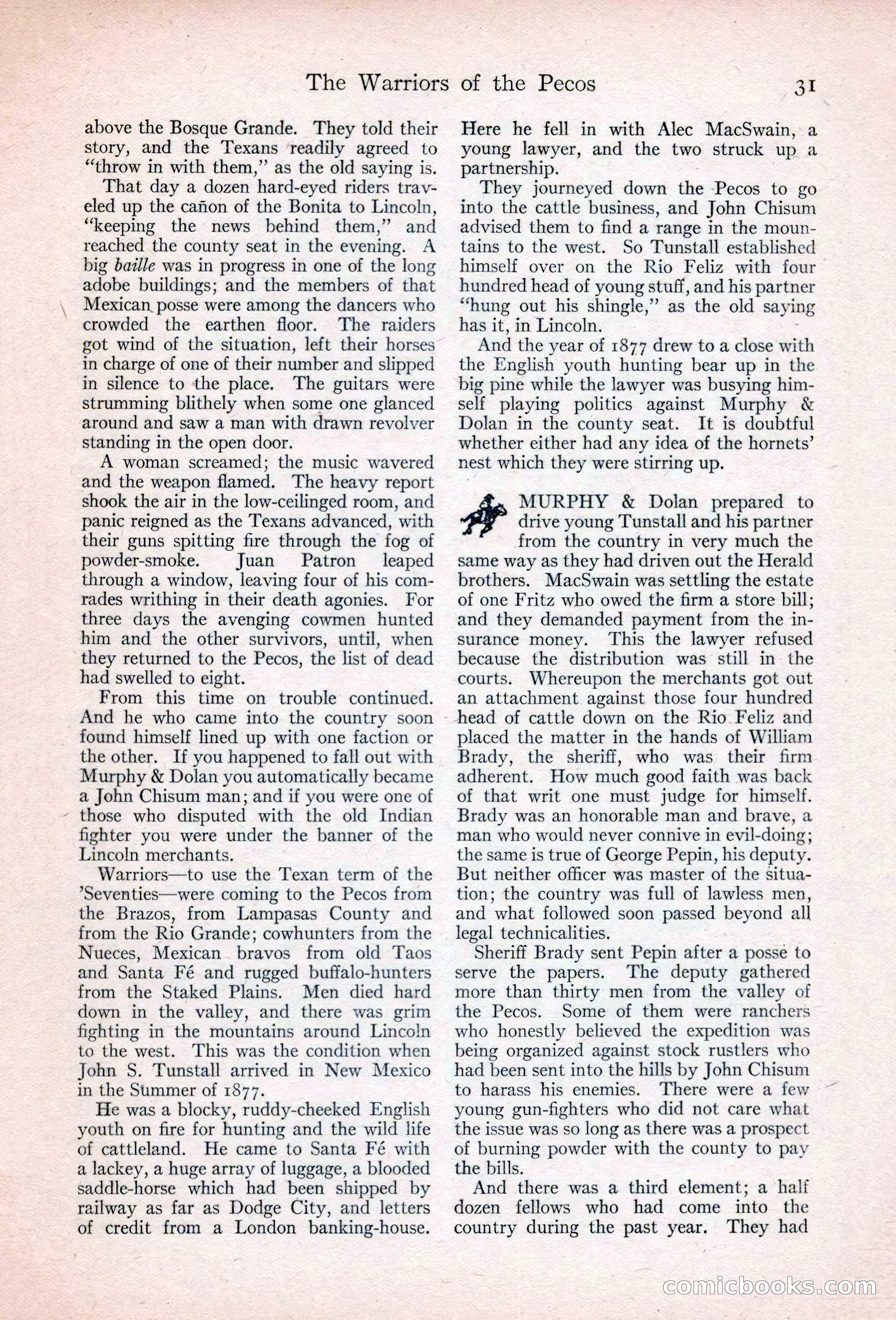
A restored page from Pulp Fiction, 1922. Page through the whole issue in the reader above.
📄 Transcribed text from this page (OCR, searchable)
Machine-transcribed from the original scan — historical spelling and the odd misread are preserved.
The Warriors above the Bosque Grande. They told their story, and the Texans readily agreed to “throw in with them,” as the old saying is. That day a dozen hard-eyed riders trav- eled up the cafion of the Bonita to Lincoln, “keeping the news behind them,” and reached the county seat in the evening. A big baile was in progress in one of the long adobe buildings; and the members of that Mexican_ posse were among the dancers who crowded the earthen floor. The raiders got wind of the situation, left their horses in charge of one of their number and slipped in silence to the place. The guitars were strumming blithely when some one glanced around and saw a man with drawn revolver standing in the open door. A woman screamed; the music wavered and the weapon flamed. The heavy report shook the air in the low-ceilinged room, and panic reigned as the Texans advanced, with their guns spitting fire through the fog of powder-smoke. Juan Patron leaped through a window, leaving four of his com- rades writhing in their death agonies. For three days the avenging cowmen hunted him and the other survivors, until, when they returned to the Pecos, the list of dead had swelled to eight. From this time on trouble continued. And he who came into the country soon found himself lined up with one faction or the other. If you happened to fall out with Murphy & Dolan you automatically became a John Chisum man; and if you were one of - those who disputed with the old Indian fighter you were under the banner of the Lincoln merchants. Warriors—to use the Texan term of the *Seventies—were coming to the Pecos from the Brazos, from Lampasas County and from the Rio Grande; cowhunters from the Nueces, Mexican bravos from old Taos and Santa Fé and rugged buffalo-hunters from the Staked Plains. Men died hard down in the valley, and there was grim fighting in the mountains around Lincoln to the west. This was the condition when John S. Tunstall arrived in New Mexico in the Summer of 1877. He was a blocky, ruddy-cheeked English youth on fire for hunting and the wild life of cattleland. He came to Santa Fé with a lackey, a huge array of luggage, a blooded saddle-horse which had been shipped by railway as far as Dodge City, and letters of credit from a London banking-house. of the Pecos 31 Here he fell in with Alec MacSwain, a young lawyer, and the two struck up a partnership. They journeyed down the Pecos to go into the cattle business, and John Chisum advised them to find a range in the moun- tains to the west. So Tunstall established himself over on the Rio Feliz with four hundred head of young stuff, and his partner “hung out his shingle,” as the old saying has it, in Lincoln. | And the year of 1877 drew to a close with the English youth hunting bear up in the big pine while the lawyer was busying him- self playing politics against Murphy & Dolan in the county seat. It is doubtful whether either had any idea of the hornets’ nest which they were stirring up. MURPHY & Dolan prepared to drive young Tunstall and his partner from the country in very much the same way as they had driven out the Herald brothers. MacSwain was settling the estate of one Fritz who owed the firm a store bill; and they demanded payment from the in- surance money. ‘This the lawyer refused because the distribution was still in the courts. Whereupon the merchants got out an attachment against those four hundred head of cattle down on the Rio Feliz and placed the matter in the hands of William Brady, the sheriff, who was their firm adherent. How much good faith was back of that writ one must judge for himself. Brady was an honorable man and brave, a man who would never connive in evil-doing; the same is true of George Pepin, his deputy. But neither officer was master of the situa- tion; the country was full of lawless men, and what followed soon passed beyond all legal technicalities. Sheriff Brady sent Pepin after a posse to serve the papers. The deputy gathered more than thirty men from the valley of the Pecos. Some of them were ranchers who honestly believed the expedition was being organized against stock rustlers who had been sent into the hills by John Chisum to harass his enemies. There were a few young gun-fighters who did not care what the issue was so long as there was a prospect of burning powder with the county to pay the bills. And there was a third element; a half dozen fellows who had come into the country during the past year. They had S COMMICLOO (C@