
Pulp Fiction, 1922 · page 58 of 200
Adventure Magazine Cover — page 58: what you’re looking at
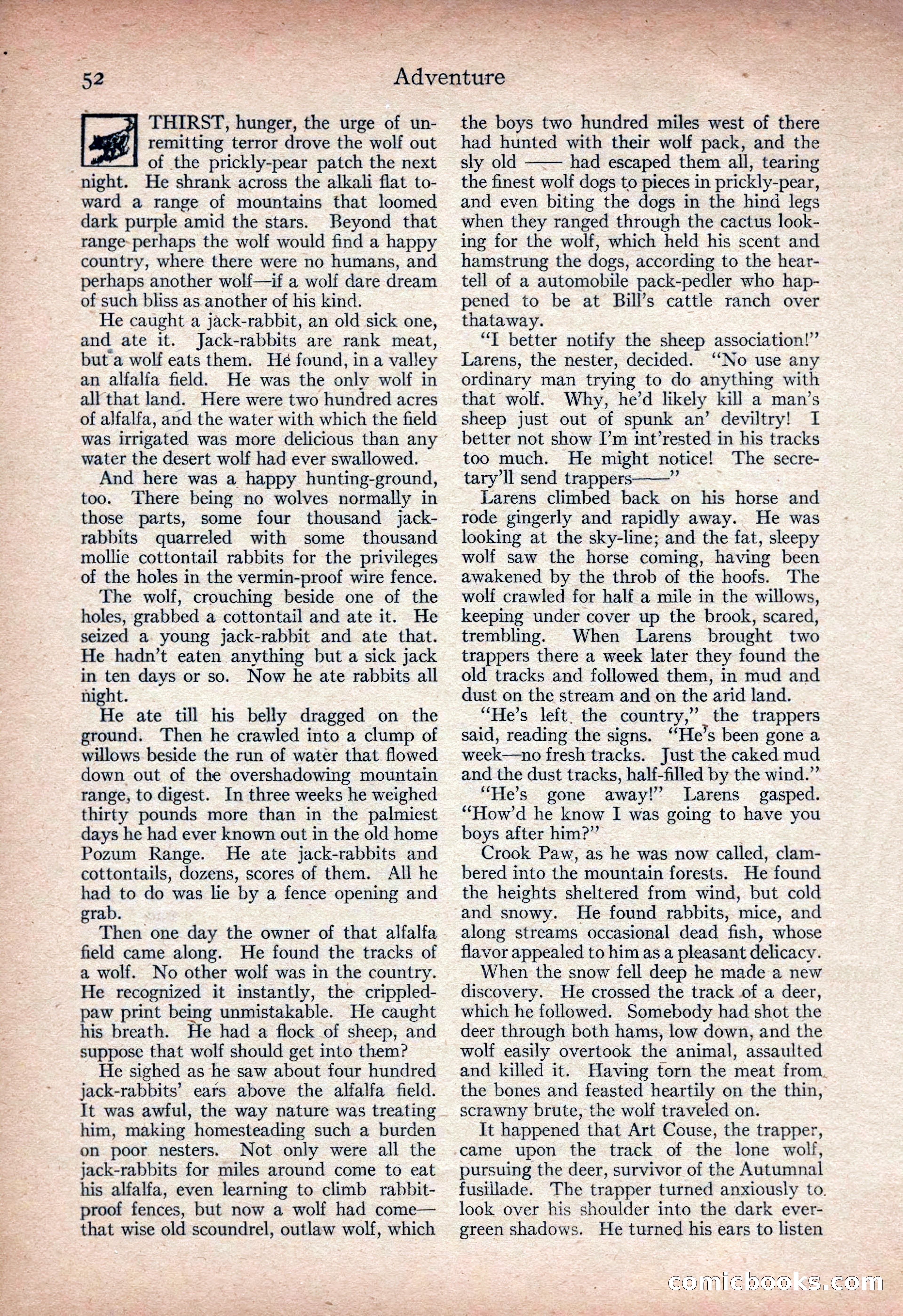
A restored page from Pulp Fiction, 1922. Page through the whole issue in the reader above.
📄 Transcribed text from this page (OCR, searchable)
Machine-transcribed from the original scan — historical spelling and the odd misread are preserved.
4 THIRST, hunger, the urge of un- fe, | remitting terror drove the wolf out Ls of the prickly-pear patch the next night. He shrank across the alkali flat to- ward a range of mountains that loomed dark purple amid the stars. Beyond that range-perhaps the wolf would find a happy country, where there were no humans, and perhaps another wolf—if a wolf dare dream of such bliss as another of his kind. He caught a jack-rabbit, an old sick one, and ate it. Jack-rabbits are rank meat, but a wolf eats them. He found, ina valley an alfalfa field. He was the only wolf in all that land. Here were two hundred acres of alfalfa, and the water with which the field was irrigated was more delicious than any water the desert wolf had ever swallowed. And here was a happy hunting-ground, too. There being no wolves normally in those parts, some four thousand Jack- rabbits quarreled with some thousand mollie cottontail rabbits for the privileges of the holes in the vermin-proof wire fence. The wolf, crouching beside one of the holes, grabbed a cottontail and ate it. He seized a young jack-rabbit and ate that. He hadn’t eaten anything but a sick jack in ten days or so. Now he ate rabbits all hight. He ate till his belly dragged on the ground. Then he crawled into a clump of willows beside the run of water that flowed down out of the overshadowing mountain range, to digest. In three weeks he weighed thirty pounds more than in the palmiest days he had ever known out in the old home Pozum Range. He ate jack-rabbits and cottontails, dozens, scores of them. All he had to do was lie by a fence opening and grab. Then one day the owner of that alfalfa field came along. He found the tracks of a wolf. No other wolf was in the country. He recognized it instantly, the crippled- paw print being unmistakable. He caught his breath. He had a flock of sheep, and suppose that wolf should get into them? He sighed as he saw about four hundred jack-rabbits’ ears above the alfalfa field. It was awful, the way nature was treating him, making homesteading such a burden on poor nesters. Not only were all the jack-rabbits for miles around come to eat his alfalfa, even learning to climb rabbit- proof fences, but now a wolf had come— that wise old scoundrel, outlaw wolf, which Adventure | a . the boys two hundred miles west of there had hunted with their wolf pack, and the sly old had escaped them all, tearing the finest wolf dogs to pieces in prickly-pear, and even biting the dogs in the hind legs when they ranged through the cactus look- ing for the wolf, which held his scent and hamstrung the dogs, according to the hear- tell of a automobile pack-pedler who hap- pened to be at Bill’s cattle ranch over thataway. “TY better notify the sheep association!”’ Larens, the nester, decided. ‘‘No use any ordinary man trying to do anything with that wolf. Why, he’d likely kill a man’s sheep just out of spunk an’ deviltry! I better not show I’m int’rested in his tracks too much. He might notice! The secre- tary’ll send trappers Larens climbed back on his horse and rode gingerly and rapidly away. He was looking at the sky-line; and the fat, sleepy wolf saw the horse coming, having been awakened by the throb of the hoofs. The wolf crawled for half a mile in the willows, keeping under cover up the brook, scared, trembling. When Larens brought two trappers there a week later they found the old tracks and followed them, in mud and dust on the stream and on the arid land. ‘““He’s left. the country,” the trappers said, reading the signs. ‘‘He’s been gone a week—no fresh tracks. Just the caked mud and the dust tracks, half-filled by the wind.” “He’s gone away!” Larens_ gasped. “How'd he know I was going to have you boys after him?” Crook Paw, as he was now called, clam- bered into the mountain forests. He found the heights sheltered from wind, but cold and snowy. He found rabbits, mice, and along streams occasional dead fish, whose flavor appealed to him as a pleasant delicacy. When the snow fell deep he made a new discovery. He crossed the track of a deer, which he followed. Somebody had shot the deer through both hams, low down, and the wolf easily overtook the animal, assaulted and killed it. the bones and feasted heartily on the thin, scrawny brute, the wolf traveled on. It happened that Art Couse, the trapper, came upon the track of the lone wolf, pursuing the deer, survivor of the Autumnal fusiilade. look over his shoulder into the dark ever- green shadows. He turned his ears to listen EORMELO “S' Having torn the meat from. The trapper turned anxiously to. (60)