
Pulp Fiction, 1922 · page 63 of 200
Adventure Magazine Cover — page 63: what you’re looking at
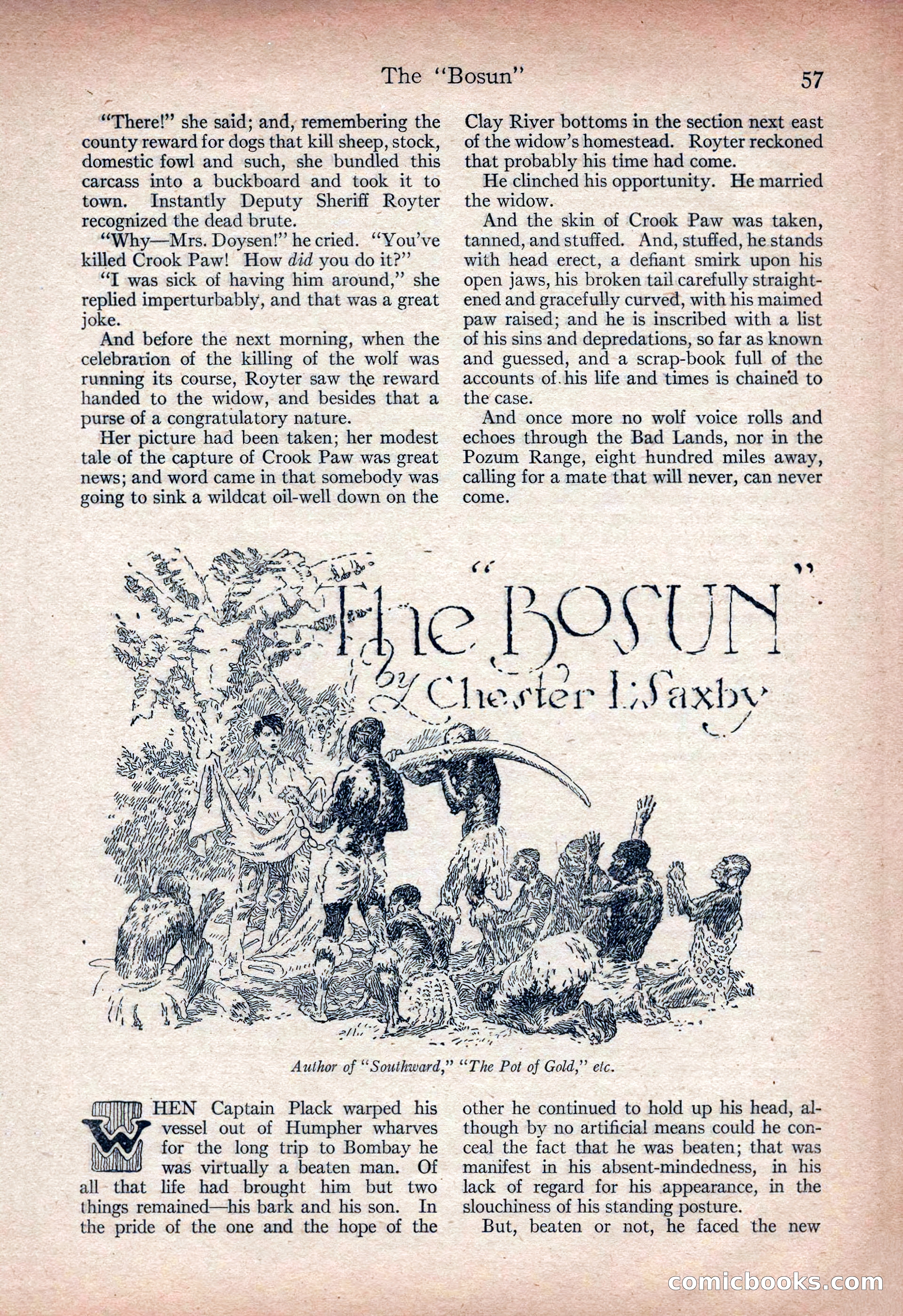
A restored page from Pulp Fiction, 1922. Page through the whole issue in the reader above.
📄 Transcribed text from this page (OCR, searchable)
Machine-transcribed from the original scan — historical spelling and the odd misread are preserved.
The ‘‘Bosun’”’ “There!” she said; and, remembering the county reward for dogs that kill sheep, stock, domestic fowl and such, she bundled this carcass into a buckboard and took it to town. Instantly Deputy Sheriff Royter recognized the dead brute. : “Why—Mrs. Doysen!” he cried. “‘You’ve killed Crook Paw! How did you do it?” “T was sick of having him around,” she replied imperturbably, and that was a great joke. And before the next morning, when the celebration of the killing of the wolf was running its course, Royter saw the reward handed to the widow, and besides that a purse of a congratulatory nature. Her picture had been taken; her modest tale of the capture of Crook Paw was great news; and word came in that somebody was going to sink a wildcat oil-well down on the Am € - + WP ee aie GCG HU A ifaly : Dae a 7 ; AIC. = NS J 4 -4 Sigs 3 (ef Chester eet ned pow G22, Zz Clay River bottoms in the section next east of the widow’s homestead. Royter reckoned that probably his time had come. He clinched his opportunity. He married the widow. And the skin of Crook Paw was taken, tanned, and stuffed. And, stuffed, he stands with head erect, a defiant smirk upon his open jaws, his broken tail carefully straight- ened and gracefully curved, with his maimed paw raised; and he is inscribed with a list of his sins and depredations, so far as known and guessed, and a scrap-book full of the accounts of.his life and times is chained to the case. And once more no wolf voice rolls and echoes through the Bad Lands, nor in the Pozum Range, eight hundred miles away, calling for a mate that will never, can never come. Ce 99 LSaxbv Author of ““Southward,” “The Pot of Gold,’’ etc. HEN Captain Plack warped his Ww vessel out of Humpher wharves for the long trip to Bombay he was virtually a beaten man. Of all- that life had brought him but two things remained—his bark and his son. In the pride of the one and the hope of the other he continued to hold up his head, al- though by no artificial means could he con- ceal the fact that he was beaten; that was manifest in his absent-mindedness, in his lack of regard for his appearance, in the slouchiness of his standing posture. But, beaten or not, he faced the new “Ss : = -comichoo Gol