
Pulp Fiction, 1911 · page 126 of 196
Adventure Magazine Cover — page 126: what you’re looking at
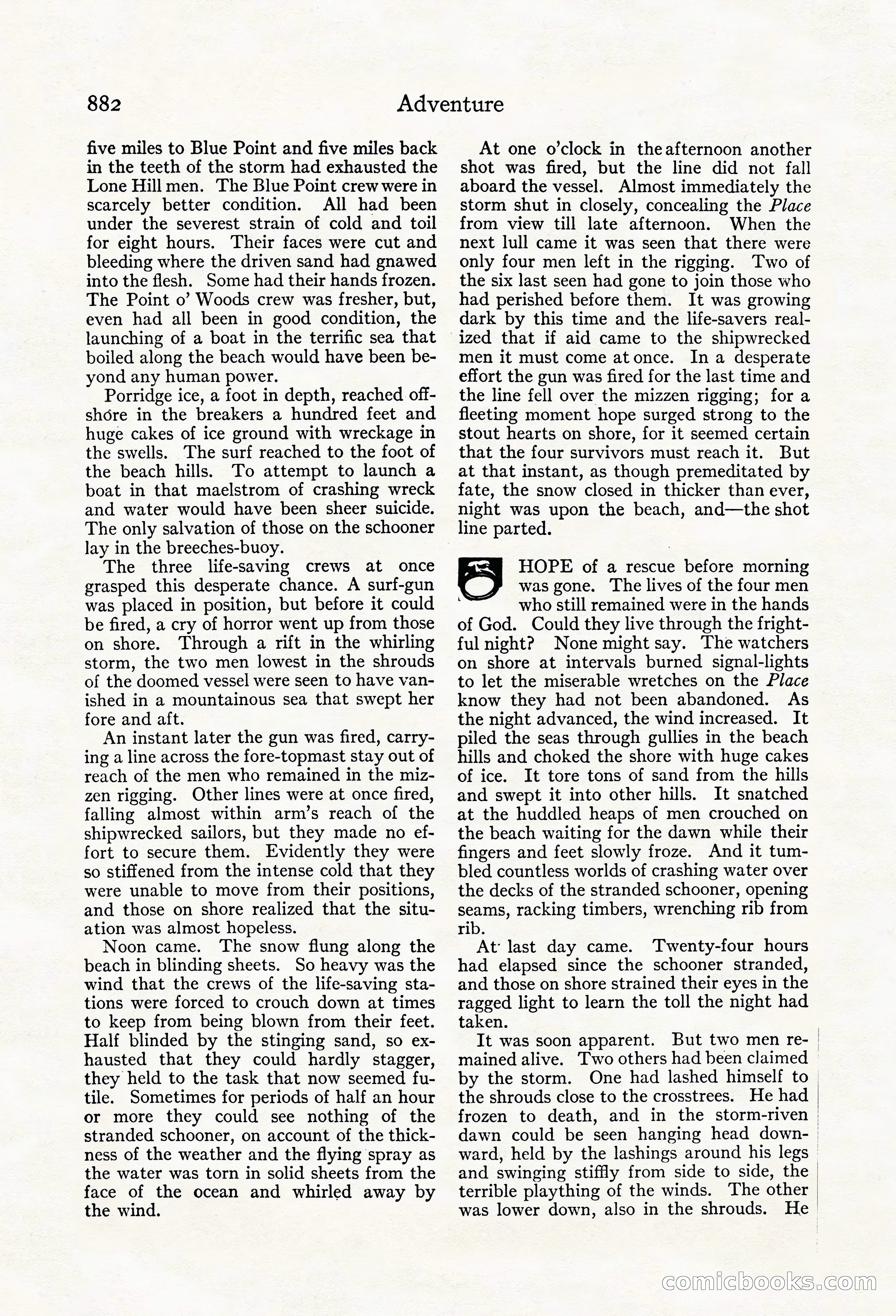
A restored page from Pulp Fiction, 1911. Page through the whole issue in the reader above.
📄 Transcribed text from this page (OCR, searchable)
Machine-transcribed from the original scan — historical spelling and the odd misread are preserved.
882 five miles to Blue Point and five miles back in the teeth of the storm had exhausted the Lone Hill men. The Blue Point crew were in scarcely better condition. All had been under the severest strain of cold and toil for eight hours. Their faces were cut and bleeding where the driven sand had gnawed into the flesh. Some had their hands frozen. The Point o’ Woods crew was fresher, but, even had all been in good condition, the launching of a boat in the terrific sea that boiled along the beach would have been be- yond any human power. Porridge ice, a foot in depth, reached off- shore in the breakers a hundred feet and huge cakes of ice ground with wreckage in the swells. The surf reached to the foot of the beach hills. To attempt to launch a boat in that maelstrom of crashing wreck and water would have been sheer suicide. The only salvation of those on the schooner lay in the breeches-buoy. The three life-saving crews at once grasped this desperate chance. A surf-gun was placed in position, but before it could be fired, a cry of horror went up from those on shore. Through a rift in the whirling storm, the two men lowest in the shrouds of the doomed vessel were seen to have van- ished in a mountainous sea that swept her fore and aft. An instant later the gun was fired, carry- ing a line across the fore-topmast stay out of reach of the men who remained in the miz- zen rigging. Other lines were at once fired, falling almost within arm’s reach of the shipwrecked sailors, but they made no ef- fort to secure them. Evidently they were so stiffened from the intense cold that they were unable to move from their positions, and those on shore realized that the situ- ation was almost hopeless. Noon came. The snow flung along the beach in blinding sheets. So heavy was the wind that the crews of the life-saving sta- tions were forced to crouch down at times to keep from being blown from their feet. Half blinded by the stinging sand, so ex- hausted that they could hardly stagger, they held to the task that now seemed fu- tile. Sometimes for periods of half an hour or more they could see nothing of the stranded schooner, on account of the thick- ness of the weather and the flying spray as the water was torn in solid sheets from the face of the ocean and whirled away by the wind. Adventure At one o’clock in theafternoon another shot was fired, but the line did not fall aboard the vessel. Almost immediately the storm shut in closely, concealing the Place from view till late afternoon. When the next lull came it was seen that there were only four men left in the rigging. Two of the six last seen had gone to join those who had perished before them. It was growing dark by this time and the life-savers real- ized that if aid came to the shipwrecked men it must come atonce. In a desperate effort the gun was fired for the last time and the line fell over the mizzen rigging; for a fleeting moment hope surged strong to the stout hearts on shore, for it seemed certain that the four survivors must reach it. But at that instant, as though premeditated by fate, the snow closed in thicker than ever, night was upon the beach, and—the shot line parted. HOPE of a rescue before morning was gone. The lives of the four men who still remained were in the hands of God. Could they live through the fright- ful night? None might say. The watchers on shore at intervals burned signal-lights to let the miserable wretches on the Place know they had not been abandoned. As the night advanced, the wind increased. It piled the seas through gullies in the beach hills and choked the shore with huge cakes of ice. It tore tons of sand from the hills and swept it into other hills. It snatched at the huddled heaps of men crouched on the beach waiting for the dawn while their fingers and feet slowly froze. And it tum- bled countless worlds of crashing water over the decks of the stranded schooner, opening seams, racking timbers, wrenching rib from rib. At last day came. Twenty-four hours had elapsed since the schooner stranded, and those on shore strained their eyes in the ragged light to learn the toll the night had taken. It was soon apparent. But two men re- mained alive. Two others had been claimed by the storm. One had lashed himself to— the shrouds close to the crosstrees. He had | frozen to death, and in the storm-riven | dawn could be seen hanging head down-_ ward, held by the lashings around his legs - and swinging stiffly from side to side, the terrible plaything of the winds. The other was lower down, also in the shrouds. He cComicloooks