
Pulp Fiction, 1911 · page 56 of 196
Adventure Magazine Cover, October 1911 — page 56: what you’re looking at
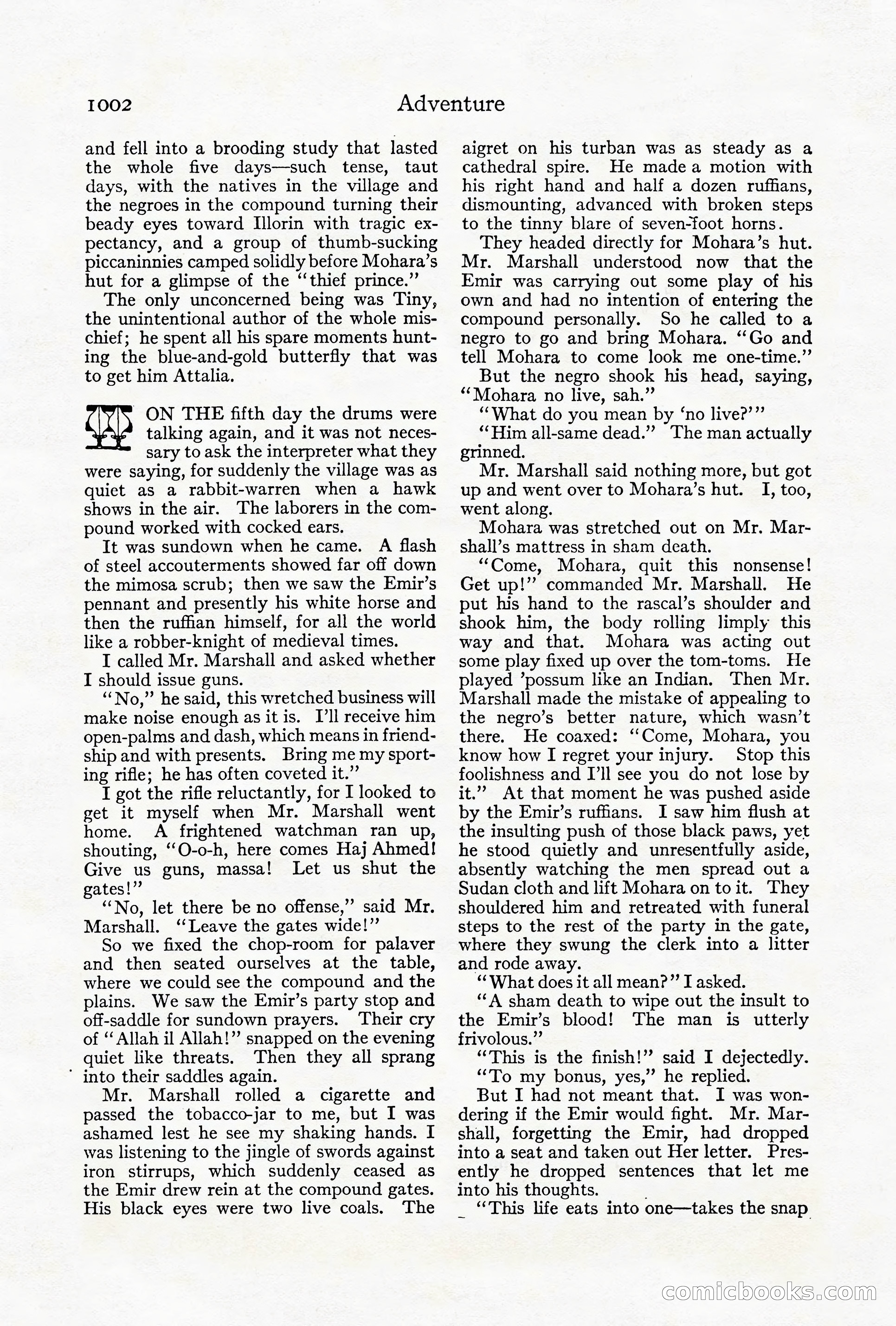
A restored page from Pulp Fiction, 1911. Page through the whole issue in the reader above.
📄 Transcribed text from this page (OCR, searchable)
Machine-transcribed from the original scan — historical spelling and the odd misread are preserved.
TO0O2 and fell into a brooding study that lasted the whole five days-—-such tense, taut days, with the natives in the village and the negroes in the compound turning their beady eyes toward Illorin with tragic ex- pectancy, and a group of thumb-sucking piccaninnies camped solidly before Mohara’s hut for a glimpse of the “thief prince.’ The only unconcerned being was Tiny, the unintentional author of the whole mis- chief; he spent all his spare moments hunt- ing the blue-and-gold butterfly that was to get him Attalia. Ov ON THE fifth day the drums were talking again, and it was not neces- sary to ask the interpreter what they were saying, for suddenly the village was as quiet as a rabbit-warren when a hawk shows in the air. The laborers in the com- pound worked with cocked ears. It was sundown when he came. A flash of steel accouterments showed far off down the mimosa scrub; then we saw the Emir’s pennant and presently his white horse and then the rufhian himself, for all the world like a robber-knight of medieval times. I called Mr. Marshall and asked whether I should issue guns. “No,” he said, this wretched business will make noise enough as itis. I’ll receive him open-palms and dash, which means in friend- ship and with presents. Bring me my sport- ing rifle; he has often coveted it.” I got the rifle reluctantly, for I looked to get it myself when Mr. Marshall went home. A frightened watchman ran up, shouting, “‘O-o-h, here comes Haj Ahmed! Give us guns, massa! Let us shut the gates!” “No, let there be no offense,” said Mr. Marshall. ‘‘Leave the gates wide!”’ So we fixed the chop-room for palaver and then seated ourselves at the table, where we could see the compound and the plains. We saw the Emir’s party stop and off-saddle for sundown prayers. ‘Their cry of ‘‘ Allah il Allah!” snapped on the evening quiet like threats. Then they all sprang ’ into their saddles again. Mr. Marshall rolled a cigarette and passed the tobacco-jar to me, but I was ashamed lest he see my shaking hands. I was listening to the jingle of swords against iron stirrups, which suddenly ceased as the Emir drew rein at the compound gates. His black eyes were two live coals. ‘The Adventure aigret on his turban was as steady as a cathedral spire. He madea motion with his right hand and half a dozen ruffians, dismounting, advanced with broken steps to the tinny blare of seven-foot horns. They headed directly for Mohara’s hut. Mr. Marshall understood now that the Emir was carrying out some play of his own and had no intention of entering the compound personally. So he called to a negro to go and bring Mohara. ‘‘Go and tell Mohara to come look me one-time.”’ But the negro shook his head, saying, *“*Mohara no live, sah.” ‘What do you mean by ‘no live?’”’ ‘“‘Him all-same dead.” The man actually grinned. Mr. Marshall said nothing more, but got up and went over to Mohara’s hut. I, too, went along. Mohara was stretched out on Mr. Mar- shall’s mattress in sham death. “Come, Mohara, quit this nonsense! Get up!’? commanded Mr. Marshall. He put his hand to the rascal’s shoulder and shook him, the body rolling limply this way and that. Mohara was acting out some play fixed up over the tom-toms. He played ’possum like an Indian. Then Mr. Marshall made the mistake of appealing to the negro’s better nature, which wasn’t there. He coaxed: ‘‘Come, Mohara, you know how I regret your injury. Stop this foolishness and I’ll see you do not lose by it.” At that moment he was pushed aside by the Emir’s rufhans. I saw him flush at the insulting push of those black paws, yet he stood quietly and unresentfully aside, absently watching the men spread out a Sudan cloth and lift Mohara on toit. They shouldered him and retreated with funeral steps to the rest of the party in the gate, where they swung the clerk into a litter and rode away. ““What does it all mean?” I asked. ‘‘A sham death to wipe out the insult to the Emir’s blood! The man is utterly frivolous.” “This is the finish!” said I dejectedly. ‘To my bonus, yes,” he replied. But I had not meant that. I was won- dering if the Emir would fight. Mr. Mar- shall, forgetting the Emir, had dropped into a seat and taken out Her letter. Pres- ently he dropped sentences that let me into his thoughts. _ “This life eats into one—takes the snap COmiclbook CO